Muziejų lygio „giclée“ arba drobos spausdinimas: greita gamyba ir lankstios apdailos parinktys. ( Pirkti rankų darbo tapybą Perejti prie skaitmeninių vaizdų)





























Pasirinkite iš mūsų nustatytų dydžių, atitinkančių originalaus meno kūrinio proporcijas.

Įveskite jums reikiamą plotį ir aukštį, kad atvaizdas derėtų prie jūsų rėmo ar sienos. Spausdiną galima tik sumažinti, bet nepadidinti virš originalaus paveikslėlio dydžio, todėl keičiant proporcijas, dalis vaizdo prarandama. Prieš spausdinimą atsiųsime jums skaitmeninį maketą patvirtinimui. Šioje puslapio nuotraukoje matomas pjūvis nėra tikslus – jį rodo tik maketas.
Pristatymas visame pasaulyje () per 2 weeks, o ne įprastas 4/5 savaičių laikotarpis. (24 lapkritis)
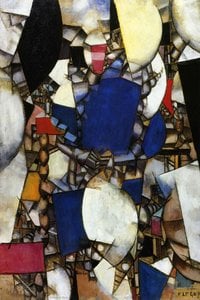
Learning to read
Reprodukcijos matmenys
Learning to read is an artwork by Fernand Léger, dating from 1923. The piece is situated within the movements of Cubism and Modernism, reflecting the structural shifts occurring in early twentieth-century visual language.
The subject matter integrates elements of portraiture and nature. Through a focus on these themes, Léger explores the intersection of human presence and the organic world.
The composition features two figures seated side by side within a deliberately flattened geometric arrangement. One figure appears to be a man and the other a woman. Both individuals hold books in their hands, suggesting an act of study or literacy. The arrangement prioritizes a structured, Cubist aesthetic, reducing the human forms into simplified shapes such as rectangles and triangles.
This work, captured in a black and white photograph, emphasizes a sense of stillness. The figures are enveloped in a rigorous structure that favors form over illusion. Rather than focusing on the expressive distortions of traditional portraiture, the subject matter is distilled into its most essential geometric components. This reduction creates a feeling of calm contemplation, presenting a quiet moment of intellectual pursuit.
Executed as a drawing, the work utilizes a stark black and white palette to define its subjects. The medium relies on a rigorous application of line and silhouette rather than the use of tonal gradation. This approach strips away the distraction of color, focusing instead on the structural clarity of the figures and their surroundings.
The technique reflects the principles of modernism through its emphasis on geometric abstraction. By prioritizing form over illusion, the artist achieves a sense of flatness that rejects traditional shading. The resulting composition emphasizes the underlying structure of the scene, presenting the figures through simplified, essential shapes.
Gidas apie „Learning to read“ yra šio kūrinio Informacinė medžiaga puslapis – spausdinamas informacinį lapelis, kuriame pateikiamas kūrinys su antrašte, autoriu nurodymu bei duomenų lentele (autorius, datos, technika, originalus dydis, kolekcija).
„Learning to read“ – Fernand Léger perteikia Reflective pojūtį bendroje Calm nuotaikoje.
„Learning to read“ – Fernand Léger kūrinio formatas yra Landscape. Formatas aprašo kompozicijos proporcijas.


1881 - 1955 , Prancūzija

Explore 10 iconic artworks capturing the Industrial Revolution’s grit & beauty. From Monet to Manet, discover realism, impressionism & powerful scenes of urban life. Find museum-quality reproductions for your home at WahooArt.com.

Immerse yourself in the vibrant world of Fernand Léger. Explore 25 iconic masterpieces of Cubism and Tubism, from bold geometric forms to machine-age energy. Find inspiration for your decor with museum-quality reproductions. Discover all masterpieces on WahooArt.com.

Delve into the revolutionary world of Cubist portraits. Discover how fragmented forms and multiple perspectives redefine identity. At WahooArt.com, we offer exquisite, hand-painted oil reproductions that bring the profound complexity of geometric abstraction to your collection.

Explore 25 iconic masterpieces from Centre Pompidou. Discover the stories behind modern art legends. Explore the full collection online at WahooArt.

Master the nuances between Salon and Gallery Cubism with our expert analysis. Discover the true meaning behind these radical art movements now.
 Peržiūrėti realaus dydžio版

 Pasidalinti
 Dalintis
 Išsamiau
 Vadovas


 Atsisiųsti
 Panašūs eksponatai
 Rentgeno spindulių nuotrauka
 Automatinė diorama
 问答

 Statistika


 Skaityti daugiau









 Stiklo variantas prieinamas tik pasirinkus dydį iki 110 cm