


Įsigykite aukštos skiriamosios raiškos, patobulintą skaitmeninį vaizdą, gerokai pranašesnį už internetinę peržiūrą.
Kiekvieną failą mūsų specialistai kruopščiai paruošia naudojant pažangias technologijas ir profesionalų rankinį retušavimą. Užtikriname, kad kiekvienas vaizdas pasižymėtų išskirtiniu aiškumu, tikslia spalvų atspalviu ir smulkiomis detalėmis.
Baigiamas failas el. paštu pristatomas per 72 valandas; jis optimizuotas nedelsiant naudojimui profesionalioje, redakcinėje ir spausdinimo aplinkoje. Tai ta pati kokybė, kuria pasitiki aukščiausios klasės dizaino studijos, leidyklos ir galerijos.
Atsisiųskite didelės raiškos failą asmeniniam naudojimui, spausdinimui ir kūrybiniams projektams. ( Pirkti spaudinį Pirkti rankomis tapytą paveikslą)
Pasirinkę WahooArt.com, jūs ne tik gaunate paveikslėlį – jūs gaunate profesionaliai patobudintą skaitmeninį kūrinį, sukurtą itin tikniai ir užtikrinantį pasitenkinimą. Štai viską, kas automatiškai pritékia jūsų užsakymui:

Jūsų aukštos raiškos skaitmeninis vaizdo failas bus išsiųstas jums el. paštu per 72 valaudas nuo užsakymo – paruoštas naudojimui be jokių papildomų veiksmų.

Jūsų meno kūrinys profesionaliai optimizuojamas naudojant pažangius dirbtinio intelekto įrankius ir rankinį redagavimą, užtikrinant maksimalią detalę, aiškumą ir spalvų tikslumą.

Atsitiktinai ištrytikote ar praradote savo failą? Nebijokite – bet kuriuo metu atsiųsime jį jums vėl nemokamai.

Mėgaukitės savo meno kūriniu akimirka – skaitiniai failai visada yra neapmokestinami, todėl nereikės mokėti muitinės, mokesčių ar pristatymo mokesčių.

Naudodami profesionalią įrangą ir spalvų valdymo sistemas, užtikriname, kad jūsų skaitmeninis vaizdas kuo tiksliau atspindėtų originalias spalvas.

Jei nebuvate patenkinti savo skaitinio vaizdo, per 100 dienų jį pertaisysime arba grąkinsime 100% sumą – be jokių klausimų.

Nepat 만족inti? Gaukite visą sumokėtą sumą per 100 dienų nuo skaitmeninio failo gavimo – be jokių papildomų klausimų.

Pirkti 3 nuotraukas – pasiūla 10% - Pirkti 5 – pasiūla 15% - Pirkti 10 ir daugiau – pasiūla 20%. Puikiai tinka kūrybiniams projektams, galerijoms bei agentūroms.

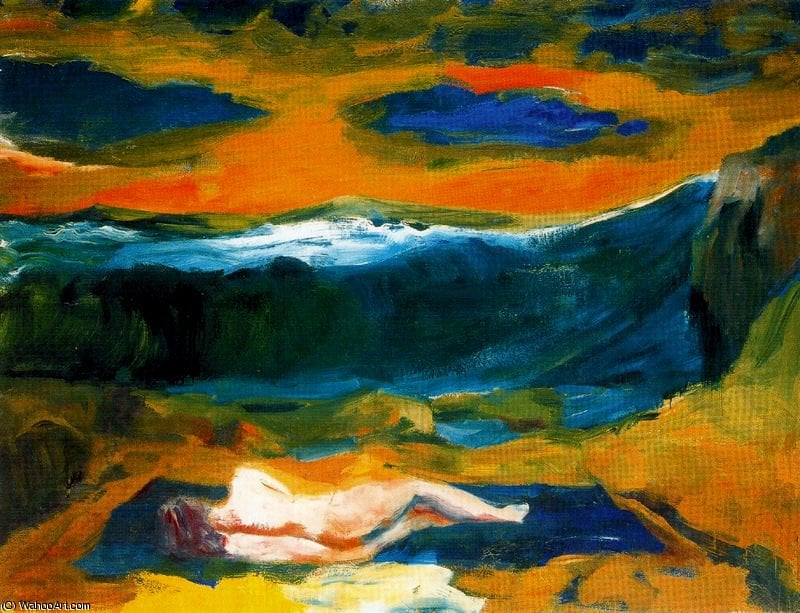
In the vibrant, transformative landscape of the post-World War II American art scene, few voices captured the quiet intimacy of human existence as poignantly as Elmer Bischoff. Born in Berkeley, California, in 1916, Bischoff was a central figure in a movement that redefined the boundaries between abstraction and representation. His journey was one of profound evolution, moving from the sweeping, gestural energy of Abstract Expressionism toward a deeply emotive form of figurative painting. This transition did not represent a retreat from modernism, but rather a sophisticated synthesis—a way to infuse the raw power of abstract brushwork with the soulful weight of the human figure and domestic space.
Bischoff’s early life and education laid the foundation for his disciplined yet expressive approach. Growing up in Berkeley as the son of German and Swedish-Ecuadoran heritage, he entered the University of California, Berkeley, in 1934. It was during these formative years that he encountered the influential teacher Margaret Peterson, whose unwavering dedication to the ethical value of art left an indelible mark on his creative conscience. However, the trajectory of his life was irrevocably altered by the onset of global conflict. Serving as a lieutenant colonel in the intelligence services near Oxford, England, between 1941 and 1945, Bischoff experienced a world in upheaval, an experience that would later inform the contemplative and often melancholic stillness found in his mature works.
Upon returning to San Francisco after the war, Bischoff found himself immersed in an era of unprecedented artistic ebullience. The city had become a crucible for avant-garde experimentation, where he rubbed shoulders with titans such as Mark Rothko and Clyfford Still. This period was marked by a fascination with scale, color, and the visceral nature of paint. Yet, alongside his contemporaries David Park and Richard Diebenkorn, Bischoff began to lead a quiet revolution known as the Bay Area Figurative Movement. This movement sought to reclaim the subject matter of the world—the light hitting a window, the silhouette of a person, the geometry of a room—while retaining the vigorous, painterly language of abstraction.
His work during this era is characterized by a unique sense of atmosphere and light. Unlike the aggressive energy of New York School abstraction, Bischoff’s paintings often possess a lyrical, almost dreamlike quality. He mastered the art of using light to sculpt space, creating scenes that feel both physically present and emotionally distant. His compositions frequently feature:
As his career progressed, Bischoff’s recognition grew alongside his technical refinement. His election as an associate member of the National Academy of Design in 1973, followed by full membership in 1985, stands as a testament to his enduring impact on American art. His ability to bridge the gap between the chaotic energy of post-war abstraction and the timeless tradition of figurative storytelling allowed him to create a body of work that remains profoundly relatable to modern audiences.
Today, the legacy of Elmer Bischoff is preserved not only in prestigious collections like the Oakland Museum of California but also in the way we perceive the intersection of light and life. He taught us that the most profound truths are often found in the quietest moments—in the way a shadow falls across a room or the stillness of a figure lost in thought. His contribution to the American canon remains a vital chapter in the history of 20th-century painting, reminding us that even in an age of abstraction, the human spirit remains the ultimate subject.

1916 - 1991 , United States of America

 Peržiūrėti realybėje
 Pasidalinti
 Dalintis
 Išsamiau

 Atsisiųsti
 Panašūs eksponatai
 Rentgeno nuotrauka
 Automatinė diorama
 Skaityti daugiau


