Peržiūrėti realaus dydžio版 Peržiūrėti AR realybėje Pirkti rankomis tapytą reprodukciją Perejti prie skaitmeninių vaizdų Siųsti
Išsamiau Vadovas Pridėti į mėgstamiausius Atsisiųsti Panašūs eksponatai Rentgeno spindulių nuotrauka Diaporama Statistika

Wendingen

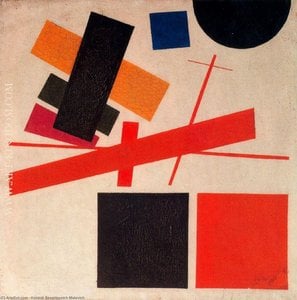
Explore El Lissitzky's 'Wendingen' (1921), a striking geometric abstraction blending Cubism & Constructivism. Featuring bold shapes, red accents, and stylized lettering.

El Lissitzky (1890–1941): Rusų abstraktojo meno reikšmė – Suprematizmas, Konstruktivizmas ir Proun serija. Jo įtaka Bauhaus mokyklai bei estetikai išliko svarbią šiuolaikinės kultūros istorijoje.

Giclée / Meno spausdinimas

Muziejų lygio „giclée“ arba drobos spausdinimas: greita gamyba ir lankstios apdailos parinktys. ( Pirkti rankomis tapytą reprodukciją Perejti prie skaitmeninių vaizdų)

Corner sample of the P118B picture frame: moulded polystyrene, 5 cm wide and 3 cm thick
P118B €10
Corner sample of the P118H picture frame: moulded polystyrene, 5 cm wide and 3 cm thick
P118H €10
Corner sample of the P118W picture frame: moulded polystyrene, 5 cm wide and 3 cm thick
P118W €10
Corner sample of the P438Z picture frame: moulded polystyrene, 5.5 cm wide and 3.5 cm thick
P438Z €10
Corner sample of the P508JH picture frame: moulded polystyrene, 7 cm wide and 3.5 cm thick
P508JH €12
Corner sample of the P508YH picture frame: moulded polystyrene, 7 cm wide and 3.5 cm thick
P508YH €12
Corner sample of the P805H picture frame: moulded polystyrene, 5 cm wide and 3.5 cm thick
P805H €10
Corner sample of the P805Z picture frame: moulded polystyrene, 5 cm wide and 3.5 cm thick
P805Z €10
Corner sample of the P919BZ picture frame: moulded polystyrene, 7 cm wide and 3.5 cm thick
P919BZ €10
Corner sample of the P919G picture frame: moulded polystyrene, 7 cm wide and 3.5 cm thick
P919G €10
Corner sample of the P919XJ picture frame: moulded polystyrene, 7 cm wide and 3.5 cm thick
P919XJ €10
Corner sample of the P959ZH picture frame: moulded polystyrene, 5 cm wide and 3 cm thick
P959ZH €10
Corner sample of the P968JZ picture frame: moulded polystyrene, 6 cm wide and 4 cm thick
P968JZ €12
Corner sample of the W106C picture frame: solid wood, 5 cm wide and 3 cm thick
W106C €8
Corner sample of the W218G picture frame: solid wood, 5 cm wide and 3 cm thick
W218G €10
Corner sample of the W218JH picture frame: solid wood, 5 cm wide and 3 cm thick
W218JH €8
Corner sample of the W218Y picture frame: solid wood, 5 cm wide and 3 cm thick
W218Y €10
Corner sample of the W307PJ picture frame: solid wood, 6 cm wide and 3 cm thick
W307PJ €10
Corner sample of the W316G picture frame: solid wood, 6 cm wide and 3 cm thick
W316G €10
Corner sample of the W316PJ picture frame: solid wood, 6 cm wide and 3 cm thick
W316PJ €8
Corner sample of the W316Y picture frame: solid wood, 6 cm wide and 3 cm thick
W316Y €10
Corner sample of the W398PJ picture frame: solid wood, 5 cm wide and 3 cm thick
W398PJ €8
Corner sample of the W4111J picture frame: solid wood, 6.5 cm wide and 3.5 cm thick
W4111J €10
Corner sample of the W500HY picture frame: solid wood, 7 cm wide and 5 cm thick
W500HY €15
Corner sample of the W500JH picture frame: solid wood, 7 cm wide and 5 cm thick
W500JH €15
Corner sample of the W692G picture frame: solid wood, 8 cm wide and 4 cm thick
W692G €12
Corner sample of the W849H picture frame: solid wood, 5 cm wide and 3 cm thick
W849H €8
Corner sample of the W940BG picture frame: solid wood, 7.5 cm wide and 4.5 cm thick
W940BG €15
Corner sample of the W953PJ picture frame: solid wood, 6 cm wide and 3.5 cm thick
W953PJ €8

Standartinis
individualaus dydžio
CM
INCH

Pasirinkite iš mūsų nustatytų dydžių, atitinkančių originalaus meno kūrinio proporcijas.

plotis
aukštis

Galite nurodyti savo matmenis, kad vaizdas atitiktų konkretų rėmą ar erdvę. Jei pasirinktas dydis nesutaps su originalaus paveikslėlio proporcijomis, mes arba apkirpsime kūrinį, arba išplėsime vaizdą naudojant veideliu atspindėtą arba vientisą šoną. Skaitmeninis maketas bus išsiųstas jums patvirtinti prieš pradedant gamybą.
Atkreipkite dėmesį, kad ekrane matomas vaizdinys neatspindi tikrojo apkirpimo ar išplėtimo. Tik maketas tiksliai parodytų galutinę kompoziciją.
Nors galima rinktis ir individualius dydžius, rekomenduojame pasirinkti vieną iš išanksti nustatytų matmenų, kad būtų išlaikytos originalios proporcijos.

Pristatymas visame pasaulyje () per 2 weeks, o ne įprastas 4/5 savaičių laikotarpis. (8 spalis)

Nemokamas greitasis pristatymas visame pasaulyje
Aukštos kokybės lininis drobė
Pilnas siuntimo draudimas
Muitinės mokesčių grąžinimo garantija
Tikro spalvų atitikimo garantija
100 dienų grąžinimo politika (tik esant įtaigoms)
100% pinigų grąžinimo garantija
Nuolaida dideliems užsakymams

Bendroji kaina

€ 58

Wendingen

Giclée / Meno spausdinimas

Reprodukcijos dydis

-

Visų pasirinktų variantų kaina

€ 58

Pagrindinė informacija

  • Title: Wendingen
  • Year: 1921
  • Influences: Bauhaus
  • Artistic style: Geometric abstraction
  • Artist: El Lissitzky
  • Notable elements or techniques:
    • Sharp angles
    • Flat planes
    • Intersecting lines
    • Right angles

Karo viktorina

Kiekviename klausime yra tik vienas teisingas atsakymas.

Klausimas 1:
What artistic movements significantly influenced El Lissitzky’s ‘Wendingen’?
Klausimas 2:
The artwork prominently features a neutral background color. Which color is it primarily?
Klausimas 3:
What does the lettering ‘WENDINGEN’ integrated into the composition signify?
Klausimas 4:
What is the primary technique used in creating the shapes and lines within ‘Wendingen’?
Klausimas 5:
In what year was 'Wendingen' created?

El Lissitzky's "Wendingen": A Geometric Symphony of Form and Space

  • Overview: El Lissitzky’s “Wendingen,” created in 1921, is a striking example of early abstract art, deeply rooted in the Constructivist and Suprematist movements. This artwork isn't merely a painting but a cover design for the Dutch magazine "Wendingen," dedicated to modern architecture and design. It embodies Lissitzky’s vision of “Proun,” a concept aiming to synthesize architecture, engineering, and art into a dynamic visual language.

Subject Matter & Style: A Dialogue Between Geometry and Dynamism

  • Abstract Composition: The artwork eschews representational imagery, instead presenting a purely abstract composition of geometric forms. Sharp angles, intersecting lines, and flat planes dominate the canvas, creating a sense of structured dynamism. Rectangles, circles, and diagonal lines interact to generate spatial tension and visual pathways.
  • Constructivist & Suprematist Influences: "Wendingen" clearly reflects the principles of Constructivism, emphasizing functional design and geometric abstraction. It also draws from Suprematism, Malevich’s movement focused on pure artistic feeling through basic geometric forms. Lissitzky's unique approach integrates these influences, creating a style that is both rigorously structured and emotionally resonant.
  • The "Wendingen" Magazine Context: The piece was designed as a cover for a magazine dedicated to modern architecture. This context highlights the artwork’s purpose: not just aesthetic beauty but also communication and visual impact within a design-focused publication. The stylized lettering of “WENDINGEN” integrated into the composition further emphasizes this functional aspect.

Technique & Materials: Precision and Clarity

  • Lithography on Paper: Lissitzky employed lithography, a printing technique that allows for precise lines and tonal variations. This method was ideal for reproducing the artwork’s sharp geometric forms and limited color palette.
  • Color Palette & Texture: The color scheme is deliberately restrained, featuring strong contrasts between red, gray, black, and beige against a neutral background. This simplicity enhances the clarity of the geometric shapes and prevents visual clutter. The texture appears smooth and flat, characteristic of a printed surface.

Historical Context & Symbolism: A Vision for a New Era

  • Post-War Reconstruction: Created in 1921, "Wendingen" emerged from the aftermath of World War I and the Russian Revolution. It reflects the era’s desire for radical change and innovation across all fields – art, architecture, and society.
  • Proun Concept: Lissitzky's “Proun” concept aimed to transcend traditional artistic boundaries by uniting art, technology, and architecture. "Wendingen" serves as a visual manifestation of this ambition, suggesting a harmonious integration of these disciplines.
  • Symbolic Interpretation: The artwork’s geometric forms can be interpreted as symbols of progress, order, and the potential for a new, rational world. The dynamic arrangement of shapes suggests movement and energy, reflecting the optimism and forward-looking spirit of the early 20th century.

Emotional Impact & Legacy: A Timeless Expression of Modernity

  • Visual Harmony: Despite its abstract nature, "Wendingen" evokes a sense of visual harmony and balance. The carefully arranged geometric forms create a pleasing composition that is both intellectually stimulating and aesthetically satisfying.
  • Influence on Design: Lissitzky’s work has had a lasting impact on graphic design, typography, and architectural aesthetics. "Wendingen" remains an iconic example of early modernism, inspiring generations of artists and designers.

问答 (or more naturally for a website heading): Klausimai ir atsakymai

Kokia buvo El Lissitzky amžius sukuriant „Wendingen"]?

El Lissitzky buvo 31 metų, kai 1921 m. sukūrė kūrinį „Wendingen“. Amžius apskaičiuotas remiantis gimimo metais 1890.

Kokia yra „Wendingen“ istorinė padėtis?

„Wendingen“, autorius – El Lissitzky priklauso Constructivism stiliui, Modernas laikotarpiui. Kartu jie suteikia šiam kūriniui vietą meno istorijoje.

Kokiam istoriniam laikotarpiui priklauso „Wendingen“, autorius – El Lissitzky?

„Wendingen“, autorius – El Lissitzky priklauso Modernas laikotarapiui. Šis laikotarpis suteikia kūriniui istorines aplinkybes.

Kokia yra „Wendingen“, autorius – El Lissitzky kūrybos data ir stilius?

„Wendingen“, autorius – El Lissitzky sukurta 1921 m. ir priklauso Constructivism stiliui.

Kas yra „Wendingen“ kūrybos autorius?

Kūrinį „Wendingen“ sukūrė El Lissitzky. Darbas katalogizuojamas El Lissitzky vardu.

Kuriem metais buvo sukurta „Wendingen“, autorius – El Lissitzky?

„Wendingen“, autorius – El Lissitzky kūrybos metai – 1921.

Kokia yra „Wendingen“, autorius – El Lissitzky dominuojanti spalva?

Khaki spalva (#e6c596) yra pagrindinė kūrinio „Wendingen“, autorius – El Lissitzky spalva.


Autoriaus biografija

A Revolutionary Vision: The Life and Art of El Lissitzky

El Lissitzky, born Lazar Markovich Lissitzky in 1890 in the small Russian town of Pochinok, emerged as a pivotal figure in the tumultuous landscape of early 20th-century art. His journey was one of constant reinvention, driven by a fervent belief in the power of art to shape society and reflect the dynamism of the modern world. From his initial training as an architect and engineer – pursuits hampered by restrictions placed upon Jewish students – Lissitzky’s path diverged towards artistic expression, initially through illustrations steeped in Jewish folklore. These early works, like his cover for ‘Chad Gadya’, reveal a nascent talent already grappling with narrative and visual storytelling, hinting at the profound cultural roots that would continue to inform his aesthetic. A move to Berlin and Darmstadt broadened his horizons, but it was upon returning to Russia that Lissitzky truly found his artistic voice, becoming inextricably linked with the revolutionary fervor sweeping through the nation.

The Embrace of Abstraction: Suprematism and Proun

A defining moment arrived with his encounter with Kazimir Malevich and the embrace of Suprematism. This radical movement, dedicated to pure geometric abstraction, resonated deeply with Lissitzky’s desire to transcend representational art and tap into a universal visual language. He became a key member of UNovis, the Suprematist group established in Vitebsk, actively disseminating its principles through teaching and artistic production. However, Lissitzky didn't simply replicate Malevich’s style; he forged his own distinct path with the development of *Proun*. This unique series, born from a fusion of Suprematism and Constructivism, explored spatial relationships and geometric forms in dynamic compositions that often resembled architectural blueprints or exploded diagrams. Proun wasn't merely painting; it was an investigation into the very structure of space itself, a premonition of future architectural possibilities. These works, with their floating planes and intersecting lines, embodied Lissitzky’s belief in art as a force capable of constructing new realities. The influence of his engineering background is palpable here, lending a structural logic to the abstract forms. He meticulously crafted Proun panels using plywood and lacquer, experimenting with color palettes and spatial arrangements that challenged conventional artistic conventions.

Art as Propaganda and Social Commentary

Lissitzky’s artistic vision extended far beyond the canvas. He passionately believed that art should serve a social purpose, actively engaging with political ideologies and seeking ways to integrate design into everyday life. This conviction led him to become deeply involved in Soviet propaganda efforts, creating powerful posters and graphic designs intended to mobilize public support for the Bolshevik regime. His 1941 poster calling for tank construction stands as a testament to this commitment – a stark, impactful image reflecting the urgency of wartime. Beyond propaganda, Lissitzky revolutionized typography, exhibition design, and photomontage. He understood that effective communication required innovative visual strategies, and he fearlessly experimented with new techniques to convey his message. His photomontages, such as ‘The Constructor’ (1924), are particularly striking – self-portraits that blend photography with geometric abstraction, offering a complex commentary on identity and the role of the artist in society. He skillfully combined disparate images and texts into visually arresting compositions, demonstrating his mastery of visual storytelling and challenging viewers to reconsider their perceptions of reality.

Bauhaus Influence and Artistic Collaboration

Lissitzky’s artistic trajectory intersected with the Bauhaus movement in Germany, where he taught alongside Walter Gropius and Josef Albers. The Bauhaus ethos – emphasizing functionalism, simplicity, and collaboration – profoundly influenced Lissitzky's aesthetic sensibilities. He embraced geometric abstraction as a means of achieving expressive clarity and promoting social reform, aligning his artistic principles with the broader goals of the Bauhaus school. Furthermore, Lissitzky engaged in fruitful collaborations with fellow artists such as Kurt Schwitters and Theo van Doesburg, fostering a dynamic exchange of ideas that enriched the artistic landscape of Weimar Germany. These partnerships pushed boundaries and challenged conventions, demonstrating Lissitzky’s willingness to embrace experimentation and explore new creative horizons.

Legacy and Enduring Influence

El Lissitzky’s life was tragically cut short in 1941 in Moscow, but his legacy continues to resonate today. He bridged the gap between art and architecture, abstraction and social purpose, leaving behind a body of work that is both intellectually stimulating and visually captivating. The establishment of the Lissitzky Foundation in 2014 underscores the ongoing commitment to preserving his artistic heritage and preparing a comprehensive catalogue raisonné of his creations. His innovations in typography, exhibition design, and photomontage continue to inspire contemporary artists and designers, while his unwavering belief in the power of art as a force for social change remains profoundly relevant. He is remembered not merely as an artist but as a visionary who championed radical ideas and transformed visual culture—a testament to the enduring impact of his artistic endeavors.

El Lissitzky

El Lissitzky

1890 - 1941 , Россия

Trumpa informacija apie kūrėją

  • Artistic Movement Or Style: ['Suprematizmą']
  • Artists Or Movements Influenced By This Artist: ['Bauhaus']
  • Artists Who Influenced This Artist: ['Kazimir Malevič']
  • Date Of Birth: Nov 23, 1890
  • Date Of Death: Dec 30, 1941
  • Full Name: El Lissitzky
  • Nationality: Rusijoje
  • Notable Artworks:
    • Konstruktorius
    • Čad Gadja apdaila
    • Proun serija
  • Place Of Birth: Pochinki, Rusia
Tyrinėkite meno kūrinius, suskirstytus pagal temas, stilius ir savybes.