x
Peržiūrėti realybėjePeržiūrėti realybėje Peržiūrėti ARPeržiūrėti AR Pirkti rankomis tapytą paveikslą Pirkti rankomis tapytą paveiksląPirkti vaizdą Pirkti vaizdą PasidalintiPasidalinti
IšsamiauIšsamiau Pridėti į mėgstamiausius Pridėti į mėgstamiausius AtsisiųstiAtsisiųsti Panašūs eksponataiPanašūs eksponatai Rentgeno nuotraukaRentgeno nuotrauka Automatinė dioramaAutomatinė diorama

Proun 3 A

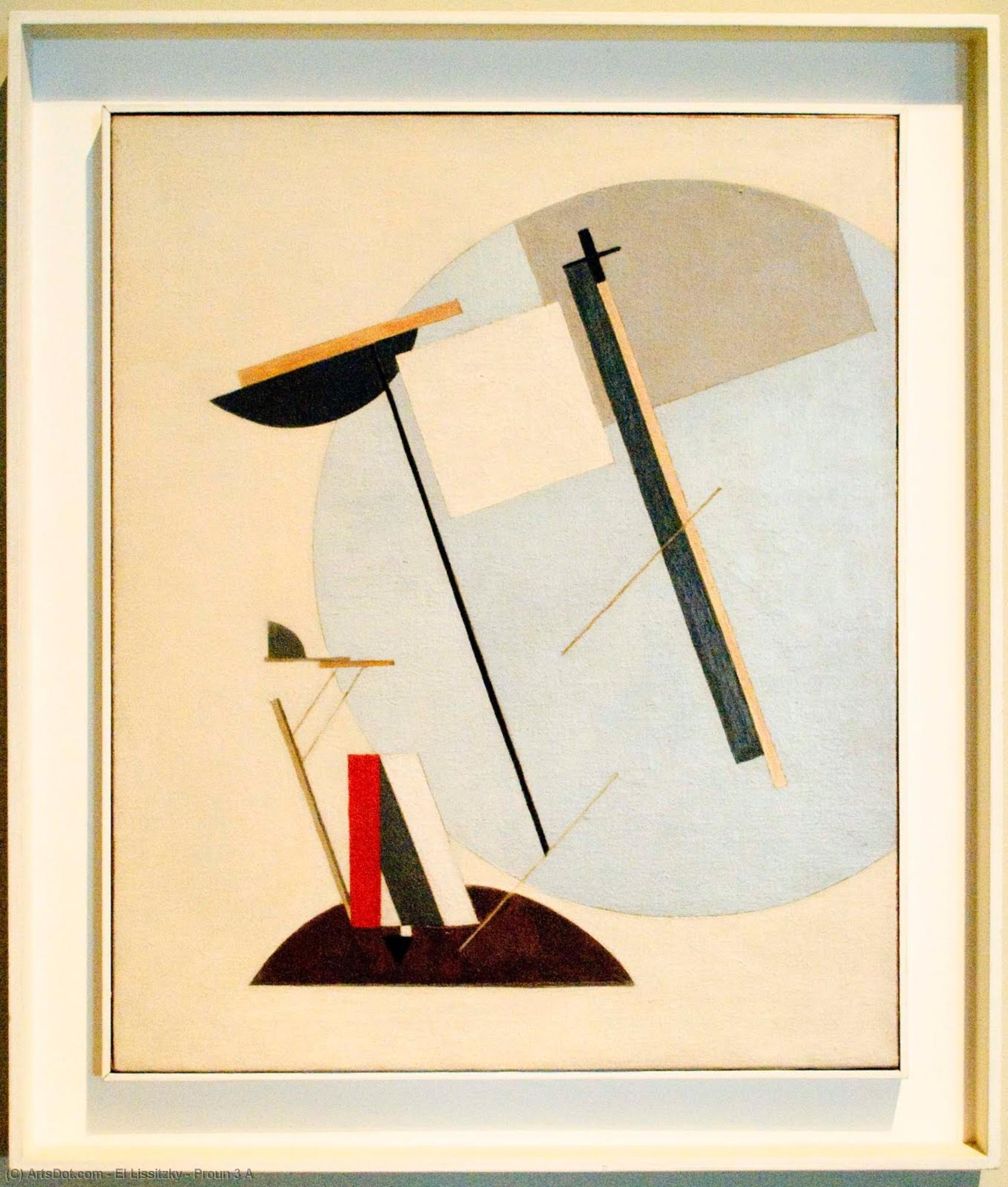
Explore El Lissitzky’s Constructivist masterpiece, Proun 3 A – a striking lithograph featuring a central circle intersected by a cross, embodying revolutionary geometric abstraction and inviting viewers to contemplate its enduring visual impact.

El Lissitzky (1890–1941): Rusų abstraktojo meno reikšmė – Suprematizmas, Konstruktivizmas ir Proun serija. Jo įtaka Bauhaus mokyklai bei estetikai išliko svarbią šiuolaikinės kultūros istorijoje.

Giclée / Meno spausdinimas

Muziejų lygio „giclée“ arba drobos spausdinimas: greita gamyba ir lankstios apdailos parinktys. (Pirkti rankomis tapytą paveikslą Pirkti rankomis tapytą paveiksląPirkti vaizdą Pirkti vaizdą)

P118B $10
P118H $10
P118W $10
P438Z $10
P508JH $12
P508YH $12
P805H $10
P805Z $10
P919BZ $10
P919G $10
P919XJ $10
P959ZH $10
P968JZ $12
W106C $8
W218G $10
W218JH $8
W218Y $10
W307PJ $10
W316G $10
W316PJ $8
W316Y $10
W398PJ $8
W4111J $10
W500HY $15
W500JH $15
W692G $12
W849H $8
W940BG $15
W953PJ $8

Standartinis dydis
individualiame dydį
CM
INCH

Pasirinkite iš mūsų nustatytų dydžių, atitinkančių originalaus meno kūrinio proporcijas.

plotis
aukštis

Galite nurodyti savo matmenis, kad vaizdas atitiktų konkretų rėmą ar erdvę. Jei pasirinktas dydis nesutaps su originalaus paveikslėlio proporcijomis, mes arba apkirpsime kūrinį, arba išplėsime vaizdą naudojant veideliu atspindėtą arba vientisą šoną. Skaitmeninis maketas bus išsiųstas jums patvirtinti prieš pradedant gamybą.
Atkreipkite dėmesį, kad ekrane matomas vaizdinys neatspindi tikrojo apkirpimo ar išplėtimo. Tik maketas tiksliai parodytų galutinę kompoziciją.
Nors galima rinktis ir individualius dydžius, rekomenduojame pasirinkti vieną iš išanksti nustatytų matmenų, kad būtų išlaikytos originalios proporcijos.

Pristatymas visame pasaulyje () per 2 weeks, o ne įprastas 4/5 savaičių laikotarpis. (4 rugsėjis)

why_choose_icon
Nemokamas greitasis pristatymas visame pasaulyje
why_choose_icon
Aukštos kokybės lininis drobė
why_choose_icon
Pilnas siuntimo draudimas
why_choose_icon
Muitinės mokesčių grąžinimo garantija
why_choose_icon
Tikro spalvų atitikimo garantija
why_choose_icon
60 dienų grąžinimo politika (tik esant gamyklinėms defektams)
why_choose_icon
100% pinigų grąžinimo garantija
why_choose_icon
Nuolaida už kelias reprodukcijas

Visų darbų kaina

$ 68

reproduction

Proun 3 A

Giclée / Meno spausdinimas

Reprodukcijos matmenys

-

Galutinė kaina

$ 68

Trumpos informacija

  • Subject or theme: Design
  • Artist: El Lissitzky
  • Medium: Lithograph
  • Location: MoMA
  • Notable elements or techniques: Geometric abstraction
  • Artistic style: Proun Style

A Geometric Symphony of Revolution

El Lissitzky’s Proun 3 A stands as a testament to the fervent idealism of Constructivism—a movement that sought to liberate art from representational illusion and forge it into a tool for social transformation. Created in 1920, this lithograph is part of a larger portfolio exploring Lissitzky's groundbreaking concept of Proun, which aimed to visualize the underlying structure of reality itself. Unlike traditional painting, Proun abandons depiction; instead, it presents a complex geometric arrangement designed to convey an emotional and intellectual resonance far beyond mere visual appearance.
  • Subject Matter: The composition centers around a prominent circle intersected by a cross—a motif that recurs throughout Lissitzky’s Proun series. This seemingly simple form embodies profound symbolic significance, representing the unity of cosmos and human consciousness according to Lissitzky's philosophical framework.
  • Style & Technique: Lissitzky’s meticulous execution demonstrates Constructivist precision. Lithography—a printing process known for its ability to reproduce intricate detail—was chosen to capture the essence of Proun’s geometric abstraction. The artist employed a bold palette, utilizing shades of ochre and crimson to heighten the visual impact.
The inclusion of elements like umbrellas and a baseball glove adds an unexpected layer of narrative to the abstract design. These objects aren't merely decorative; they serve as anchors within the geometric expanse, subtly referencing everyday life while simultaneously elevating it to the realm of conceptual art. Lissitzky deliberately juxtaposes these familiar forms with the dominant circle and cross, prompting viewers to contemplate the relationship between the tangible world and the underlying order of existence. Historical Context: Proun emerged during a period of intense artistic experimentation in Russia following the Bolshevik Revolution. Constructivism sought to dismantle bourgeois aesthetics and embrace rational principles—influences evident in Lissitzky’s unwavering commitment to geometric abstraction as a vehicle for expressing revolutionary ideals. This artwork reflects the broader ambition to construct a new visual language capable of communicating complex ideas about space, time, and human experience.

Symbolism Beyond Geometry

Beyond its formal structure, Proun 3 A resonates with deeper symbolic meanings rooted in Lissitzky’s spiritual explorations. The circle represents wholeness and unity—a concept central to Eastern philosophy and embraced by Lissitzky as a means of overcoming Western dualisms. Simultaneously, the cross symbolizes faith and transcendence—a visual counterpoint that underscores the artist's desire to reconcile reason and spirituality.

Emotional Impact & Artistic Legacy

Ultimately, Proun 3 A transcends mere aesthetic contemplation; it invites viewers into a dialogue about the nature of reality and the role of art in shaping perception. Lissitzky’s masterful manipulation of geometric form conveys an aura of intellectual conviction—a palpable sense of optimism tempered by awareness of social responsibility. This lithograph remains a cornerstone of Constructivist art, inspiring generations of artists to explore the expressive potential of abstraction while grappling with pressing societal concerns. Its enduring appeal lies in its ability to communicate profound ideas through deceptively simple visual elements—a testament to Lissitzky’s genius as both artist and visionary.

Autoriaus biografija

A Revolutionary Vision: The Life and Art of El Lissitzky

El Lissitzky, born Lazar Markovich Lissitzky in 1890 in the small Russian town of Pochinok, emerged as a pivotal figure in the tumultuous landscape of early 20th-century art. His journey was one of constant reinvention, driven by a fervent belief in the power of art to shape society and reflect the dynamism of the modern world. From his initial training as an architect and engineer – pursuits hampered by restrictions placed upon Jewish students – Lissitzky’s path diverged towards artistic expression, initially through illustrations steeped in Jewish folklore. These early works, like his cover for ‘Chad Gadya’, reveal a nascent talent already grappling with narrative and visual storytelling, hinting at the profound cultural roots that would continue to inform his aesthetic. A move to Berlin and Darmstadt broadened his horizons, but it was upon returning to Russia that Lissitzky truly found his artistic voice, becoming inextricably linked with the revolutionary fervor sweeping through the nation.

The Embrace of Abstraction: Suprematism and Proun

A defining moment arrived with his encounter with Kazimir Malevich and the embrace of Suprematism. This radical movement, dedicated to pure geometric abstraction, resonated deeply with Lissitzky’s desire to transcend representational art and tap into a universal visual language. He became a key member of UNovis, the Suprematist group established in Vitebsk, actively disseminating its principles through teaching and artistic production. However, Lissitzky didn't simply replicate Malevich’s style; he forged his own distinct path with the development of *Proun*. This unique series, born from a fusion of Suprematism and Constructivism, explored spatial relationships and geometric forms in dynamic compositions that often resembled architectural blueprints or exploded diagrams. Proun wasn't merely painting; it was an investigation into the very structure of space itself, a premonition of future architectural possibilities. These works, with their floating planes and intersecting lines, embodied Lissitzky’s belief in art as a force capable of constructing new realities. The influence of his engineering background is palpable here, lending a structural logic to the abstract forms. He meticulously crafted Proun panels using plywood and lacquer, experimenting with color palettes and spatial arrangements that challenged conventional artistic conventions.

Art as Propaganda and Social Commentary

Lissitzky’s artistic vision extended far beyond the canvas. He passionately believed that art should serve a social purpose, actively engaging with political ideologies and seeking ways to integrate design into everyday life. This conviction led him to become deeply involved in Soviet propaganda efforts, creating powerful posters and graphic designs intended to mobilize public support for the Bolshevik regime. His 1941 poster calling for tank construction stands as a testament to this commitment – a stark, impactful image reflecting the urgency of wartime. Beyond propaganda, Lissitzky revolutionized typography, exhibition design, and photomontage. He understood that effective communication required innovative visual strategies, and he fearlessly experimented with new techniques to convey his message. His photomontages, such as ‘The Constructor’ (1924), are particularly striking – self-portraits that blend photography with geometric abstraction, offering a complex commentary on identity and the role of the artist in society. He skillfully combined disparate images and texts into visually arresting compositions, demonstrating his mastery of visual storytelling and challenging viewers to reconsider their perceptions of reality.

Bauhaus Influence and Artistic Collaboration

Lissitzky’s artistic trajectory intersected with the Bauhaus movement in Germany, where he taught alongside Walter Gropius and Josef Albers. The Bauhaus ethos – emphasizing functionalism, simplicity, and collaboration – profoundly influenced Lissitzky's aesthetic sensibilities. He embraced geometric abstraction as a means of achieving expressive clarity and promoting social reform, aligning his artistic principles with the broader goals of the Bauhaus school. Furthermore, Lissitzky engaged in fruitful collaborations with fellow artists such as Kurt Schwitters and Theo van Doesburg, fostering a dynamic exchange of ideas that enriched the artistic landscape of Weimar Germany. These partnerships pushed boundaries and challenged conventions, demonstrating Lissitzky’s willingness to embrace experimentation and explore new creative horizons.

Legacy and Enduring Influence

El Lissitzky’s life was tragically cut short in 1941 in Moscow, but his legacy continues to resonate today. He bridged the gap between art and architecture, abstraction and social purpose, leaving behind a body of work that is both intellectually stimulating and visually captivating. The establishment of the Lissitzky Foundation in 2014 underscores the ongoing commitment to preserving his artistic heritage and preparing a comprehensive catalogue raisonné of his creations. His innovations in typography, exhibition design, and photomontage continue to inspire contemporary artists and designers, while his unwavering belief in the power of art as a force for social change remains profoundly relevant. He is remembered not merely as an artist but as a visionary who championed radical ideas and transformed visual culture—a testament to the enduring impact of his artistic endeavors.

El Lissitzky

El Lissitzky

1890 - 1941 , Россия

Trumpa informacija

  • Artistic Movement Or Style: ['Suprematizmą']
  • Artists Or Movements Influenced By This Artist: ['Bauhaus']
  • Artists Who Influenced This Artist: ['Kazimir Malevič']
  • Date Of Birth: Nov 23, 1890
  • Date Of Death: Dec 30, 1941
  • Full Name: El Lissitzky
  • Nationality: Rusijoje
  • Notable Artworks:
    • Konstruktorius
    • Čad Gadja apdaila
    • Proun serija
  • Place Of Birth: Pochinki, Rusia
Tyrinėkite meno kūrinius, suskirstytus pagal temas, stilius ir savybes.