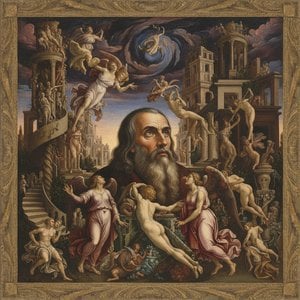
Doménikos Theotokópoulos: Šviesos ir Tikėjimo Forge
Doménikos Theotokópoulos, pasaulyje žinomas kaip El Greco – „graikas“ – buvo dailininkas, kurio gyvenimas ir kūriniai neleidžia lengvai jį į kategorijas suskirstyti. Gimė 1541 metais Kretos saloje, tuomet priklausančioje Venecijos Respublikai, jo meninis kelias nutūlo per Venetiją ir Romą, kol galiausiai rado savo išraiškos širdį Ispanijoje: Tolede. El Greco nebuvo tiesiog šių vietų produktas; jis sintezavo jų įtakas į kažką visiškai unikalus – stilių, kuris numatė ekspresionizmo emocinį intensyvumą ir kubizmo fragmentuotus variantus dar prieš keletą amžių. Ankstyvasis jo mokymas Bizantijos tradicijoje įskiepijo jam kruopštų dėmesį detalėms ir gilią supratimą religinės ikonografijos. Ši bazė, tačiau, nevaržė jo. Jis pasirašydavo savo darbus graikiškai, dažnai pridėdami „Krḗs“ – kretingas – kaip didžiuodamasis savo kilmės deklaracija, netgi vykdama į naujas menines teritorijas. Jo išskirtinio stiliaus sėklos buvo pasėti ne tik technika, bet ir jo tėvynės karštomis religinėmis nuotaikomis bei Venecijos meno turtingu audiniu.
Iš Venecijos į Tolede: Transformacija
Pereigimas į Venetiją maždaug 1567 metais pažymėjo kertinį momentą. Panardintas į dinamišką meninę sceną, El Greco studijavo meistrus – Titianą, Tintoretą, Veronesę – perimdamos jų spalvų, kompozicijos ir dramatiškos apšvietimo meistriškumą. Jis išmoko atpalaiduoti savo teptuką, priimti aliejaus dažų jauslingumą ir pavaizduoti figūras su nauju dinamišku judėjimu. Šis venecijietiškojo įtakos ženklas matomas ankstyvuose darbuose, tokiuose kaip *Šv. Sebastianas* (1600), kuriame anatomijos detalės sklandžiai susijungia su beveik teatrališkais šviesos ir šešėlio panaudojimu. Vėlesnis viešnagė Romoje atskleidė jam manierizmą, stilių, pasižymėjusį pailgintomis formomis, iškreipta perspektyva ir sudėtingomis kompozicijomis. Nors jis pademonstravo didelį talentą, El Greco sunkiai įgijo plačią pripažinimą konkurencingoje Romos meno scenoje. Būtent perkelti į Tolede 1577 metais galiausiai leido jo unikaliai vizijai suklestėti. Miestas, tuo metu buvęs religinio karštumo centru Kontrreformacijos laikotarpiu, suteikė tiek mecenatystės, tiek atmosferos, palankios jo intensyviai dvasingoms tapyboms.
Unikalus Stilius
El Greco meno stilius yra iškart atpažįstamas – ir visiškai žavintis. Jo figūros dažnai dramatiškai pailgintos, jų kūnai ištempti ir susukti pozose, kurios perteikia dvasinio ekstazės arba gilaus kančios jausmą. Tai ne tik stilistinis papuošimas; tai bandymas pavaizduoti nematytąjį, emocines ir dvasines realybes, kurios yra už dalykų paviršiaus. Jis meistriškai naudojo spalvą – ne visada realistinę spalvą, bet ryškias, dažnai nenaudalinę atspalvius – kad sustiprintų savo darbo emocinį poveikį. Dramatiška apšvietimo, su aštriais šviesos ir šešėlio kontrastais, kuria teatrališką efektą, paversdama žiūrovą scenos širdyje.
Toledo Grafas Orgazo Laidotuvės (1586–1588), laikomas jo meistriniu darbu, tobulai pavyzduoja šias savybes. Šis paveikslas vaizduoja stebuklų įvykį – šventųjų nusileidimą laidoti gilios tikėjimo turėtoją – su nuostabiu realizmu pavaizduojant šiuolaikinius veikėjus, sutinkančius su eteriniu, pailgintu formomis, atstovaujančiu dieviškajai intervencijai. Jis derino bizantine tradicijas su italų renesanso technikomis, sukūręs stilių, kuris buvo tiek naujoviškas, tiek giliai asmeniškas. Vėlesni jo darbai tapo vis labiau mistiški, atspindėdami jo pačių gilų religinius įsitikinimus ir augančią atsiskyrimą nuo įprastinių meninių normų.
Palikimas ir Perdarymas
Nors per savo gyvenimą pasiekė reikšmingo sėkmės – gavęs svarbius užsakymus iš bažnyčių ir vienuolynų Tolede – El Greco darbai po jo mirties 1614 metais atsidūrė santykinėje anonimiškumo būsenoje. Šimtmečius jis buvo didžiąją dalį pamirštas menotyrininkų, atmestas kaip ekscentrikas arba provincijos dailininkas. Tik XX amžiuje jo genijus pradėjo būti visiškai vertinamas. Tokie dailininkai kaip Pikaso ir Braque jį atpažino kaip pirmtaką moderniam menui, ypač kubizmui, gerbdami jo iškreiptas formas ir neįprastas perspektyvas. Jo ekspresyvus stilius atsiliepė į ekspresionistus, kurie siekė perteikti emocinį intensyvumą ryškiomis spalvomis ir dramatiškomis kompozicijomis. Šiandien El Greco yra šveniamas kaip vienas svarbiausių Vakarų meno istorijos figūrų – vizionieriaus dailininko, kurio darbai ir toliau žavi žiūrovus savo dvasiniu gyliu, emociniu jėga ir unikalios meninės vizijos. Jo paveikslai nėra tik religinių scenų atvaizdai; tai langai į sielą, liudijimai apie tikėjimo amžinę galią ir šlovinimai žmogaus dvasios gebėjimo siekti transcendencijos.
Pagrindiniai Darbai
- Toledo Grafas Orgazo Laidotuvės (1586–1588): Jo neprilygstantis meistrinis darbas, monumentalus kūrinys, derinantis realizmą ir dvasinį intensyvumą.
- Toledo Vaizdas (1596–1600): Dramatiškas peizažas, kuriame pavaizduotas miestas sukasi atmosferiniu stiliumi, užčiuopiant jo esmę beveik vizionierišku kokybiu.
- Penktojo Sandėrio Atidarymas (1608–1614): Serijos dalis, įkvėpta Apreiškimo knygos, šis paveikslas pavyzduoja El Greco apokaliptinę viziją ir jo meistriškumą dramatiškoje kompozicijoje.
- Šv. Sebastianas (1600): Stiprus šventojo atvaizdas, derinantis anatomijos detales su teatrališkais apšvietimo ir emociniu intensyvumu.
- El Espolio (Kristaus Striukimas) (1577–1579): Ankstyvas darbas, kuriame matomas venecijietiškojo įtakos ir dramatiško spalvos bei šviesos panaudojimo.



 Peržiūrėti realaus dydžio版
 Perjungti į spausdinamus版作品
 Pasidalinti
 Dalintis
 Išsamiau
 Vadovas

 Atsisiųsti
 Panašūs eksponatai
 Rentgeno spindulių nuotrauka
 Automatinė diorama
 Q&A
Q&A Statistika


 Skaityti daugiau






































 Stiklo variantas prieinamas tik pasirinkus dydį iki 110 cm