Rankiniu būdu tapytas aliejus ant droblio jūsų pageidaujamame dydį ir rėmuose – mūsų menininkų darbas pagal užsakymą. ( Perejti prie spausdinimo
Perejti prie skaitmeninio vaizdo)
Pasirinkite iš mūsų nustatytų dydžių, atitinkančių originalaus meno kūrinio proporcijas.
Galite įvesti savo matmenis, kad jie atitiktų konkretų rėmą ar erdvę. Jei pasirinktas dydis neatitinka originalaus paveikslėlio proporcijų, mes arba apkropsime meno kūrinį, arba papildysime tapybą rankomis dažytい elementais. Prieš pradėdami gamybą, jūsų patvirtinimui atsiųsime skaitmeninį maketą.
Atkreipkite dėmesį, kad ekrane rodomas vaizdas neatspindi tikrojo apkarpymo ar papildymo. Tik maketas tiksliai parodys galutinę kompoziciją.
Nors galima rinktis ir individualius dydžius, rekomenduojame pasirinkti matmenis iš nustatytos sąrašo, kad būtų išlaikytos originalios proporcijos.
Pristatymas visame pasaulyje () per 3–4 savaites, o ne įprastai – per 5 savaites. (11 rugsėjis). Kokybė lieka nepakeičiama.
untitled (2235)
Reprodukcijos matmenys
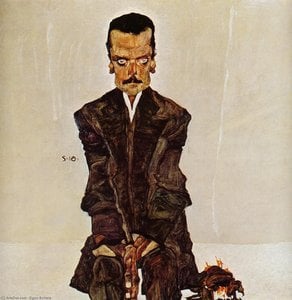
Egon Schiele's "Untitled (2235)," painted in 1918, stands as a haunting testament to the artist’s profound exploration of human vulnerability and the anxieties simmering beneath the surface of early 20th-century Europe. Created during a period marked by war and societal upheaval, this intensely personal work transcends mere representation, plunging the viewer into a realm of psychological turmoil and raw emotion. It's not simply a depiction of a nude figure; it’s an embodiment of existential questioning rendered in charcoal and graphite with unsettling precision.
The painting immediately commands attention through its stark simplicity and deliberate lack of conventional perspective. A reclining male form dominates the composition, his limbs elongated and twisted into a posture that suggests both surrender and resistance. The background is reduced to a minimal plane, amplifying the figure’s isolation and intensifying the focus on his internal state. This flattening effect, coupled with the almost claustrophobic arrangement, creates a sense of unease—a feeling of being trapped within the subject's experience.
Schiele’s masterful use of color is perhaps the most striking element of this work. The palette is relentlessly monochromatic, dominated by shades of gray, black, white, and muted browns. This deliberate restriction isn't a sign of artistic limitation; rather, it serves to heighten the emotional impact, stripping away any distractions and forcing the viewer to confront the raw essence of the subject’s distress. The lines are equally crucial – harsh, angular, and deliberately broken, they mirror the figure’s fragmented state of mind. Hatching and cross-hatching techniques are employed with meticulous detail, building up tonal variations that suggest volume and texture without resorting to traditional modeling.
The surface itself appears almost tactile, created through the deliberate application of charcoal or graphite. The visible strokes and energetic marks convey a sense of immediacy and spontaneity—as if Schiele were wrestling with his subject in real-time. This directness is characteristic of Expressionism, where the artist’s emotional state is prioritized over objective representation.
Beyond its formal qualities, “Untitled (2235)” resonates with potent symbolism. The nude figure itself represents vulnerability—a stripping away of defenses to reveal a core of exposed emotion. The contorted pose can be interpreted as a struggle against an unseen force, perhaps reflecting the anxieties surrounding war and societal change. Schiele’s recurring fascination with mortality is evident here, not in a morbid way, but as a fundamental aspect of human existence. The painting speaks to the fragility of life and the inevitability of death—themes that were particularly relevant during the turbulent years leading up to World War I.
Considering Schiele’s own life – his early loss of his father, his sister's illness, and his own struggles with mental health – it is clear that this work is deeply autobiographical. The painting can be viewed as a projection of his inner turmoil onto the canvas, offering a glimpse into the artist’s psyche during a period of profound personal crisis.
Egon Schiele was a pivotal figure in the development of Expressionism, and “Untitled (2235)” exemplifies his unique approach to art. His willingness to confront difficult subjects—sexuality, mortality, and psychological distress—challenged conventional artistic norms and paved the way for future generations of artists. Reproductions of this powerful work continue to captivate viewers with their raw emotional intensity and unsettling beauty. It remains a poignant reminder of the complexities of the human condition and the enduring power of art to explore the darkest corners of our inner lives.
Austrijos pozicija dviejų pasaulinio karo horizonte buvo labai abejojanti: vienu metu ji buvo šiek tiek iš Šiaurės į rytus, lengvai įsitikinusi veiksmų vyrai. Mažėjęs šalis po 1918 m., beveik visiškai neišplitusi tarptautiniu pasauliu buvo lengvai įvykdinta Hitlerio Reichui 1938 m.; meno srityje tai reiškė kad modernizmo istorija buvo išvykstanti nuo Šiaurės iki pietų, su pagrindiniu dėmesiu į formą. Vokelių šiek tiek pripažino ekspresionizmą kaip svarbų meno srovę; jis buvo vienas iš žymiausius austrių artistas XX amžiaus pradžioje – kartu su Gustavu Klimtu ir Oskar Kokoschka išvykę į Vieną buvo laikomas vienu iš Žyduvo šimtmečio svarbiausių vizualinių menininkų.
Egonas Šylė gimė 1890 m. vasario 3 d. Tulne, Austrijoje. Jo tėvas Adolfas Šylė buvo Tulno geležinkelio stoties direktorius ir gimė 1851 m. Vienoje Adolfo Šyly tevai turėjo tris jaunesnes seseris: Elvirą, Melaniją ir Gertrūdą. Elvira mirė vaikyste dėl gimtinių sifiliso. Jo tėvas buvo užsikrėtęs sifiliu įsimėlynėje savo jaunystės metais po vienos jo naujosios žmonos išėjimo iš kambario.
Šylė mokytojo Christian Griepenkerl įtaką išgyveno Vienoje 1907 m. ir G. Klimtas tapo jo svarbiu rėmėju. Šylė paliko akademiją 1906 m., nes jos mokymo metodai buvo labai konservatyvus, ir įkūrė Naują austrių dailės grupę 1909 m. Grupėje vyravo ekspresionistinė estetika, kuri iššūkiant šiuolaikinėms kultūros normas.
Šylė buvo vienas iš žymiausius austrių artistas XX amžiaus pradžioje – kartu su Gustavu Klimtu ir Oskar Kokoschka išvykę į Vieną buvo laikomas vienu iš Žyduvo šimtmečio svarbiausių vizualinių menininkų. Šylė buvo ekspresionizmo meno srovės atstovas.
Šylė buvo žinomas dėl savo iššūkiantį įžiūrą į pasaulio problemas ir šiuolaikinę estetika, kuri iššūkiant šiuolaikinėms kultūros normas. Šylė buvo ekspresionizmo meno srovės atstovas.
1890 - 1918 , Austrija