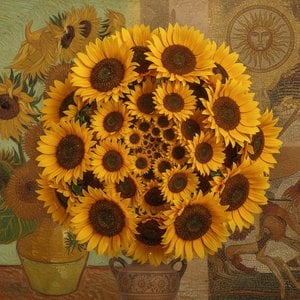
Sunflower (1909), autoriaus Egon Šylė, meistro rankomis sumalatyta aliejų technika reprodukcija
Peržiūrėti realaus dydžio版 Peržiūrėti AR realybėje Perjungti į spausdinamus版作品 Perejti prie skaitmeninių vaizdų Pasidalinti
Išsamiau Vadovas Pridėti į mėgstamiausius Atsisiųsti Panašūs eksponatai Rentgeno spindulių nuotrauka Automatinė diorama 问答 Presentation Statistika

Sunflower Rankiniu būdu dažyta aliejaus reprodukcija

Egon Schiele's 'Sunflower' (1909) captures the artist’s signature Expressionism with haunting beauty. Explore this poignant work, reflecting mortality and fragility through bold lines & a melancholic palette.

Egon Šylė – Austrių ekspresionizmo dailininkas. Žiūrėkite į jo reikšmę Vienoje ir pasaulyje! Ekspresionistinio meno srovės atstovas, žinomas dėl savo psichologinės gilumo ir išraiškos.

Rankų darbo aliejinės reprodukcijos

Rankiniu būdu tapytas aliejus ant droblio jūsų pageidaujamame dydį ir rėmuose – tai mūsų menininkų pagal užsakymą sukurtas darbas. ( Perjungti į spausdinamus版作品 Perejti prie skaitmeninių vaizdų)

Corner sample of the P118B picture frame: lieto polistirolo detalės, 5 cm wide and 3 cm thick
P118B €10
Corner sample of the P118H picture frame: lieto polistirolo detalės, 5 cm wide and 3 cm thick
P118H €10
Corner sample of the P118W picture frame: lieto polistirolo detalės, 5 cm wide and 3 cm thick
P118W €10
Corner sample of the P438Z picture frame: lieto polistirolo detalės, 5.5 cm wide and 3.5 cm thick
P438Z €10
Corner sample of the P508JH picture frame: lieto polistirolo detalės, 7 cm wide and 3.5 cm thick
P508JH €12
Corner sample of the P508YH picture frame: lieto polistirolo detalės, 7 cm wide and 3.5 cm thick
P508YH €12
Corner sample of the P805H picture frame: lieto polistirolo detalės, 5 cm wide and 3.5 cm thick
P805H €10
Corner sample of the P805Z picture frame: lieto polistirolo detalės, 5 cm wide and 3.5 cm thick
P805Z €10
Corner sample of the P919BZ picture frame: lieto polistirolo detalės, 7 cm wide and 3.5 cm thick
P919BZ €10
Corner sample of the P919G picture frame: lieto polistirolo detalės, 7 cm wide and 3.5 cm thick
P919G €10
Corner sample of the P919XJ picture frame: lieto polistirolo detalės, 7 cm wide and 3.5 cm thick
P919XJ €10
Corner sample of the P959ZH picture frame: lieto polistirolo detalės, 5 cm wide and 3 cm thick
P959ZH €10
Corner sample of the P968JZ picture frame: lieto polistirolo detalės, 6 cm wide and 4 cm thick
P968JZ €12
Corner sample of the W106C picture frame: solidus medžio

**Improved version:**
solidus medis, 5 cm wide and 3 cm thick
W106C €8
Corner sample of the W218G picture frame: solidus medžio

**Improved version:**
solidus medis, 5 cm wide and 3 cm thick
W218G €10
Corner sample of the W218JH picture frame: solidus medžio

**Improved version:**
solidus medis, 5 cm wide and 3 cm thick
W218JH €8
Corner sample of the W218Y picture frame: solidus medžio

**Improved version:**
solidus medis, 5 cm wide and 3 cm thick
W218Y €10
Corner sample of the W307PJ picture frame: solidus medžio

**Improved version:**
solidus medis, 6 cm wide and 3 cm thick
W307PJ €10
Corner sample of the W316G picture frame: solidus medžio

**Improved version:**
solidus medis, 6 cm wide and 3 cm thick
W316G €10
Corner sample of the W316PJ picture frame: solidus medžio

**Improved version:**
solidus medis, 6 cm wide and 3 cm thick
W316PJ €8
Corner sample of the W316Y picture frame: solidus medžio

**Improved version:**
solidus medis, 6 cm wide and 3 cm thick
W316Y €10
Corner sample of the W398PJ picture frame: solidus medžio

**Improved version:**
solidus medis, 5 cm wide and 3 cm thick
W398PJ €8
Corner sample of the W4111J picture frame: solidus medžio

**Improved version:**
solidus medis, 6.5 cm wide and 3.5 cm thick
W4111J €10
Corner sample of the W500HY picture frame: solidus medžio

**Improved version:**
solidus medis, 7 cm wide and 5 cm thick
W500HY €15
Corner sample of the W500JH picture frame: solidus medžio

**Improved version:**
solidus medis, 7 cm wide and 5 cm thick
W500JH €15
Corner sample of the W692G picture frame: solidus medžio

**Improved version:**
solidus medis, 8 cm wide and 4 cm thick
W692G €12
Corner sample of the W849H picture frame: solidus medžio

**Improved version:**
solidus medis, 5 cm wide and 3 cm thick
W849H €8
Corner sample of the W940BG picture frame: solidus medžio

**Improved version:**
solidus medis, 7.5 cm wide and 4.5 cm thick
W940BG €15
Corner sample of the W953PJ picture frame: solidus medžio

**Improved version:**
solidus medis, 6 cm wide and 3.5 cm thick
W953PJ €8

Standartinis dydis
pagal užsakymą
CM
INCH

Pasirinkite iš mūsų nustatytų dydžių, atitinkančių originalaus meno kūrinio proporcijas.

plotis
aukštis

Įveskite jums reikiamą plotį ir aukštį, kad paveikslas atitiktų jūsų rėmą ar sieną. Kadangi šis darbas yra rankinio darbo, siekiant išgauti kitokios formos dydį, paveikslas gali būti šiek tiek didesnis (nuo kraštų bus palikta daugiau erdvės) arba mažesnis – pasirinkite jums patogiausią variantą. Prieš pradedant tapyti, atsiųsime jums skaitmeninį maketą patvirtinimui. Šioje puslapio nuotraukoje matomas vaizdas nėra galutinis rezultatas – jį parodys tik sukurtas maketas.

Ką galima pakeisti (pavyzdžiai): Pakeisti veidą į kliento nuotrauką; Pridėti augintinį (pvz., pakeisti katę šunimi); Įtraukti paslėptą žinutę fone; Pakeisti fono kraštovaizdį ar elementus.
Gavus užsakymą, WahooArt.com komanda susisieks su klientu el. paštu dėl instrukcijų ir pateiks maketo pavyzdį

Pristatymas visame pasaulyje () per 3–4 savaites, o ne įprastai – per 5 savaites. (6 lapkritis). Kokybė lieka nepakeičiama.

Nemokamas greitasis pristatymas visame pasaulyje
Aukštos kokybės lininis drobė
Pilnas siuntimo draudimas
Muitinės mokesčių grąžinimo garantija
Tikro spalvų atitikimo garantija
100 dienų grąžinimo politika (tik esant įtaigoms)
100% pinigų grąžinimo garantija
Nuolaida dideliems užsakymams

Visos kainos suma

€ 243

Sunflower

Reprodukcijos technika

Reprodukcijos matmenys

-

Bendroji kaina

€ 243

Trumpa informacija

  • Year: 1909
  • Movement: Expressionism
  • Medium: Watercolor
  • Subject or theme: Sunflower
  • Artistic style: Art Nouveau

Karo viktorina

Kiekviename klausime yra tik vienas teisingas atsakymas.

Klausimas 1:
What artistic style is most prominently associated with Egon Schiele’s ‘Sunflower’?
Klausimas 2:
The sunflower depicted in the painting is primarily characterized by:
Klausimas 3:
Considering Egon Schiele’s biography, which of the following best reflects a recurring theme in his work?
Klausimas 4:
Based on the image description, what is a notable characteristic of the sunflower’s arrangement within the frame?
Klausimas 5:
Egon Schiele’s work often reflects elements of Expressionism. Which of the following best describes this movement's focus?

A Fragile Radiance: Introducing Egon Schiele's Sunflower

Egon Schiele’s 1909 painting, “Sunflower,” isn’t a celebration of summer’s bounty; it’s an intensely personal exploration of vulnerability and the quiet drama of decay. Often overlooked in favor of his more overtly expressive self-portraits or haunting depictions of death, this work reveals a surprising depth of feeling – a poignant beauty born from acknowledging life's fleeting nature. It’s a piece that speaks to the heart of Schiele’s unique artistic vision: a world where even the most vibrant subjects are imbued with an undercurrent of melancholy and a profound awareness of mortality.

Sunflower by Egon Schiele

Art Nouveau Echoes & The Weight of Loss

Painted in the early years of his career, “Sunflower” is firmly rooted in the Art Nouveau movement, yet it transcends its stylistic influences. Notice the elongated format – a deliberate choice that creates a sense of confinement and heightens the drama of the single flower dominating the frame. The verticality mirrors the skeletal structure of the sunflower itself, emphasizing its fragility against the vastness of the implied space. Schiele’s use of line is particularly striking; it's not merely descriptive but actively expressive, conveying a feeling of tension and unease. The thick, almost frantic brushstrokes contribute to this sense of urgency, as if the flower is struggling to hold onto its vitality.

The painting’s creation coincides with a period of significant personal upheaval for Schiele – his father's death from syphilis had left an indelible mark on his psyche. This loss, coupled with the early death of his sister Elvira, fueled a preoccupation with themes of illness, decay, and the ephemeral nature of existence. The sunflower, in this context, becomes a potent symbol of vulnerability—a radiant beauty destined to fade, mirroring Schiele’s own anxieties about mortality.

Decoding the Symbolism: Light, Shadow & The Spirals

Despite its somber mood, “Sunflower” is far from bleak. Schiele masterfully employs light and shadow to create a captivating interplay of form and color. The dark center of the flowerhead draws the eye inward, while the delicate yellow petals seem to radiate outwards, suggesting a desperate attempt to capture and hold onto life’s fleeting moments. The spiral arrangement of the florets—a mathematical marvel found throughout nature—adds another layer of complexity to the composition. This pattern, reminiscent of Fibonacci sequences, hints at an underlying order within chaos, perhaps reflecting Schiele's own struggle to find meaning in a world riddled with suffering.

The choice of a sunflower itself is significant. Traditionally associated with adoration and loyalty, the sunflower’s symbolism has been reinterpreted by Schiele to represent something far more nuanced—a poignant meditation on beauty, loss, and the acceptance of inevitable decline. The flower's tendency to turn its face towards the sun, even as it wilts, embodies a quiet dignity in the face of mortality.

Bringing “Sunflower” Home: A Reproduction for Your Space

WahooArt offers meticulously crafted hand-painted reproductions of Egon Schiele’s “Sunflower,” allowing you to experience the raw emotion and captivating beauty of this iconic work within your own home. Our artists replicate Schiele's distinctive style with exceptional skill, capturing not only the visual details but also the underlying mood and psychological intensity of the original painting. Choose from a range of sizes and canvas materials to perfectly complement your décor. Whether you’re an art collector, an interior designer seeking a touch of expressive drama, or simply someone drawn to Schiele's hauntingly beautiful vision, our reproduction of “Sunflower” is a timeless addition to any collection.

Klausimai ir atsakymai

Kada buvo sukurta „Sunflower“ ir prie kokio meno stiliaus ji priskiriama?

„Sunflower“ sukurta 1909 metais, priklausant į Art Nouveau kryptį. Data ir stilius įtvirtina šį kūrinį laiko eje.

Iš ko ir kokiu stiliumi sukurta „Sunflower“?

Kūrybinėje darbe „Sunflower“ Acrylic On Canvas technika susilieja su Art Nouveau kryptimi.

Kokią vietą Egon Šylė kūrybos ešėlyje užima „Sunflower“?

„Sunflower“ priklauso Egon Šylė Art Nouveau kūrybai, kurios įrašytoms temoms priskiriamas expressionism, mortality, anxiety, vienna, self-portrait.


Autoriaus biografija

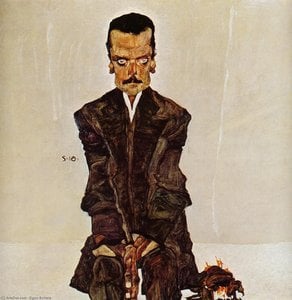
Egon Schiele

Austrijos pozicija dviejų pasaulinio karo horizonte buvo labai abejojanti: vienu metu ji buvo šiek tiek iš Šiaurės į rytus, lengvai įsitikinusi veiksmų vyrai. Mažėjęs šalis po 1918 m., beveik visiškai neišplitusi tarptautiniu pasauliu buvo lengvai įvykdinta Hitlerio Reichui 1938 m.; meno srityje tai reiškė kad modernizmo istorija buvo išvykstanti nuo Šiaurės iki pietų, su pagrindiniu dėmesiu į formą. Vokelių šiek tiek pripažino ekspresionizmą kaip svarbų meno srovę; jis buvo vienas iš žymiausius austrių artistas XX amžiaus pradžioje – kartu su Gustavu Klimtu ir Oskar Kokoschka išvykę į Vieną buvo laikomas vienu iš Žyduvo šimtmečio svarbiausių vizualinių menininkų.

Gyvenimas

Egonas Šylė gimė 1890 m. vasario 3 d. Tulne, Austrijoje. Jo tėvas Adolfas Šylė buvo Tulno geležinkelio stoties direktorius ir gimė 1851 m. Vienoje Adolfo Šyly tevai turėjo tris jaunesnes seseris: Elvirą, Melaniją ir Gertrūdą. Elvira mirė vaikyste dėl gimtinių sifiliso. Jo tėvas buvo užsikrėtęs sifiliu įsimėlynėje savo jaunystės metais po vienos jo naujosios žmonos išėjimo iš kambario.

Meno vystymasis

Šylė mokytojo Christian Griepenkerl įtaką išgyveno Vienoje 1907 m. ir G. Klimtas tapo jo svarbiu rėmėju. Šylė paliko akademiją 1906 m., nes jos mokymo metodai buvo labai konservatyvus, ir įkūrė Naują austrių dailės grupę 1909 m. Grupėje vyravo ekspresionistinė estetika, kuri iššūkiant šiuolaikinėms kultūros normas.

Žymūs kūriniai

Šylė buvo vienas iš žymiausius austrių artistas XX amžiaus pradžioje – kartu su Gustavu Klimtu ir Oskar Kokoschka išvykę į Vieną buvo laikomas vienu iš Žyduvo šimtmečio svarbiausių vizualinių menininkų. Šylė buvo ekspresionizmo meno srovės atstovas.

Žymūs veiksniai

Šylė buvo žinomas dėl savo iššūkiantį įžiūrą į pasaulio problemas ir šiuolaikinę estetika, kuri iššūkiant šiuolaikinėms kultūros normas. Šylė buvo ekspresionizmo meno srovės atstovas.

Egon Šylė

Egon Šylė

1890 - 1918 , Austrija

Trumpa informacija

  • Artistic Movement Or Style: Ekspresionizmas
  • Artists Who Influenced This Artist: ['Gustavas Klimtas']
  • Date Of Birth: 1890 m.
  • Date Of Death: 1918 m.
  • Full Name: Egon Schiele
  • Nationality: Austras
  • Notable Artworks:
    • Savęs portretas su fizižalis
    • Porą įemčianti
    • Žemės apėjimų kraštovaizdis
  • Place Of Birth: Tulnas, Austrija
Tyrinėkite meno kūrinius, suskirstytus pagal temas, stilius ir savybes.