Peržiūrėti realaus dydžio版 Peržiūrėti AR realybėje Pirkti rankomis tapytą reprodukciją Perejti prie skaitmeninių vaizdų Siųsti
Išsamiau Vadovas Pridėti į mėgstamiausius Atsisiųsti Panašūs eksponatai Rentgeno spindulių nuotrauka Diaporama Statistika

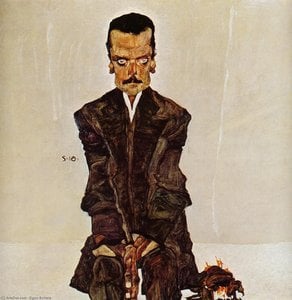
Sleeping Child

A hauntingly vulnerable expressionist portrait of a sleeping boy by Egon Schiele captures the raw psychological depth of 1910 Vienna through angular lines and muted tones, inviting you to explore this masterpiece.

Egon Šylė – Austrių ekspresionizmo dailininkas. Žiūrėkite į jo reikšmę Vienoje ir pasaulyje! Ekspresionistinio meno srovės atstovas, žinomas dėl savo psichologinės gilumo ir išraiškos.

Giclée / Meno spausdinimas

Muziejų lygio „giclée“ arba drobos spausdinimas: greita gamyba ir lankstios apdailos parinktys. ( Pirkti rankomis tapytą reprodukciją Perejti prie skaitmeninių vaizdų)

Corner sample of the P118B picture frame: lieto polistirolo, 5 cm wide and 3 cm thick
P118B €10
Corner sample of the P118H picture frame: lieto polistirolo, 5 cm wide and 3 cm thick
P118H €10
Corner sample of the P118W picture frame: lieto polistirolo, 5 cm wide and 3 cm thick
P118W €10
Corner sample of the P438Z picture frame: lieto polistirolo, 5.5 cm wide and 3.5 cm thick
P438Z €10
Corner sample of the P508JH picture frame: lieto polistirolo, 7 cm wide and 3.5 cm thick
P508JH €12
Corner sample of the P508YH picture frame: lieto polistirolo, 7 cm wide and 3.5 cm thick
P508YH €12
Corner sample of the P805H picture frame: lieto polistirolo, 5 cm wide and 3.5 cm thick
P805H €10
Corner sample of the P805Z picture frame: lieto polistirolo, 5 cm wide and 3.5 cm thick
P805Z €10
Corner sample of the P919BZ picture frame: lieto polistirolo, 7 cm wide and 3.5 cm thick
P919BZ €10
Corner sample of the P919G picture frame: lieto polistirolo, 7 cm wide and 3.5 cm thick
P919G €10
Corner sample of the P919XJ picture frame: lieto polistirolo, 7 cm wide and 3.5 cm thick
P919XJ €10
Corner sample of the P959ZH picture frame: lieto polistirolo, 5 cm wide and 3 cm thick
P959ZH €10
Corner sample of the P968JZ picture frame: lieto polistirolo, 6 cm wide and 4 cm thick
P968JZ €12
Corner sample of the W106C picture frame: solidus medžio, 5 cm wide and 3 cm thick
W106C €8
Corner sample of the W218G picture frame: solidus medžio, 5 cm wide and 3 cm thick
W218G €10
Corner sample of the W218JH picture frame: solidus medžio, 5 cm wide and 3 cm thick
W218JH €8
Corner sample of the W218Y picture frame: solidus medžio, 5 cm wide and 3 cm thick
W218Y €10
Corner sample of the W307PJ picture frame: solidus medžio, 6 cm wide and 3 cm thick
W307PJ €10
Corner sample of the W316G picture frame: solidus medžio, 6 cm wide and 3 cm thick
W316G €10
Corner sample of the W316PJ picture frame: solidus medžio, 6 cm wide and 3 cm thick
W316PJ €8
Corner sample of the W316Y picture frame: solidus medžio, 6 cm wide and 3 cm thick
W316Y €10
Corner sample of the W398PJ picture frame: solidus medžio, 5 cm wide and 3 cm thick
W398PJ €8
Corner sample of the W4111J picture frame: solidus medžio, 6.5 cm wide and 3.5 cm thick
W4111J €10
Corner sample of the W500HY picture frame: solidus medžio, 7 cm wide and 5 cm thick
W500HY €15
Corner sample of the W500JH picture frame: solidus medžio, 7 cm wide and 5 cm thick
W500JH €15
Corner sample of the W692G picture frame: solidus medžio, 8 cm wide and 4 cm thick
W692G €12
Corner sample of the W849H picture frame: solidus medžio, 5 cm wide and 3 cm thick
W849H €8
Corner sample of the W940BG picture frame: solidus medžio, 7.5 cm wide and 4.5 cm thick
W940BG €15
Corner sample of the W953PJ picture frame: solidus medžio, 6 cm wide and 3.5 cm thick
W953PJ €8

Standartinis
individualaus dydžio
CM
INCH

Pasirinkite iš mūsų nustatytų dydžių, atitinkančių originalaus meno kūrinio proporcijas.

plotis
aukštis

Įveskite jums reikiamą plotį ir aukštį, kad atvaizdas derėtų prie jūsų rėmo ar sienos. Spausdiną galima tik sumažinti, bet nepadidinti virš originalaus paveikslėlio dydžio, todėl keičiant proporcijas, dalis vaizdo prarandama. Prieš spausdinimą atsiųsime jums skaitmeninį maketą patvirtinimui. Šioje puslapio nuotraukoje matomas pjūvis nėra tikslus – jį rodo tik maketas.

Pristatymas visame pasaulyje () per 2 weeks, o ne įprastas 4/5 savaičių laikotarpis. (27 spalis)

Nemokamas greitasis pristatymas visame pasaulyje
Aukštos kokybės lininis drobė
Pilnas siuntimo draudimas
Muitinės mokesčių grąžinimo garantija
Tikro spalvų atitikimo garantija
100 dienų grąžinimo politika (tik esant įtaigoms)
100% pinigų grąžinimo garantija
Nuolaida dideliems užsakymams

Bendroji kaina

€ 60

Sleeping Child

Giclée / Meno spausdinimas

Reprodukcijos dydis

-

Visų pasirinktų variantų kaina

€ 60

Pagrindinė informacija

  • Influences: Symbolism
  • Movement: Expressionism
  • Subject or theme: Childhood innocence
  • Artist: Egon Schiele
  • Year: 1910

Karo viktorina

Kiekviename klausime yra tik vienas teisingas atsakymas.

Klausimas 1:
In which art movement does Egon Schiele's 'Sleeping Child' belong?
Klausimas 2:
What medium was used to create 'Sleeping Child'?
Klausimas 3:
What does the child's posture in the painting primarily convey to the viewer?
Klausimas 4:
Which color palette best describes the mood of this artwork?
Klausimas 5:
In what year was 'Sleeping Child' painted?

A Haunting Encounter with Vulnerability

In the quiet, unsettling depths of Egon Schiele’s 1910 masterpiece, “Sleeping Child,” we encounter more than just a portrait; we witness a profound psychological excavation. This exquisite gouache on canvas serves as a haunting testament to the artist's lifelong preoccupation with mortality and the fragile boundaries of the human psyche. The painting depicts a young boy nestled in repose, his small frame curled inward, arms wrapped tightly around himself in a posture that immediately evokes a sense of defenselessness and raw vulnerability. Schiele, a master of the Expressionist movement, eschews the polished idealism of traditional portraiture to instead capture a deeper, more unsettling truth—the quiet ache of existence that lies beneath the surface of even the most innocent subjects.

The technical execution of the piece is as striking as its subject matter. Schiele employs a distinctive Expressionist style characterized by angular, almost jagged lines and a flattened perspective that pushes the figure toward the viewer, demanding an intimate, if uncomfortable, engagement. His palette is deliberately muted, dominated by somber browns, earthy ochres, and shadowy tones that contribute to a heavy, melancholic atmosphere. By layering thin, translucent washes of gouache, Schiele builds a texture that feels palpably alive, creating a surface that seems to vibrate with the artist's own internal anxieties. This meticulous approach ensures that every stroke contributes to the painting's overall sense of tension and psychological weight.

Symbolism and the Shadows of Vienna

To look upon “Sleeping Child” is to navigate a labyrinth of symbolic meaning. The boy’s fetal position is laden with significance, representing an innocence that feels perpetually threatened by an encroaching darkness—a recurring motif throughout Schiele's turbulent oeuvre. There is a deliberate concealment within the work; the child's face is partially obscured by his own limbs, creating a mask-like effect that hints at hidden emotions and the deliberate shielding of identity from a harsh world. This interplay between presence and absence, between what is revealed and what remains shrouded, invites the viewer to contemplate the complexities of the human condition.

The historical context of the piece further enriches its emotional resonance. Created during Schiele’s formative years in Vienna, the painting reflects the broader intellectual ferment and societal upheaval of the early twentieth century. It was an era marked by a profound shift in how humanity perceived itself, as the certainties of the past gave way to the psychological explorations of modernism. For collectors and lovers of fine art, this piece offers a window into that transformative period, capturing the very essence of Expressionism—the desire to convey inner turmoil through distorted imagery and intense emotionality. Whether displayed in a curated gallery or as a focal point in a sophisticated interior, “Sleeping Child” remains an evocative powerhouse, offering a timeless meditation on the beauty found within fragility.

问答 (or more naturally for a website heading): Klausimai ir atsakymai

Ar galėčiau „Sleeping Child“ peržiūrėti kaip pilno ekrano nuotraukų rodyklę?

Kūrinį „Sleeping Child“, autorius – Egon Šylė galima peržiūrėti kaip diorama (slaidų rulio) formatą puslapyje Diaporama.

Atsižvelgiant į kūrinio datą, prie kokios Egon Šylė karjeros etapos galima priskirti „Sleeping Child“?

1910 m. data įtraugia "Sleeping Child" į Egon Šylė kūrybinio plėtojimo Mature Period laikotarpį.

Ar „Sleeping Child“ yra būdingas tam, ką Egon Šylė paprastai kūrė?

Tarp užfiksuotų Egon Šylė temų – psychological exploration, expressionist style, mortality concerns, train motif, inner turmoil – kūrinys „Sleeping Child“ akcentuoja childhood, portraiture, mask, anguish, fear, sleep, anatomy.


Autoriaus biografija

Egon Schiele

Austrijos pozicija dviejų pasaulinio karo horizonte buvo labai abejojanti: vienu metu ji buvo šiek tiek iš Šiaurės į rytus, lengvai įsitikinusi veiksmų vyrai. Mažėjęs šalis po 1918 m., beveik visiškai neišplitusi tarptautiniu pasauliu buvo lengvai įvykdinta Hitlerio Reichui 1938 m.; meno srityje tai reiškė kad modernizmo istorija buvo išvykstanti nuo Šiaurės iki pietų, su pagrindiniu dėmesiu į formą. Vokelių šiek tiek pripažino ekspresionizmą kaip svarbų meno srovę; jis buvo vienas iš žymiausius austrių artistas XX amžiaus pradžioje – kartu su Gustavu Klimtu ir Oskar Kokoschka išvykę į Vieną buvo laikomas vienu iš Žyduvo šimtmečio svarbiausių vizualinių menininkų.

Gyvenimas

Egonas Šylė gimė 1890 m. vasario 3 d. Tulne, Austrijoje. Jo tėvas Adolfas Šylė buvo Tulno geležinkelio stoties direktorius ir gimė 1851 m. Vienoje Adolfo Šyly tevai turėjo tris jaunesnes seseris: Elvirą, Melaniją ir Gertrūdą. Elvira mirė vaikyste dėl gimtinių sifiliso. Jo tėvas buvo užsikrėtęs sifiliu įsimėlynėje savo jaunystės metais po vienos jo naujosios žmonos išėjimo iš kambario.

Meno vystymasis

Šylė mokytojo Christian Griepenkerl įtaką išgyveno Vienoje 1907 m. ir G. Klimtas tapo jo svarbiu rėmėju. Šylė paliko akademiją 1906 m., nes jos mokymo metodai buvo labai konservatyvus, ir įkūrė Naują austrių dailės grupę 1909 m. Grupėje vyravo ekspresionistinė estetika, kuri iššūkiant šiuolaikinėms kultūros normas.

Žymūs kūriniai

Šylė buvo vienas iš žymiausius austrių artistas XX amžiaus pradžioje – kartu su Gustavu Klimtu ir Oskar Kokoschka išvykę į Vieną buvo laikomas vienu iš Žyduvo šimtmečio svarbiausių vizualinių menininkų. Šylė buvo ekspresionizmo meno srovės atstovas.

Žymūs veiksniai

Šylė buvo žinomas dėl savo iššūkiantį įžiūrą į pasaulio problemas ir šiuolaikinę estetika, kuri iššūkiant šiuolaikinėms kultūros normas. Šylė buvo ekspresionizmo meno srovės atstovas.

Egon Šylė

Egon Šylė

1890 - 1918 , Austrija

Trumpa informacija apie kūrėją

  • Artistic Movement Or Style: Ekspresionizmas
  • Artists Who Influenced This Artist: ['Gustavas Klimtas']
  • Date Of Birth: 1890 m.
  • Date Of Death: 1918 m.
  • Full Name: Egon Schiele
  • Nationality: Austras
  • Notable Artworks:
    • Savęs portretas su fizižalis
    • Porą įemčianti
    • Žemės apėjimų kraštovaizdis
  • Place Of Birth: Tulnas, Austrija
Tyrinėkite meno kūrinius, suskirstytus pagal temas, stilius ir savybes.