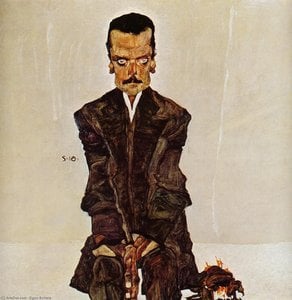
Acrylic On PaperWallArtExpressionism
 1918
1918 45.0 x 29.0 cm
Rankiniu būdu tapytas aliejus ant droblio jūsų pageidaujamame dydį ir rėmuose – mūsų menininkų darbas pagal užsakymą. ( Pirkti spaudinį Pirkti vaizdą)





























Pasirinkite iš mūsų nustatytų dydžių, atitinkančių originalaus meno kūrinio proporcijas.

Galite įvesti savo matmenis, kad jie atitiktų konkretų rėmą ar erdvę. Jei pasirinktas dydis neatitinka originalaus paveikslėlio proporcijų, mes arba apkropsime meno kūrinį, arba papildysime tapybą rankomis dažytい elementais. Prieš pradėdami gamybą, jūsų patvirtinimui atsiųsime skaitmeninį maketą.
Atkreipkite dėmesį, kad ekrane rodomas vaizdas neatspindi tikrojo apkarpymo ar papildymo. Tik maketas tiksliai parodys galutinę kompoziciją.
Nors galima rinktis ir individualius dydžius, rekomenduojame pasirinkti matmenis iš nustatytos sąrašo, kad būtų išlaikytos originalios proporcijos.
Pristatymas visame pasaulyje () per 3–4 savaites, o ne įprastai – per 5 savaites. (6 rugsėjis). Kokybė lieka nepakeičiama.


Sitting Woman
Reprodukcijos matmenys
Egon Schiele's 1918 drawing, "Sitting Woman," is not merely a portrait; it’s a distilled essence of the artist’s intensely personal and profoundly unsettling vision. Executed during a turbulent period in his life – just months before his untimely death – this work embodies the core tenets of Expressionism: an exploration of raw emotion, psychological depth, and a deliberate rejection of conventional beauty standards. The piece, rendered in stark black ink on paper, immediately commands attention with its elongated figure, poised in a classical ballet pose yet imbued with a palpable sense of vulnerability and introspection. It’s a study in contrasts – the formality of the stance juxtaposed against the loose, gestural lines that define Schiele's distinctive style.
The composition is strikingly vertical, emphasizing the woman’s elongated form and drawing the viewer’s eye upwards to her face—though obscured by shadow. Minimal background detail serves only to heighten the figure’s isolation, creating a sense of immediacy and intimacy as if we are witnessing a private moment. Schiele masterfully employs hatching and cross-hatching techniques to build up tonal variation, suggesting both form and texture entirely through line weight. He doesn't rely on precise shading; instead, heavier lines delineate areas of shadow and volume, while lighter strokes define highlights and contours, lending the drawing an almost palpable physicality.
Schiele’s approach to portraiture during this period moved decisively away from realistic representation. He wasn't interested in capturing a likeness; he sought to convey an inner state – a feeling, a mood, a psychological intensity. “Sitting Woman” exemplifies this shift. The woman’s posture is deliberately ambiguous, suggesting both repose and unease. Her hands, resting on her thighs, hint at a contained energy, while the downward gaze contributes to a sense of melancholy or perhaps even resignation. This deliberate ambiguity invites interpretation, allowing each viewer to project their own emotions onto the image.
The influence of Expressionism is undeniable in Schiele’s use of distorted forms and exaggerated lines. The figure's body isn’t rendered with anatomical precision; rather, it’s simplified into a series of elegant curves and sharp angles, reflecting the artist’s fascination with the human form as a vehicle for expressing emotion. This stylistic choice aligns perfectly with the Expressionist movement’s rejection of academic conventions in favor of subjective experience.
Beyond its formal qualities, “Sitting Woman” is rich in symbolic meaning. The obscured face invites speculation about the woman's identity and inner thoughts. Her posture suggests a moment of contemplation—a pause in the relentless flow of life. Some art historians interpret the drawing as an exploration of Schiele’s own anxieties surrounding mortality, fueled by his father’s illness and the looming threat of World War I. The shadow enveloping her face can be seen as a metaphor for the unknown, the unconscious, or perhaps even death itself.
Interestingly, the choice of a ballet pose—a symbol of grace and beauty—is deliberately subverted by Schiele’s expressive style. It's not a celebration of idealized femininity; rather, it’s a raw, unflinching portrayal of human vulnerability. The drawing speaks to the complexities of the female experience – the tension between strength and fragility, confidence and doubt.
WahooArt offers meticulously crafted hand-painted reproductions of “Sitting Woman,” capturing the essence of Schiele’s unique style with remarkable fidelity. Our artists utilize traditional techniques to recreate the drawing's intricate linework, tonal variations, and emotional depth, ensuring that you receive a piece of art that is both visually stunning and historically significant. Whether you are an art collector, interior designer seeking a striking statement piece, or simply an admirer of Schiele’s work, our reproductions provide a beautiful and authentic way to experience this iconic image.
Explore the available sizes and canvas options on our website to bring “Sitting Woman” into your home or office. Each reproduction is carefully packaged and shipped with utmost care, guaranteeing its safe arrival.

Austrijos pozicija dviejų pasaulinio karo horizonte buvo labai abejojanti: vienu metu ji buvo šiek tiek iš Šiaurės į rytus, lengvai įsitikinusi veiksmų vyrai. Mažėjęs šalis po 1918 m., beveik visiškai neišplitusi tarptautiniu pasauliu buvo lengvai įvykdinta Hitlerio Reichui 1938 m.; meno srityje tai reiškė kad modernizmo istorija buvo išvykstanti nuo Šiaurės iki pietų, su pagrindiniu dėmesiu į formą. Vokelių šiek tiek pripažino ekspresionizmą kaip svarbų meno srovę; jis buvo vienas iš žymiausius austrių artistas XX amžiaus pradžioje – kartu su Gustavu Klimtu ir Oskar Kokoschka išvykę į Vieną buvo laikomas vienu iš Žyduvo šimtmečio svarbiausių vizualinių menininkų.
Egonas Šylė gimė 1890 m. vasario 3 d. Tulne, Austrijoje. Jo tėvas Adolfas Šylė buvo Tulno geležinkelio stoties direktorius ir gimė 1851 m. Vienoje Adolfo Šyly tevai turėjo tris jaunesnes seseris: Elvirą, Melaniją ir Gertrūdą. Elvira mirė vaikyste dėl gimtinių sifiliso. Jo tėvas buvo užsikrėtęs sifiliu įsimėlynėje savo jaunystės metais po vienos jo naujosios žmonos išėjimo iš kambario.
Šylė mokytojo Christian Griepenkerl įtaką išgyveno Vienoje 1907 m. ir G. Klimtas tapo jo svarbiu rėmėju. Šylė paliko akademiją 1906 m., nes jos mokymo metodai buvo labai konservatyvus, ir įkūrė Naują austrių dailės grupę 1909 m. Grupėje vyravo ekspresionistinė estetika, kuri iššūkiant šiuolaikinėms kultūros normas.
Šylė buvo vienas iš žymiausius austrių artistas XX amžiaus pradžioje – kartu su Gustavu Klimtu ir Oskar Kokoschka išvykę į Vieną buvo laikomas vienu iš Žyduvo šimtmečio svarbiausių vizualinių menininkų. Šylė buvo ekspresionizmo meno srovės atstovas.
Šylė buvo žinomas dėl savo iššūkiantį įžiūrą į pasaulio problemas ir šiuolaikinę estetika, kuri iššūkiant šiuolaikinėms kultūros normas. Šylė buvo ekspresionizmo meno srovės atstovas.

1890 - 1918 , Austrija

Elevate your most cherished memories with WahooArt’s bespoke service. We transform your personal photos into breathtaking, hand-painted black & white oil masterpieces. Experience museum-quality craftsmanship and timeless elegance for your private collection. Discover the art of legacy.

Elevate your artistic practice with this expert guide to mastering the line. Discover advanced techniques in graphite, charcoal, and contour drawing designed for art students seeking technical precision and expressive depth in their fine art studies.

Explore the profound artistry of black and white photography. From historical mastery to the interplay of light and shadow, discover how monochrome captures timeless emotion and form through a sophisticated lens of art history.

 Peržiūrėti realybėje
 Pasidalinti
 Dalintis
 Išsamiau

 Atsisiųsti
 Panašūs eksponatai
 Rentgeno nuotrauka
 Automatinė diorama
 Skaityti daugiau







 Stiklo variantas prieinamas tik pasirinkus dydį iki 110 cm