Muziejų lygio „giclée“ arba drobos spausdinimas: greita gamyba ir lankstios apdailos parinktys. ( Pirkti rankomis tapytą paveikslą Pirkti vaizdą)





























Pasirinkite iš mūsų nustatytų dydžių, atitinkančių originalaus meno kūrinio proporcijas.

Galite nurodyti savo matmenis, kad vaizdas atitiktų konkretų rėmą ar erdvę. Jei pasirinktas dydis nesutaps su originalaus paveikslėlio proporcijomis, mes arba apkirpsime kūrinį, arba išplėsime vaizdą naudojant veideliu atspindėtą arba vientisą šoną. Skaitmeninis maketas bus išsiųstas jums patvirtinti prieš pradedant gamybą.
Atkreipkite dėmesį, kad ekrane matomas vaizdinys neatspindi tikrojo apkirpimo ar išplėtimo. Tik maketas tiksliai parodytų galutinę kompoziciją.
Nors galima rinktis ir individualius dydžius, rekomenduojame pasirinkti vieną iš išanksti nustatytų matmenų, kad būtų išlaikytos originalios proporcijos.
Pristatymas visame pasaulyje () per 2 weeks, o ne įprastas 4/5 savaičių laikotarpis. (6 rugsėjis)


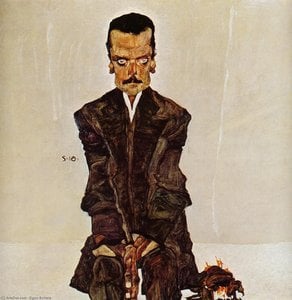
Seated Woman
Reprodukcijos matmenys
Egon Schiele's "Seated Woman," painted in 1913 amidst the tumultuous backdrop of early 20th-century Vienna, is far more than a simple portrait; it’s a haunting meditation on mortality, vulnerability, and the raw intensity of human emotion. Born in Tulln an der Donau in 1890, Schiele's life was tragically cut short at just 28, leaving behind a body of work characterized by its unsettling honesty and profound psychological depth. This particular painting, executed in watercolor on paper, exemplifies these qualities perfectly, offering a glimpse into the artist’s intensely personal vision.
The subject herself remains partially obscured, her face veiled in shadow, drawing our attention immediately to her posture and the delicate tension within her form. She is seated on what appears to be a simple chair, her head resting heavily upon another unseen figure's lap – an arrangement that speaks volumes about power dynamics, intimacy, and perhaps even a sense of surrender. The pose itself is deliberately awkward, almost painfully contorted; her back arches dramatically, suggesting both vulnerability and a fierce determination to endure. This isn’t the idealized beauty celebrated in much of Viennese art at the time; instead, Schiele presents a woman stripped bare, not just physically but emotionally.
Schiele's masterful use of watercolor is crucial to the painting’s impact. The medium lends itself beautifully to capturing fleeting moments and conveying a sense of immediacy. Notice how the colors bleed into one another, creating soft edges and an almost ethereal quality. However, this softness is juxtaposed with sharply defined lines – particularly evident in the woman's limbs and the chair’s frame – which inject a feeling of unease and instability. These angular lines contribute to the overall sense of tension within the composition.
The artist employs a remarkably restrained palette: primarily muted browns, creams, and greens, punctuated by flashes of red in the chair upholstery and the woman's hair. This limited color scheme amplifies the painting’s emotional resonance, creating a mood that is both melancholic and unsettling. The absence of bright colors reinforces the sense of isolation and vulnerability at the heart of the work.
Painted in 1913, “Seated Woman” reflects the anxieties and uncertainties of its time. Vienna was a city grappling with social upheaval, artistic experimentation, and a growing awareness of mortality – themes that would become increasingly prominent in Schiele’s oeuvre. The presence of the unseen figure supporting her head is particularly significant; it could be interpreted as representing death itself, or perhaps a symbol of dependence and vulnerability. Schiele's own life was marked by loss and illness, including the early deaths of his father and sister, experiences that undoubtedly informed his artistic vision.
Interestingly, Schiele’s work often explored themes of eroticism alongside mortality, as evidenced in other paintings from this period. This juxtaposition – a celebration of beauty intertwined with an awareness of decay – is characteristic of the Expressionist movement's willingness to confront uncomfortable truths about the human condition. The painting can be seen as a poignant exploration of the delicate balance between life and death, pleasure and pain.
"Seated Woman" remains a powerfully evocative work of art, offering a rare glimpse into the inner world of one of Expressionism’s most tormented yet brilliant artists. Its unsettling beauty, combined with its profound psychological depth, continues to resonate with viewers today. Whether viewed as a meditation on mortality or a celebration of human vulnerability, this painting stands as a testament to Schiele's unique artistic vision and his ability to capture the complexities of the human experience.

Austrijos pozicija dviejų pasaulinio karo horizonte buvo labai abejojanti: vienu metu ji buvo šiek tiek iš Šiaurės į rytus, lengvai įsitikinusi veiksmų vyrai. Mažėjęs šalis po 1918 m., beveik visiškai neišplitusi tarptautiniu pasauliu buvo lengvai įvykdinta Hitlerio Reichui 1938 m.; meno srityje tai reiškė kad modernizmo istorija buvo išvykstanti nuo Šiaurės iki pietų, su pagrindiniu dėmesiu į formą. Vokelių šiek tiek pripažino ekspresionizmą kaip svarbų meno srovę; jis buvo vienas iš žymiausius austrių artistas XX amžiaus pradžioje – kartu su Gustavu Klimtu ir Oskar Kokoschka išvykę į Vieną buvo laikomas vienu iš Žyduvo šimtmečio svarbiausių vizualinių menininkų.
Egonas Šylė gimė 1890 m. vasario 3 d. Tulne, Austrijoje. Jo tėvas Adolfas Šylė buvo Tulno geležinkelio stoties direktorius ir gimė 1851 m. Vienoje Adolfo Šyly tevai turėjo tris jaunesnes seseris: Elvirą, Melaniją ir Gertrūdą. Elvira mirė vaikyste dėl gimtinių sifiliso. Jo tėvas buvo užsikrėtęs sifiliu įsimėlynėje savo jaunystės metais po vienos jo naujosios žmonos išėjimo iš kambario.
Šylė mokytojo Christian Griepenkerl įtaką išgyveno Vienoje 1907 m. ir G. Klimtas tapo jo svarbiu rėmėju. Šylė paliko akademiją 1906 m., nes jos mokymo metodai buvo labai konservatyvus, ir įkūrė Naują austrių dailės grupę 1909 m. Grupėje vyravo ekspresionistinė estetika, kuri iššūkiant šiuolaikinėms kultūros normas.
Šylė buvo vienas iš žymiausius austrių artistas XX amžiaus pradžioje – kartu su Gustavu Klimtu ir Oskar Kokoschka išvykę į Vieną buvo laikomas vienu iš Žyduvo šimtmečio svarbiausių vizualinių menininkų. Šylė buvo ekspresionizmo meno srovės atstovas.
Šylė buvo žinomas dėl savo iššūkiantį įžiūrą į pasaulio problemas ir šiuolaikinę estetika, kuri iššūkiant šiuolaikinėms kultūros normas. Šylė buvo ekspresionizmo meno srovės atstovas.

1890 - 1918 , Austrija

Discover the ethereal beauty of watercolor through an art-historical lens. Master the delicate balance of light, fluidity, and pigment to capture the luminous essence of nature, inspired by the legendary techniques of the Old Masters and Impressionist greats.

Discover the ethereal beauty of premium watercolor reproductions and bespoke commissions at WahooArt. From museum-quality landscapes to custom AI-enhanced portraits, our master artists deliver unparalleled craftsmanship and white-glove service for discerning collectors worldwide.

 Peržiūrėti realybėje
 Pasidalinti
 Dalintis
 Išsamiau

 Atsisiųsti
 Panašūs eksponatai
 Rentgeno nuotrauka
 Automatinė diorama

 Skaityti daugiau







 Stiklo variantas prieinamas tik pasirinkus dydį iki 110 cm