Ragazza in nero: A Portrait of Vulnerability and Artistic Intensity
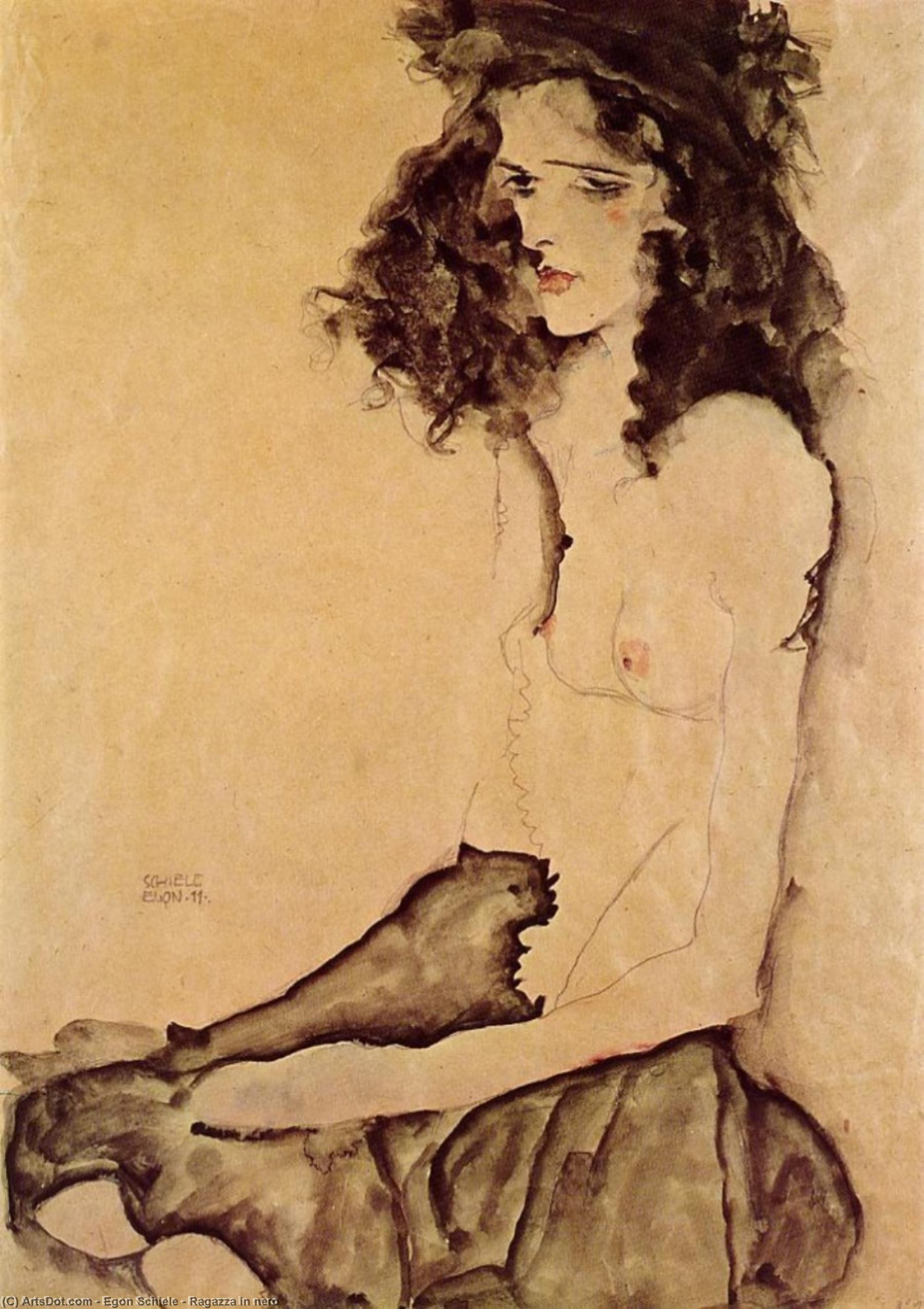
Egon Schiele’s “Ragazza in nero,” painted circa 1908-1909, stands as a haunting testament to the artist's masterful grasp of Expressionist aesthetics and his profound engagement with psychological exploration. This striking portrait captures a young woman seated on the ground, her gaze averted downwards while cradling a cat—a gesture laden with symbolic significance that speaks volumes about Schiele’s artistic vision.
Style & Technique: The painting embodies the core tenets of Expressionism, rejecting academic conventions in favor of raw emotion and subjective experience. Schiele employs bold, angular brushstrokes – characteristic of his distinctive style – to convey a palpable sense of unease and tension. Thick impasto creates textural surfaces that amplify the visual impact, mirroring the artist’s internal turmoil. The muted palette dominated by shades of black, grey, and ochre contributes to the melancholic atmosphere, emphasizing the subject's isolation.
Historical Context: Schiele emerged during Vienna’s artistic ferment at the turn of the century, a period marked by intellectual currents grappling with anxieties surrounding modernity and mortality. Influenced by artists like Edvard Munch and Gustav Klimt, Schiele sought to depict human emotion with uncompromising honesty—often confronting themes of sexuality, illness, and death. “Ragazza in nero” reflects this preoccupation with psychological depth, mirroring the broader artistic movement’s fascination with inner landscapes.
Symbolism & Emotion: The woman's downward gaze is interpreted as a reflection of introspection and vulnerability—a deliberate choice by Schiele to portray her emotional state rather than simply presenting a likeness. The cat nestled in her lap serves as a potent symbol of comfort, protection, and perhaps even maternal instinct, juxtaposed against the woman’s apparent sadness. These elements coalesce into an emotionally resonant image that captures the artist's preoccupation with themes of fragility and existential dread.
Interior Design Inspiration: “Ragazza in nero”’s subdued color palette and textural surface lend themselves beautifully to contemporary interior design schemes. Consider incorporating similar tones—deep greys, earthy browns—into living spaces to create a mood of contemplative serenity. Alternatively, reproductions of this artwork can serve as focal points within an artistic composition, adding depth and intrigue.



 Užsisakyti kopiją
 Pasidalinti
 Dalintis
 Išsamiau

 Atsisiųsti
 Panašūs eksponatai
 Rentgenogramą
 Automatinė diorama
 Skaityti daugiau






































 Stiklo variantas prieinamas tik pasirinkus dydį iki 110 cm