A Portrait of Melancholy: Egon Schiele's "Moa"
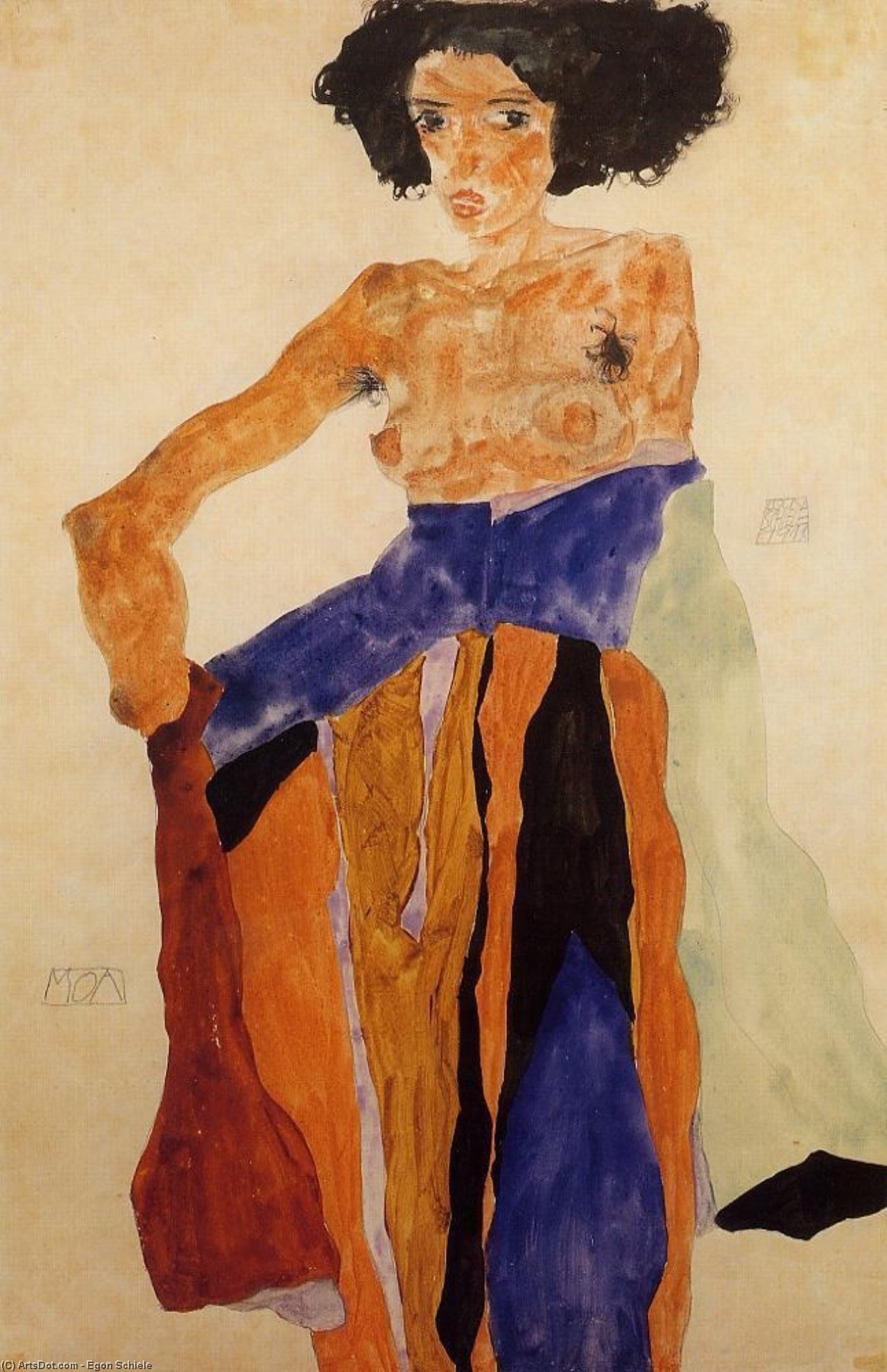
Egon Schiele’s “Moa,” painted in 1911, is not merely a depiction of a woman; it’s an intensely personal and profoundly unsettling meditation on vulnerability, loss, and the human condition. Created during a pivotal period in Schiele's tragically short career – he died at just 28 – the painting embodies the raw emotional intensity that would come to define his oeuvre. The subject, a young woman with her arms crossed in a posture of quiet contemplation, immediately draws the viewer into a space of palpable sadness. Her downward gaze and subtly downturned mouth suggest a deep introspection, perhaps even despair, reflecting the pervasive anxieties of the era.
Expressionist Techniques and Anatomical Precision
- Style: Schiele’s style is firmly rooted in Expressionism, prioritizing emotional impact over realistic representation. He achieves this through distorted forms, exaggerated features, and a deliberate rejection of idealized beauty.
- Technique: The painting showcases Schiele's mastery of oil paint, utilizing thick impasto strokes to build up texture and create a sense of physicality. His meticulous attention to anatomical detail, particularly in the rendering of the woman’s hands and face, is juxtaposed with his expressive distortions, creating a dynamic tension between observation and emotion.
- Color Palette: The muted color palette – dominated by blues, browns, and ochres – contributes significantly to the painting's melancholic atmosphere. These somber tones reinforce the sense of isolation and introspection.
Symbolism Within the Frame
Beyond the immediate portrait, “Moa” is laden with symbolic weight. The umbrella, positioned near the center-left, could represent protection against an overwhelming emotional storm or perhaps a futile attempt to shield oneself from sorrow. The presence of two indistinct figures in the background – partially obscured and seemingly detached – adds another layer of complexity, suggesting themes of loneliness, alienation, and the difficulty of genuine connection. Schiele frequently explored themes of death and decay within his work, likely influenced by the personal tragedies he experienced and the broader anxieties surrounding mortality prevalent at the time. The painting’s creation coincided with a period of significant social and political upheaval in Europe, further contributing to a sense of unease and uncertainty.
Historical Context and Schiele's Legacy
Painted in 1911, “Moa” reflects the artistic ferment of Vienna at the turn of the century. The city was a hub for avant-garde movements, including Expressionism, Secessionism, and Cubism, all seeking to challenge traditional artistic conventions. Schiele’s work, though initially met with criticism, quickly gained recognition for its unflinching honesty and emotional power. His exploration of themes such as sexuality, mortality, and the human psyche continues to resonate with viewers today. As a key figure in early 20th-century art, Schiele's influence extends far beyond his own lifetime, inspiring generations of artists who sought to capture the complexities of the human experience through bold and uncompromising vision. This hand-painted reproduction offers a unique opportunity to possess a piece of this pivotal moment in art history.



 Pirkti atspaudą
 Pasidalinti
 Dalintis
 Išsamiau

 Atsisiųsti
 Panašūs eksponatai
 Rentgenogramą
 Automatinė diorama

 Skaityti daugiau






































 Stiklo variantas prieinamas tik pasirinkus dydį iki 110 cm