Peržiūrėti realaus dydžio版 Peržiūrėti AR realybėje Pirkti rankų darbo tapybą Perejti prie skaitmeninių vaizdų Pasidalinti
Išsamiau Vadovas Pridėti į mėgstamiausius Atsisiųsti Panašūs eksponatai Rentgeno spindulių nuotrauka Automatinė diorama Statistika

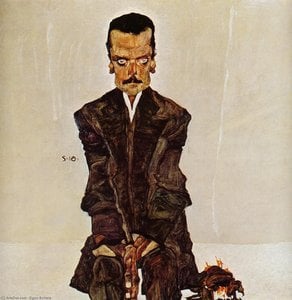
Boy (Ragazzo)

Egon Schiele’s ‘Boy (Ragazzo)’ captures youthful vulnerability and quiet intensity. This poignant drawing explores themes of adolescence, mortality, and the complexities of human emotion – a powerful glimpse into Schiele's expressive world.

Egon Šylė – Austrių ekspresionizmo dailininkas. Žiūrėkite į jo reikšmę Vienoje ir pasaulyje! Ekspresionistinio meno srovės atstovas, žinomas dėl savo psichologinės gilumo ir išraiškos.

Giclée / Meno spausdinimas

Muziejų lygio „giclée“ arba drobos spausdinimas: greita gamyba ir lankstios apdailos parinktys. ( Pirkti rankų darbo tapybą Perejti prie skaitmeninių vaizdų)

Corner sample of the P118B picture frame: lieto polistirolo detalės, 5 cm wide and 3 cm thick
P118B €10
Corner sample of the P118H picture frame: lieto polistirolo detalės, 5 cm wide and 3 cm thick
P118H €10
Corner sample of the P118W picture frame: lieto polistirolo detalės, 5 cm wide and 3 cm thick
P118W €10
Corner sample of the P438Z picture frame: lieto polistirolo detalės, 5.5 cm wide and 3.5 cm thick
P438Z €10
Corner sample of the P508JH picture frame: lieto polistirolo detalės, 7 cm wide and 3.5 cm thick
P508JH €12
Corner sample of the P508YH picture frame: lieto polistirolo detalės, 7 cm wide and 3.5 cm thick
P508YH €12
Corner sample of the P805H picture frame: lieto polistirolo detalės, 5 cm wide and 3.5 cm thick
P805H €10
Corner sample of the P805Z picture frame: lieto polistirolo detalės, 5 cm wide and 3.5 cm thick
P805Z €10
Corner sample of the P919BZ picture frame: lieto polistirolo detalės, 7 cm wide and 3.5 cm thick
P919BZ €10
Corner sample of the P919G picture frame: lieto polistirolo detalės, 7 cm wide and 3.5 cm thick
P919G €10
Corner sample of the P919XJ picture frame: lieto polistirolo detalės, 7 cm wide and 3.5 cm thick
P919XJ €10
Corner sample of the P959ZH picture frame: lieto polistirolo detalės, 5 cm wide and 3 cm thick
P959ZH €10
Corner sample of the P968JZ picture frame: lieto polistirolo detalės, 6 cm wide and 4 cm thick
P968JZ €12
Corner sample of the W106C picture frame: solidus medžio

**Improved version:**
solidus medis, 5 cm wide and 3 cm thick
W106C €8
Corner sample of the W218G picture frame: solidus medžio

**Improved version:**
solidus medis, 5 cm wide and 3 cm thick
W218G €10
Corner sample of the W218JH picture frame: solidus medžio

**Improved version:**
solidus medis, 5 cm wide and 3 cm thick
W218JH €8
Corner sample of the W218Y picture frame: solidus medžio

**Improved version:**
solidus medis, 5 cm wide and 3 cm thick
W218Y €10
Corner sample of the W307PJ picture frame: solidus medžio

**Improved version:**
solidus medis, 6 cm wide and 3 cm thick
W307PJ €10
Corner sample of the W316G picture frame: solidus medžio

**Improved version:**
solidus medis, 6 cm wide and 3 cm thick
W316G €10
Corner sample of the W316PJ picture frame: solidus medžio

**Improved version:**
solidus medis, 6 cm wide and 3 cm thick
W316PJ €8
Corner sample of the W316Y picture frame: solidus medžio

**Improved version:**
solidus medis, 6 cm wide and 3 cm thick
W316Y €10
Corner sample of the W398PJ picture frame: solidus medžio

**Improved version:**
solidus medis, 5 cm wide and 3 cm thick
W398PJ €8
Corner sample of the W4111J picture frame: solidus medžio

**Improved version:**
solidus medis, 6.5 cm wide and 3.5 cm thick
W4111J €10
Corner sample of the W500HY picture frame: solidus medžio

**Improved version:**
solidus medis, 7 cm wide and 5 cm thick
W500HY €15
Corner sample of the W500JH picture frame: solidus medžio

**Improved version:**
solidus medis, 7 cm wide and 5 cm thick
W500JH €15
Corner sample of the W692G picture frame: solidus medžio

**Improved version:**
solidus medis, 8 cm wide and 4 cm thick
W692G €12
Corner sample of the W849H picture frame: solidus medžio

**Improved version:**
solidus medis, 5 cm wide and 3 cm thick
W849H €8
Corner sample of the W940BG picture frame: solidus medžio

**Improved version:**
solidus medis, 7.5 cm wide and 4.5 cm thick
W940BG €15
Corner sample of the W953PJ picture frame: solidus medžio

**Improved version:**
solidus medis, 6 cm wide and 3.5 cm thick
W953PJ €8

Standartinis dydis
pagal užsakymą
CM
INCH

Pasirinkite iš mūsų nustatytų dydžių, atitinkančių originalaus meno kūrinio proporcijas.

plotis
aukštis

Įveskite jums reikiamą plotį ir aukštį, kad atvaizdas derėtų prie jūsų rėmo ar sienos. Spausdiną galima tik sumažinti, bet nepadidinti virš originalaus paveikslėlio dydžio, todėl keičiant proporcijas, dalis vaizdo prarandama. Prieš spausdinimą atsiųsime jums skaitmeninį maketą patvirtinimui. Šioje puslapio nuotraukoje matomas pjūvis nėra tikslus – jį rodo tik maketas.

Pristatymas visame pasaulyje () per 2 weeks, o ne įprastas 4/5 savaičių laikotarpis. (28 spalis)

Nemokamas greitasis pristatymas visame pasaulyje
Aukštos kokybės lininis drobė
Pilnas siuntimo draudimas
Muitinės mokesčių grąžinimo garantija
Tikro spalvų atitikimo garantija
100 dienų grąžinimo politika (tik esant įtaigoms)
100% pinigų grąžinimo garantija
Nuolaida dideliems užsakymams

Visos kainos suma

€ 60

Boy (Ragazzo)

Giclée / Meno spausdinimas

Reprodukcijos matmenys

-

Bendroji kaina

€ 60

Trumpa informacija

  • Notable elements: Wooden chair, coat
  • Title: Boy (Ragazzo)
  • Year: 1910
  • Medium: Drawing
  • Subject or theme: Youth, Portraiture

Karo viktorina

Kiekviename klausime yra tik vienas teisingas atsakymas.

Klausimas 1:
What is the primary subject of Egon Schiele’s ‘Boy (Ragazzo)’?
Klausimas 2:
The wooden chair in the painting contributes to which element of the scene?
Klausimas 3:
Considering Egon Schiele's artistic style, what is a likely interpretation of ‘Boy (Ragazzo)’?
Klausimas 4:
In what year was ‘Boy (Ragazzo)’ likely created, based on the provided information?
Klausimas 5:
Egon Schiele’s work often reflects themes of mortality and psychological distress. Which of the following best describes this influence on his art?

A Portrait of Transient Emotion

Egon Schiele's “Boy (Ragazzo),” painted in 1910, isn’t merely a depiction of youth; it’s a raw, intensely personal exploration of vulnerability and the precarious nature of existence. The drawing, rendered with Schiele’s signature agitated lines and unsettlingly direct gaze, captures a young boy seated on a simple wooden chair – an arrangement that immediately evokes a sense of quiet contemplation, yet simultaneously hints at underlying unease. The subject, though youthful in appearance, possesses a profound stillness, almost as if he's holding his breath, bracing himself against an unseen force. This isn’t the idealized portraiture of the era; instead, Schiele presents us with an honest, unvarnished glimpse into the psyche of a young man grappling with something deeply felt.

Boy (Ragazzo) by Egon Schiele

The Language of Line and Shadow

Schiele’s technique is immediately arresting. He employs a rapid, almost frantic application of charcoal – or perhaps crayon, given its texture – to build up the form. The lines aren't smooth or polished; they are jagged, broken, and imbued with an urgent energy. Notice how he uses hatching and cross-hatching to create depth and volume, particularly in the boy’s jacket, which adds a layer of complexity to the composition. The shadows are not gentle gradations but rather sharp, defined areas that heighten the sense of drama and isolation. The boy's face is rendered with an almost skeletal quality, emphasizing his youth and vulnerability. This deliberate roughness reflects Schiele’s Expressionist approach – he wasn’t interested in replicating reality; he sought to convey feeling, emotion, and psychological truth.

A Reflection of Personal Turmoil

To understand “Boy (Ragazzo),” it's crucial to consider the context of Egon Schiele’s life. Born in Vienna in 1890, his early years were marked by illness, loss, and a profound sense of instability. The death of his father from syphilis at the age of fourteen deeply impacted him, fueling an obsession with mortality and the fragility of human existence – themes that permeate much of his work. The boy depicted here isn’t simply a portrait; it's a projection of Schiele’s own anxieties and fears, a visual manifestation of the emotional turmoil he experienced throughout his life. The drawing can be interpreted as a meditation on childhood innocence lost, or perhaps a premonition of the hardships to come.

Symbolism and Emotional Resonance

The simple wooden chair itself is significant. It’s an ordinary object, yet it provides a grounding element within the otherwise unsettling composition. It suggests a moment of respite, a brief pause in the boy's internal struggles. The boy’s posture – slightly hunched, with his hands clasped loosely – conveys a sense of introspection and perhaps even apprehension. His gaze is averted, suggesting a reluctance to confront whatever burdens he carries. Schiele masterfully uses these subtle details to create an image that resonates deeply with the viewer, evoking feelings of empathy, sadness, and a poignant awareness of human vulnerability. The drawing’s power lies not in its literal representation but in its ability to tap into universal emotions – loneliness, fear, and the yearning for connection.

For a high-quality reproduction of “Boy (Ragazzo),” visit WahooArt.com to experience this emotionally charged masterpiece in stunning detail.

Klausimai ir atsakymai

Kokia yra „Boy (Ragazzo)“ – Egon Šylė technika ir kūrybos data?

„Boy (Ragazzo)“ sukurtas 1910 m. naudojant Acrylic On Canvas techniką. Medžiaga ir data nurodo, kaip ir kada buvo sukurtas originalas.

Ar „Boy (Ragazzo)“ – Egon Šylė yra portretinė, peisžinio tipo ar kvadratinė kompozicija?

„Boy (Ragazzo)“ formatas yra Portrait. Tai padeda planuojant, kur būtų patalpinta reprodukcija.

Kokią spalvų harmoniją išpriešia „Boy (Ragazzo)“ – Egon Šylė?

„Boy (Ragazzo)“ – Egon Šylė spalvos于demonstruoja Unified Palette harmoniją. Harmonija apibūdina, kaip spalvos dera viena su kita.


Autoriaus biografija

Egon Schiele

Austrijos pozicija dviejų pasaulinio karo horizonte buvo labai abejojanti: vienu metu ji buvo šiek tiek iš Šiaurės į rytus, lengvai įsitikinusi veiksmų vyrai. Mažėjęs šalis po 1918 m., beveik visiškai neišplitusi tarptautiniu pasauliu buvo lengvai įvykdinta Hitlerio Reichui 1938 m.; meno srityje tai reiškė kad modernizmo istorija buvo išvykstanti nuo Šiaurės iki pietų, su pagrindiniu dėmesiu į formą. Vokelių šiek tiek pripažino ekspresionizmą kaip svarbų meno srovę; jis buvo vienas iš žymiausius austrių artistas XX amžiaus pradžioje – kartu su Gustavu Klimtu ir Oskar Kokoschka išvykę į Vieną buvo laikomas vienu iš Žyduvo šimtmečio svarbiausių vizualinių menininkų.

Gyvenimas

Egonas Šylė gimė 1890 m. vasario 3 d. Tulne, Austrijoje. Jo tėvas Adolfas Šylė buvo Tulno geležinkelio stoties direktorius ir gimė 1851 m. Vienoje Adolfo Šyly tevai turėjo tris jaunesnes seseris: Elvirą, Melaniją ir Gertrūdą. Elvira mirė vaikyste dėl gimtinių sifiliso. Jo tėvas buvo užsikrėtęs sifiliu įsimėlynėje savo jaunystės metais po vienos jo naujosios žmonos išėjimo iš kambario.

Meno vystymasis

Šylė mokytojo Christian Griepenkerl įtaką išgyveno Vienoje 1907 m. ir G. Klimtas tapo jo svarbiu rėmėju. Šylė paliko akademiją 1906 m., nes jos mokymo metodai buvo labai konservatyvus, ir įkūrė Naują austrių dailės grupę 1909 m. Grupėje vyravo ekspresionistinė estetika, kuri iššūkiant šiuolaikinėms kultūros normas.

Žymūs kūriniai

Šylė buvo vienas iš žymiausius austrių artistas XX amžiaus pradžioje – kartu su Gustavu Klimtu ir Oskar Kokoschka išvykę į Vieną buvo laikomas vienu iš Žyduvo šimtmečio svarbiausių vizualinių menininkų. Šylė buvo ekspresionizmo meno srovės atstovas.

Žymūs veiksniai

Šylė buvo žinomas dėl savo iššūkiantį įžiūrą į pasaulio problemas ir šiuolaikinę estetika, kuri iššūkiant šiuolaikinėms kultūros normas. Šylė buvo ekspresionizmo meno srovės atstovas.

Egon Šylė

Egon Šylė

1890 - 1918 , Austrija

Trumpa informacija

  • Artistic Movement Or Style: Ekspresionizmas
  • Artists Who Influenced This Artist: ['Gustavas Klimtas']
  • Date Of Birth: 1890 m.
  • Date Of Death: 1918 m.
  • Full Name: Egon Schiele
  • Nationality: Austras
  • Notable Artworks:
    • Savęs portretas su fizižalis
    • Porą įemčianti
    • Žemės apėjimų kraštovaizdis
  • Place Of Birth: Tulnas, Austrija
Tyrinėkite meno kūrinius, suskirstytus pagal temas, stilius ir savybes.