Muziejų lygio „giclée“ arba drobos spausdinimas: greita gamyba ir lankstios apdailos parinktys. ( Pirkti rankų darbo tapybą Perejti prie skaitmeninių vaizdų)





























Pasirinkite iš mūsų nustatytų dydžių, atitinkančių originalaus meno kūrinio proporcijas.

Įveskite jums reikiamą plotį ir aukštį, kad atvaizdas derėtų prie jūsų rėmo ar sienos. Spausdiną galima tik sumažinti, bet nepadidinti virš originalaus paveikslėlio dydžio, todėl keičiant proporcijas, dalis vaizdo prarandama. Prieš spausdinimą atsiųsime jums skaitmeninį maketą patvirtinimui. Šioje puslapio nuotraukoje matomas pjūvis nėra tikslus – jį rodo tik maketas.
Pristatymas visame pasaulyje () per 2 weeks, o ne įprastas 4/5 savaičių laikotarpis. (8 lapkritis)
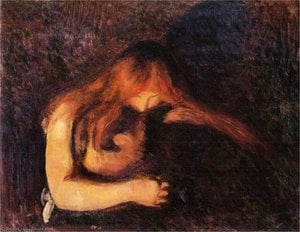
Vampire
Reprodukcijos matmenys
Edvard Munch's "Vampire," painted in 1894, isn’t merely a depiction of a nocturnal scene; it’s a visceral plunge into the artist’s own tormented psyche. This expressionist masterpiece, rendered in stark black and white photography, captures a moment suspended between terror and an unsettling fascination – a visual embodiment of Munch's lifelong struggle with mortality, illness, and the pervasive sense of dread that haunted his existence. The photograph itself, a faithful reproduction of the original painting, immediately draws the viewer into its shadowed world, hinting at the emotional intensity contained within.
The composition is dominated by a figure lying prone, their head turned away from the viewer, seemingly lost in contemplation or perhaps confronting an unseen horror. Two birds, wings outstretched and poised mid-flight, flank this central figure – symbols of both predatory instinct and fleeting hope. Their placement isn’t casual; they actively participate in the scene's unsettling drama, suggesting a constant threat lurking just beyond perception. The stark contrast between light and shadow is crucial to Munch’s technique, creating an atmosphere of palpable unease. He employed a limited palette, emphasizing the dramatic interplay of tones to heighten the emotional impact, foregoing detailed rendering for expressive brushstrokes that convey raw feeling.
To understand “Vampire,” one must delve into the deeply personal context of Munch’s life. The painting emerged during a period of intense psychological distress, fueled by the early deaths of his mother and sister from tuberculosis – experiences that irrevocably shaped his artistic vision. These losses weren't simply biographical events; they became foundational to his exploration of themes like sickness, death, and the fragility of human existence. His father’s strict religious beliefs further contributed to a sense of unease, creating an environment where emotional expression was often suppressed, leading Munch to find solace and release through art.
The figure in "Vampire" is widely interpreted as a self-portrait, embodying Munch's own anxieties and vulnerabilities. The averted gaze suggests a retreat from the world, a desire to escape the horrors he perceived within himself and around him. The birds, often associated with both life and death, could represent the inescapable forces of nature or perhaps even the predatory aspects of human relationships – mirroring the artist’s own feelings of being hunted by his demons.
Munch's use of symbolism is deliberately ambiguous, inviting multiple interpretations. The “vampire” itself isn’t explicitly depicted; instead, it’s implied through the atmosphere of dread and the predatory birds. This deliberate vagueness allows viewers to project their own fears and anxieties onto the scene, making "Vampire" a profoundly personal experience. The painting exemplifies key elements of Expressionism – an artistic movement that sought to convey subjective emotions rather than objective reality. Munch’s distorted forms, exaggerated lines, and intense color palette (though rendered in monochrome here) are all designed to evoke a powerful emotional response.
Furthermore, the photograph's stark black and white treatment amplifies the painting's inherent drama. The absence of color forces the viewer to focus on the composition, line, and texture – elements that contribute significantly to the work’s unsettling atmosphere. The technique mirrors Munch’s broader exploration of light and shadow as metaphors for psychological states, highlighting the interplay between darkness and illumination within the human soul.
"Vampire" remains a hauntingly relevant artwork, continuing to resonate with audiences today. It's not a comfortable image; it confronts us with our own fears about mortality, illness, and the darker aspects of human nature. As a reproduction offered by WahooArt.com, this piece provides an exceptional opportunity to experience Munch’s genius firsthand, bringing his intensely personal vision into your home or studio. The meticulous detail captured in the photograph ensures that every nuance of the original painting is faithfully reproduced, allowing you to appreciate the artist's masterful technique and profound emotional depth.
„Vampire“ galima įsigyti kaip rankomis dažyta aliejaus reprodukcija ant lininio drobos. Užsakymą galite padaryti specialioje Rankų darbo aliejinis reprodukcija puslapio, pasirinkę tinkamą dydį.
Kūrinio „Vampire“ – Edvardas Munkas stilius – Expressionist Painting. Ši klasifikacija leidžia šį darbą įtraukti į bendrą susijusių menininkų ir kūrinių kontekstą.
Living Room erdvėje „Vampire“ siūloma spausdinti Large dydžiu.


1863 - 1944 , Švedija

Explore the profound artistry of black and white photography. From historical mastery to the interplay of light and shadow, discover how monochrome captures timeless emotion and form through a sophisticated lens of art history.

Elevate your most cherished memories with WahooArt’s bespoke service. We transform your personal photos into breathtaking, hand-painted black & white oil masterpieces. Experience museum-quality craftsmanship and timeless elegance for your private collection. Discover the art of legacy.
 Peržiūrėti realaus dydžio版
 Pasidalinti
 Dalintis
 Išsamiau
 Vadovas

 Atsisiųsti
 Panašūs eksponatai
 Rentgeno spindulių nuotrauka
 Automatinė diorama
 问答
问答
 Statistika

 Skaityti daugiau









 Stiklo variantas prieinamas tik pasirinkus dydį iki 110 cm