A Window into the Soul: Exploring Munch’s Fauvist-Inflected Interior
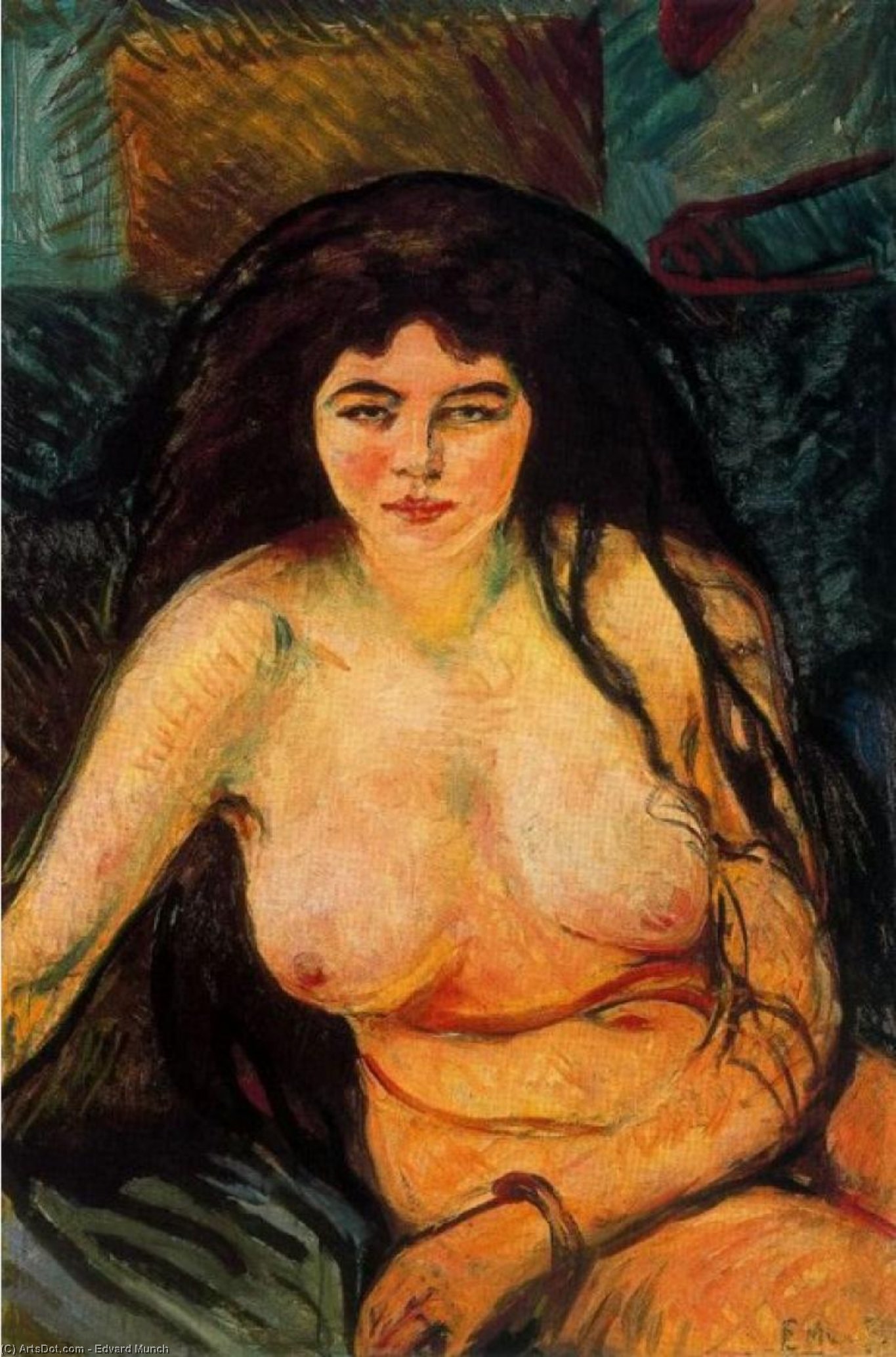
This striking work by Edvard Munch offers a compelling glimpse into the artist's ongoing exploration of the human condition, presented through a lens surprisingly divergent from his most famous Symbolist creations. While instantly recognizable as a product of Munch’s unique vision, this piece demonstrates a fascinating engagement with the burgeoning Fauvist movement – a stylistic detour that amplifies the emotional intensity at its core. It is a testament to Munch's willingness to experiment and adapt while remaining true to his deeply personal themes.
Decoding the Language of Color & Form
The painting’s most immediate characteristic is its bold, unapologetic use of color. This isn’t the naturalistic palette of academic tradition; instead, Munch employs intensely saturated hues – a hallmark of Fauvism – to express emotion rather than simply depict reality. Notice how colors are *felt* rather than seen: skin tones aren't rendered realistically but become emotional signifiers, contributing to the overall visceral impact.
- Brushwork & Texture: Loose, gestural brushstrokes build up a rich texture and contribute to the dynamism of the composition. The lines writhe and flow, mirroring the internal turmoil often associated with Munch’s work.
- Flattened Perspective: The deliberately flattened perspective prioritizes expressive quality over illusionistic depth, further intensifying the emotional resonance.
- Fauvist Influence & Personal Style: While clearly influenced by Fauvism's liberation of color, Munch doesn’t fully abandon his own stylistic tendencies. A distinct psychological weight remains, anchoring the work within his established artistic identity.
Introspection and the Vulnerable Figure
The central figure – a nude woman seated in an interior space – commands immediate attention through her direct gaze. This isn’t a confrontational stare but one imbued with vulnerability, quiet introspection, and perhaps even a plea for understanding. The nude form, a recurring motif throughout art history, is here stripped of idealized beauty; it feels raw, exposed, and profoundly human.
The composition focuses intently on the figure, contrasting her with a somewhat chaotic background. This juxtaposition draws our eye to her internal state, suggesting she exists within – or perhaps *against* – a turbulent world. The draped fabric adds an element of intimacy and concealment, hinting at layers of emotional complexity beneath the surface.
A Life Marked by Loss: Historical Context
To truly understand Munch’s work, one must acknowledge the profound tragedies that shaped his life. The early deaths of his mother and sister to tuberculosis, coupled with a family history of mental illness, instilled within him a lifelong preoccupation with mortality, sickness, and psychological distress. While this painting doesn't explicitly depict these traumas, they undoubtedly inform its emotional undercurrent.
Munch was also deeply influenced by the philosophical currents of his time, particularly the nihilism espoused by Hans Jæger, who encouraged artistic exploration of inner turmoil. This piece can be seen as a continuation of that exploration – a visual manifestation of anxieties and vulnerabilities inherent in the human condition.
It’s a testament to art's power to transform personal suffering into universal expression.
Emotional Resonance & Contemporary Appeal
This work transcends mere representation; it is an evocation of feeling. The bold colors, expressive brushstrokes, and direct gaze combine to create a powerful emotional impact that resonates deeply with viewers. It speaks to timeless themes of loneliness, vulnerability, the search for meaning, and the complexities of human existence – themes that remain profoundly relevant today.
For collectors and interior designers, this piece offers a striking blend of historical significance and contemporary aesthetic appeal. Its vibrant colors and dynamic composition would make a bold statement in any space, while its underlying emotional depth invites contemplation and conversation. A high-quality reproduction promises to bring not just visual interest but also a sense of artistic weight and psychological resonance to any collection or interior design scheme.