A Moment Frozen in Expressionist Angst
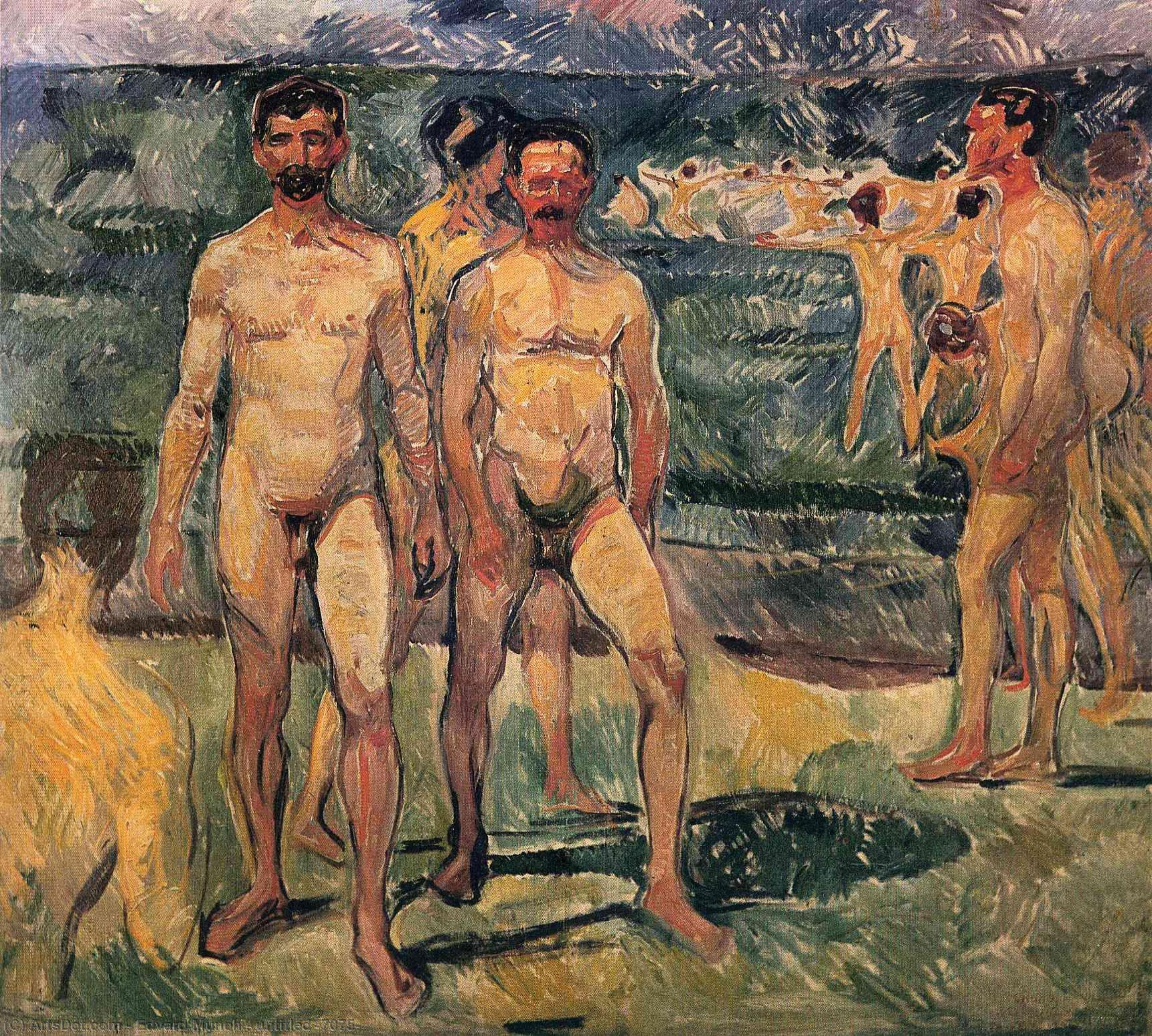
Edvard Munch’s “untitled (7075)” presents a striking tableau of nude male figures inhabiting a grassy expanse, capturing an arresting snapshot of human vulnerability and primal connection. The photograph depicts twelve men standing together outdoors, engaged in postures that convey both playful interaction and contemplative stillness – a scene brimming with unspoken emotion.
Munch’s masterful use of Expressionist technique—characterized by bold brushstrokes, distorted forms, and jarring color palettes—immediately establishes the painting's dramatic intensity. The figures are rendered without clothing, emphasizing their exposed physicality and mirroring the artist’s preoccupation with themes of mortality and psychological disturbance. The palette leans heavily into reds and yellows, hues often associated with passion, fear, and impending doom, contributing to a palpable sense of unease.
The Roots of Psychological Landscape
Born in Adelsbruk, Sweden, Munch's formative years were profoundly shaped by familial tragedy – the untimely deaths of his mother and sister from tuberculosis instilled within him an enduring fascination with illness and loss. These experiences weren’t merely biographical; they became the bedrock upon which Munch constructed his artistic vision, propelling him to explore the depths of human consciousness and confronting anxieties surrounding existence itself.
His father's staunch religious convictions further fueled a pervasive dread that permeated Munch’s worldview, influencing not only his personal life but also informing the symbolic language he employed in his art. Unlike many artists of his time who sought to depict idealized beauty or heroic narratives, Munch deliberately rejected conventional aesthetics, opting instead for raw emotion and unsettling imagery—a conscious rebellion against societal norms.
Symbolism Beneath the Surface
“untitled (7075)” transcends mere representation; it operates on a symbolic level, mirroring Munch’s own internal struggles. The figures' nakedness symbolizes vulnerability and exposure, confronting viewers with uncomfortable truths about human fragility. The expansive grassland serves as a backdrop for this confrontation, representing the vastness of existence and highlighting the insignificance of individual concerns against the forces of nature.
The painting’s emotional impact is undeniable—a visceral portrayal of anxiety and apprehension that resonates deeply within the viewer's psyche. Munch achieved this effect through masterful manipulation of color and form, creating a visual experience that transcends mere observation and invites contemplation on themes of fear, grief, and the inescapable awareness of death.
A Legacy Enduring Through Reproduction
The Munch Museum in Oslo showcases the breadth of Munch’s artistic output, including “untitled (7075)” alongside numerous prints and sculptures—a testament to his enduring influence on Expressionism. Reproductions at WahooArt.com offer a chance to experience this iconic artwork firsthand, capturing its haunting beauty and conveying its profound psychological depth.



 Užsisakyti kopiją
 Pasidalinti
 Dalintis
 Išsamiau

 Atsisiųsti
 Panašūs eksponatai
 Rentgenogramą
 Automatinė diorama
 Skaityti daugiau






































 Stiklo variantas prieinamas tik pasirinkus dydį iki 110 cm