Introduction to Edvard Munch and Expressionism
Edvard Munch (1863-1944) was a Norwegian painter who is best known for his contribution to the Expressionist movement. Expressionism is a modernist movement that emerged in the early 20th century, characterized by its emotional intensity and bold use of color. The movement was not limited to painting but included influential collagists and sculptors as well.
Madonna: A Masterpiece of Expressionism
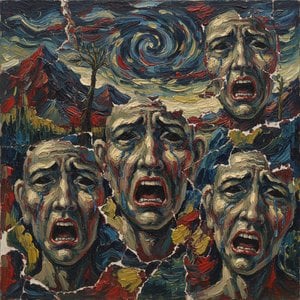
Madonna is a painting by Edvard Munch, created in 1895-1902. The painting depicts a woman with an expression of ecstasy or pain, with bold colors and abstract forms that convey a sense of emotional intensity. The woman's face is framed by long red hair, which creates a striking contrast against the muted background. The use of color and form in this painting creates a sense of movement and energy that is both powerful and unsettling.
Interpretation of Madonna
Madonna has been interpreted in many ways, including as a representation of the Virgin Mary, a symbol of sexuality, and an expression of existential anxiety. The painting's ambiguity is one of its strengths, allowing viewers to project their own meanings onto the work. Munch himself described the painting as "a study in hatred," suggesting that it reflects his own emotional struggles.
Madonna's Legacy
Madonna is considered one of Edvard Munch's most important works and a masterpiece of expressionism. The painting has been widely exhibited and reproduced, and its influence can be seen in the work of many later artists. Today, Madonna remains a powerful and thought-provoking work that continues to inspire and challenge viewers.
Conclusion
Edvard Munch's Madonna is a masterpiece of expressionism that showcases the artist's emotional intensity and bold use of color. The painting's ambiguity allows viewers to project their own meanings onto the work, making it a powerful and thought-provoking work that continues to inspire and challenge viewers today.
Where to Find Handmade Oil Paintings Reproductions of Madonna
If you are interested in purchasing a handmade oil painting reproduction of Madonna, look no further than WahooArt.com. Our team of skilled artists creates high-quality reproductions that capture the beauty and emotion of the original work. Browse our collection today to find the perfect addition to your art collection.
问答 (or more naturally for a website heading): Klausimai ir atsakymai
Kaip „Madonna“, autorius – Edvardas Munkas sujungia Expressionist Movement su autoriaus gimtinė?
„Madonna“ sujungia Expressionist Movement stilių su Švedija, atspindėdama kūrėjo gimimo vietą.
Kaip galiu peržiūrėti „Madonna“, autorius – Edvardas Munkas kaip diorama?
Kūrinį „Madonna“, autorius – Edvardas Munkas galima peržiūrėti kaip diorama (slaidų rulio) formatą puslapyje Diaporama.
Kiek metų buvo Edvardas Munkas, kai sukūrė „Madonna“ 1895 m.?
Edvardas Munkas sukūrė „Madonna“ būdamas 32 metų amžiaus.ت Artistas gimė 1863, o kūrinys datuojamas 1895 metais.
Ar Edvardas Munkas kūrinys „Madonna“ yra viešosios nuoslegos, ir kodėl?
Autorinės teisės statusas kūriniui „Madonna“ – pripa принадле belongs to the public domain – jo autorinė teisė pasibaigusi – nustatomas remiantis to, kad paveikslas buvo sukurtas po to, kai menininkas mirė 1944 m.
Kokia technika ir stilius charakterizuoja „Madonna“, autorius – Edvardas Munkas?
„Madonna“ sukurta naudojant Acrylic On Canvas, Expressionist Movement stiliuje.
Kokią emociją sukelia „Madonna“, autorius – Edvardas Munkas?
„Madonna“ kūryboje Dramatic nuotaika lydi Melancholic emociją.
Kokią emociją perteikia „Madonna“, autorius – Edvardas Munkas?
„Madonna“ siejama su Melancholic jausmu. Emocinis tonas aprašo įspūdį, kurį sukelia kūrinys.
Kokio vietos išdėstymo formatas „Madonna“, autorius – Edvardas Munkas tinka?
Savo Portrait forma „Madonna“ reprodukcija siūloma Living Room kambariui.



 Peržiūrėti realaus dydžio版
 Perjungti į spausdinimą
 Siųsti
 Dalintis
 Išsamiau
 Vadovas

 Atsisiųsti
 Panašūs eksponatai
 Rentgeno spindulių nuotrauka
 Diaporama
 Statistika

 Rodyti daugiau






































 Stiklo variantas prieinamas tik pasirinkus dydį iki 110 cm