The Intensity of Self: David Bomberg's Portraiture
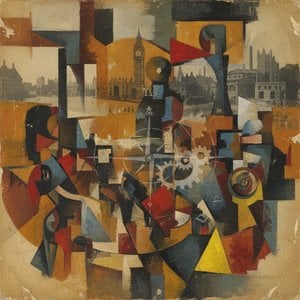
To stand before a self-portrait by David Bomberg is to encounter not merely an image, but a profound confrontation with the artist’s own gaze. This 1937 work, titled Self Portrait (David), pulses with an almost visceral energy. The subject matter—the artist himself—is rendered with a striking immediacy that pulls the viewer into the intimate space of creation. Bomberg, a key figure among the 'Whitechapel Boys,' channeled the restless spirit of early 20th-century London onto his canvas. Here, the self is presented not as a polished ideal, but as a study in raw, vibrant existence.
A Symphony in Red and Shadow
Technically, the painting commands attention through its audacious use of color. The background, an overwhelming field of deep, saturated red, acts less like a backdrop and more like an emotional atmosphere—a curtain drawn around the figure. This bold chromatic choice immediately establishes a dramatic tension that permeates every inch of the composition. Against this fiery expanse, the man’s face emerges, illuminated by a masterful interplay of light and shadow. The artist has enveloped his form in what appears to be a rich red robe or garment, creating a powerful echo between the subject's attire and the surrounding void. This deliberate repetition of color unifies the piece while simultaneously heightening the contrast that defines the portrait’s drama.
Historical Echoes and Artistic Lineage
Bomberg’s career was marked by an absorption of major artistic movements, from the structured lessons learned under Walter Sickert to the revolutionary currents of Cubism. This Self Portrait stands as a testament to his mature style—a place where academic training meets raw emotional outpouring. While some of his contemporaries explored abstraction or narrative scenes, Bomberg often returned to the figure, grounding his avant-garde explorations in palpable human presence. The painting feels both deeply rooted in the tradition of portraiture and startlingly modern in its chromatic intensity, reflecting a pivotal moment in British art history.
Emotional Resonance for the Modern Collector
For those who collect art not just for beauty but for narrative weight, this piece offers deep contemplation. The bold color scheme ensures that it functions as a powerful focal point in any interior space, lending an air of sophisticated drama. It speaks to themes of identity, visibility, and the intense act of self-examination. Owning a reproduction of this work allows one to bring home a piece charged with such palpable artistic struggle and vibrant life force. It is art that does not whisper; it resonates, demanding that you pause, look closer, and engage with the compelling spirit captured by David Bomberg.
问答 (or more naturally for a website heading): Klausimai ir atsakymai
Kokia spalva dominuoja „Self Portrait (David)“, autorius – Davidas Bombergas kompozicijoje?
Dominuojanti „Self Portrait (David)“, autorius – Davidas Bombergas spalva yra Brown (#942f11).
Kaip galiu peržiūrėti „Self Portrait (David)“, autorius – Davidas Bombergas reprodukciją?
Norėdami peržiūrėti „Self Portrait (David)“, autorius – Davidas Bombergas reprodukciją, atidarykite kūrinio Peržiūra puslapį.
Kokios yra „Self Portrait (David)“, autorius – Davidas Bombergas proporcijų ir kokio dydžio?
„Self Portrait (David)“ formatas yra Portrait, o originalo matmenys yra 61 x 51 cm. Abu šie duomenys yra naudingi planuojant reprodukciją.



 Peržiūrėti realaus dydžio版
 Pirkti rankomis tapytą reprodukciją
 Siųsti
 Dalintis
 Išsamiau
 Vadovas

 Atsisiųsti
 Panašūs eksponatai
 Rentgeno spindulių nuotrauka
 Diaporama
 Statistika


 Rodyti daugiau






































 Stiklo variantas prieinamas tik pasirinkus dydį iki 110 cm