

Šiame puslapyje rodomas meno kūrinys yra saugomas autorių teisių įstatymais, todėl neturime teisės legaliai kurti ar parduoti jo identiškos reprodukcijos. Ši apsauga užtikrinama remiantis tokiais tarptautiniais susitarimais kaip Bernės konvencija ir pagal nacionalines įstatymų nuostatas, įskaitant tas, kurias nurodo JAV autoriškos teisės įstatymas – 17-asis skyrius.
Šis metodas visiškai atitinka autorių teises, nes jame nėra saugomo kūrinio kopijavimo ar dubliavimo. Tai yra kūrybinė reinterpretacija – naujas paveikslas, kurį įkvėpė originalas, tačiau kuris nėra jo identiškas.
Muziejų lygio „giclée“ arba drobos spausdinimas: greita gamyba ir lankstios apdailos parinktys. ( Pirkti rankų darbo tapybą Perejti prie skaitmeninių vaizdų)





























Pasirinkite iš mūsų nustatytų dydžių, atitinkančių originalaus meno kūrinio proporcijas.

Įveskite jums reikiamą plotį ir aukštį, kad atvaizdas derėtų prie jūsų rėmo ar sienos. Spausdiną galima tik sumažinti, bet nepadidinti virš originalaus paveikslėlio dydžio, todėl keičiant proporcijas, dalis vaizdo prarandama. Prieš spausdinimą atsiųsime jums skaitmeninį maketą patvirtinimui. Šioje puslapio nuotraukoje matomas pjūvis nėra tikslus – jį rodo tik maketas.
Pristatymas visame pasaulyje () per 2 weeks, o ne įprastas 4/5 savaičių laikotarpis. (10 lapkritis)
Alaïa Fashion Drawing
Reprodukcijos matmenys
Claude Parent’s 2016 “Alaïa Fashion Drawing” isn't merely a depiction of a dress; it’s a distilled essence of modernism, a geometric meditation on form and movement. The drawing immediately commands attention with its stark simplicity – a grayscale world dominated by the assertive presence of Alaïa’s design. It feels both intensely contemporary and deeply rooted in Parent’s pioneering architectural philosophy, particularly his concept of the “Oblique Function,” which sought to liberate architecture from rigid right angles and embrace dynamic, flowing spaces. The image isn't about replicating a photograph; it’s an interpretation, a reduction to its most essential elements – line, shape, and contrast – mirroring Parent’s approach to designing buildings that responded intuitively to the human body in motion.
Understanding this drawing requires acknowledging Claude Parent's broader artistic vision. He wasn’t simply an architect; he was a theorist who questioned conventional design principles, advocating for architecture that anticipated and accommodated human movement. This philosophy is powerfully reflected in the “Alaïa Fashion Drawing.” The dress isn’t just clothing; it’s a study in dynamic form – a visual representation of how a garment can interact with the body in motion. The diagonal line, a recurring motif in Parent's architectural work, symbolizes this fluidity and suggests a continuous, flowing movement.
His background as an apprentice under Ionel Schein, coupled with his early involvement in the Espace group – a collective of artists exploring radical new ideas about space and form – profoundly shaped his approach to design. Parent’s work consistently challenged established norms, pushing boundaries and seeking innovative solutions that prioritized human experience. The drawing embodies this spirit of experimentation and intellectual rigor.
The deliberate use of the diagonal line carries a potent symbolic weight. It can be interpreted as representing disruption, fragmentation, or even a sense of instability – mirroring Parent’s critique of rigid architectural forms. However, it also suggests dynamism and forward momentum, reflecting his belief that architecture should respond to human movement. The simplified representation of the figure itself contributes to this emotional resonance; by stripping away extraneous details, Parent focuses on the essential form, inviting viewers to contemplate the underlying structure and principles at play.
The drawing’s overall effect is one of quiet intensity – a powerful statement about design, movement, and the relationship between form and function. It's not an invitation to romanticize fashion; rather, it’s a rigorous exploration of geometric principles and their application to visual representation.
Created in 2016, this drawing represents a late-career work for Claude Parent, building upon his decades of architectural innovation. It's significant not just as a standalone piece but as a testament to his enduring influence on modern design. Parent’s legacy extends far beyond architecture; his ideas have resonated with artists and designers across various disciplines. The “Alaïa Fashion Drawing” serves as a compelling example of how his principles – emphasizing dynamism, geometric precision, and a critical engagement with established norms – can be applied to seemingly disparate fields.
Further research into Parent’s work reveals a consistent thread of intellectual curiosity and a relentless pursuit of innovative design solutions. The drawing stands as a powerful reminder of his unique vision and its lasting impact on the world of art and architecture.
„Alaïa Fashion Drawing“ – Klodas Parentas technika – Acrylic On Paper, kūrybinė data – 2016.
„Alaïa Fashion Drawing“ – Klodas Parentas puslapio Statistika statistika rodo viešųjų apsilankymų duomenis: šio kūrinio mėnesinius apsilankymus, palyginimą su daugiausia peržiūrėtomis šio autoriaus dalimis bei lankytojų kilmės regionus.
„Alaïa Fashion Drawing“ kūryboje Statement kontrastas susilieja su Unified Palette harmonija.


1923 - 2016 , Prancūzija

Embark on a visual journey through the evolution of fashion photography. Discover how masters like Gianfranco Ferré blended geometry, surrealism, and texture to redefine high-fashion art for collectors and connoisseurs of luxury imagery.
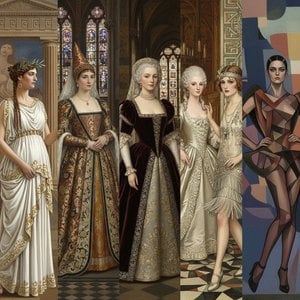
Explore the breathtaking intersection of fine art and high fashion. Discover how iconic masterpieces from Art Deco to Impressionism have shaped the world of luxury couture and timeless design in this curated visual journey.

Elevate your artistic practice with this expert guide to mastering the line. Discover advanced techniques in graphite, charcoal, and contour drawing designed for art students seeking technical precision and expressive depth in their fine art studies.

Explore the profound elegance of minimalist art. Discover how the precision of a single line transforms simple geometry into timeless masterpieces for the discerning collector seeking sophistication and depth in fine art acquisitions.
 Peržiūrėti realaus dydžio版
 Pasidalinti
 Dalintis
 Išsamiau
 Vadovas

 Atsisiųsti
 Panašūs eksponatai
 Rentgeno spindulių nuotrauka
 Automatinė diorama
 问答
问答
 Statistika


 Skaityti daugiau









 Stiklo variantas prieinamas tik pasirinkus dydį iki 110 cm


