Peržiūrėti realaus dydžio版 Peržiūrėti AR realybėje Pirkti rankomis tapytą reprodukciją Perejti prie skaitmeninių vaizdų Siųsti
Išsamiau Vadovas Pridėti į mėgstamiausius Atsisiųsti Panašūs eksponatai Rentgeno spindulių nuotrauka Diaporama Statistika

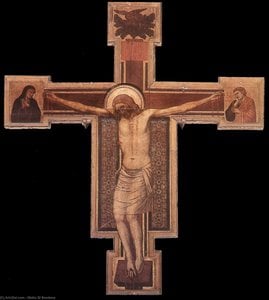
Kristus kryžius

Žydų religijos meistras Cimabue sukūrė Kristus kryžių – reikšmingą Italijos protorenesės šedevrą, kuri išgarsėjo savo inovatyviu stiliumi ir simboliniu paveikslu. Peržiūrėkite Švento Kryžiaus pamėgą Santa Croce Bazilikoje!

Čimabujė (apie 1240–1302) – italų protorenesanso tapytojas, jungiantis bizantinę ir renesansinę tradicijas. Jo „Maestà“ ir kiti kūriniai paveikė Giotto ir atvėrė kelią naujajai Italijos dailės epochai.

Giclée / Meno spausdinimas

Muziejų lygio „giclée“ arba drobos spausdinimas: greita gamyba ir lankstios apdailos parinktys. ( Pirkti rankomis tapytą reprodukciją Perejti prie skaitmeninių vaizdų)

Corner sample of the P118B picture frame: lieto polistirolo, 5 cm wide and 3 cm thick
P118B €10
Corner sample of the P118H picture frame: lieto polistirolo, 5 cm wide and 3 cm thick
P118H €10
Corner sample of the P118W picture frame: lieto polistirolo, 5 cm wide and 3 cm thick
P118W €10
Corner sample of the P438Z picture frame: lieto polistirolo, 5.5 cm wide and 3.5 cm thick
P438Z €10
Corner sample of the P508JH picture frame: lieto polistirolo, 7 cm wide and 3.5 cm thick
P508JH €12
Corner sample of the P508YH picture frame: lieto polistirolo, 7 cm wide and 3.5 cm thick
P508YH €12
Corner sample of the P805H picture frame: lieto polistirolo, 5 cm wide and 3.5 cm thick
P805H €10
Corner sample of the P805Z picture frame: lieto polistirolo, 5 cm wide and 3.5 cm thick
P805Z €10
Corner sample of the P919BZ picture frame: lieto polistirolo, 7 cm wide and 3.5 cm thick
P919BZ €10
Corner sample of the P919G picture frame: lieto polistirolo, 7 cm wide and 3.5 cm thick
P919G €10
Corner sample of the P919XJ picture frame: lieto polistirolo, 7 cm wide and 3.5 cm thick
P919XJ €10
Corner sample of the P959ZH picture frame: lieto polistirolo, 5 cm wide and 3 cm thick
P959ZH €10
Corner sample of the P968JZ picture frame: lieto polistirolo, 6 cm wide and 4 cm thick
P968JZ €12
Corner sample of the W106C picture frame: solidus medžio, 5 cm wide and 3 cm thick
W106C €8
Corner sample of the W218G picture frame: solidus medžio, 5 cm wide and 3 cm thick
W218G €10
Corner sample of the W218JH picture frame: solidus medžio, 5 cm wide and 3 cm thick
W218JH €8
Corner sample of the W218Y picture frame: solidus medžio, 5 cm wide and 3 cm thick
W218Y €10
Corner sample of the W307PJ picture frame: solidus medžio, 6 cm wide and 3 cm thick
W307PJ €10
Corner sample of the W316G picture frame: solidus medžio, 6 cm wide and 3 cm thick
W316G €10
Corner sample of the W316PJ picture frame: solidus medžio, 6 cm wide and 3 cm thick
W316PJ €8
Corner sample of the W316Y picture frame: solidus medžio, 6 cm wide and 3 cm thick
W316Y €10
Corner sample of the W398PJ picture frame: solidus medžio, 5 cm wide and 3 cm thick
W398PJ €8
Corner sample of the W4111J picture frame: solidus medžio, 6.5 cm wide and 3.5 cm thick
W4111J €10
Corner sample of the W500HY picture frame: solidus medžio, 7 cm wide and 5 cm thick
W500HY €15
Corner sample of the W500JH picture frame: solidus medžio, 7 cm wide and 5 cm thick
W500JH €15
Corner sample of the W692G picture frame: solidus medžio, 8 cm wide and 4 cm thick
W692G €12
Corner sample of the W849H picture frame: solidus medžio, 5 cm wide and 3 cm thick
W849H €8
Corner sample of the W940BG picture frame: solidus medžio, 7.5 cm wide and 4.5 cm thick
W940BG €15
Corner sample of the W953PJ picture frame: solidus medžio, 6 cm wide and 3.5 cm thick
W953PJ €8

Standartinis
individualaus dydžio
CM
INCH

Pasirinkite iš mūsų nustatytų dydžių, atitinkančių originalaus meno kūrinio proporcijas.

plotis
aukštis

Įveskite jums reikiamą plotį ir aukštį, kad atvaizdas derėtų prie jūsų rėmo ar sienos. Spausdiną galima tik sumažinti, bet nepadidinti virš originalaus paveikslėlio dydžio, todėl keičiant proporcijas, dalis vaizdo prarandama. Prieš spausdinimą atsiųsime jums skaitmeninį maketą patvirtinimui. Šioje puslapio nuotraukoje matomas pjūvis nėra tikslus – jį rodo tik maketas.

Pristatymas visame pasaulyje () per 2 weeks, o ne įprastas 4/5 savaičių laikotarpis. (22 spalis)

Nemokamas greitasis pristatymas visame pasaulyje
Aukštos kokybės lininis drobė
Pilnas siuntimo draudimas
Muitinės mokesčių grąžinimo garantija
Tikro spalvų atitikimo garantija
100 dienų grąžinimo politika (tik esant įtaigoms)
100% pinigų grąžinimo garantija
Nuolaida dideliems užsakymams

Bendroji kaina

€ 59

Kristus kryžius

Giclée / Meno spausdinimas

Reprodukcijos dydis

-

Visų pasirinktų variantų kaina

€ 59

Pagrindinė informacija

  • Year: 1287–88
  • Notable elements or techniques: Žmogaus kūno modeliavimas šviesos ir šešėlių dėka
  • Subject or theme: Kristaus kryžių kalėjimas
  • Medium: Temperą ir auksinį uždengimą į medinį plokštę
  • Influences: Bizantija
  • Title: Crucifix

Karo viktorina

Kiekviename klausime yra tik vienas teisingas atsakymas.

Klausimas 1:
Koks menininko vardas sukūrė šį kūrinį?
Klausimas 2:
Apie kokius metus buvo sukurtas "Crucifix" kūrinys?
Klausimas 3:
Kokią techniką Cimabue naudojo sukuriant šį kūrinį?
Klausimas 4:
Kokia stilistinė įtaka stipriausiai matoma "Crucifix" kūrinyje?
Klausimas 5:
Ką simbolizuoja kryžius krikščioniškoje mene?

Bizantinio įtakos šedevras

Čimabujo „Kryžius“ iškyla kaip monumentali XIII amžiaus pabaigos darbo kūrinys, įkūnijantis perėjimą nuo bizantinės ikonografijos prie ankstyvojo renesanso realizmo. Sukurtas apie 1287 metus, šis didelio mastelio kryžius yra Čimabujo inovatyvaus požiūrio įrodymas, sujungiantis tradicinę religinę simboliką su pradinėmis meno technikomis, kurios atvėrė kelią tokiems būsimiems meistrams kaip Giotto.

Tema ir kompozicija

Šis kūrinys vaizduoja Jėzaus Kristaus kryžžekylę – pagrindinę temą krikščioniškesėje meno tradicijose. Kompozicija seka tradicinį kryžminį išdėstymą, kuriame Jėzaus figūra iškyla ryškiai centre. Kryžiaus šonu stovi du gedytojai, tikriausiai Šv. Mergelė Marija ir apaštas Jonas Evangelistas, pridedant scenai emocinio gylio.

Stilius ir technika

Čimabujo stiliui būdingas bizantinių įtakų ir ankstyvojo renesanso naujųjų elementų derinys. Žymios spalvos, ypač gilios mėlynos, raudonos ir auksinės, sukuria pagarbos ir dieviškumo pojūtį. Lyginant su ankstesniu viduramžių menu, figūros vaizduojamos su reališkesnėmis proporcijomis ir išmaniu šešėliavimu, kuris suteikia joms tūrio bei gylio. Kūrinys vykdomas tempera ant medinės panelės – tai buvo dažna to laikotarpio technika. Aukso lapelio akcentai suteikia švieslumos, sustiprindami scenos šventumą. Kruopštus dėmesys detalėms figūrų odos ir aprangos vaizduojime demonstruoja Čimabujo meistriškumą.

Istorinis kontekstas

Apie 1240 metais Florencijoje gimęs Čimabujas buvo lemiama figūra itališko meno evoliucijoje. Jo darbas pažymėjo svarbų atsiskyrimą nuo plokščio, schematiško bizantinio tapybos metodo, įvedant realizmo ir emocinio išraiškos elementus, kurie tapo renesanso žyminėmis požymėmis. „Kryžius“ yra vienas iš ankstyviausių priskiriamų Čimabujo darbų, užsakytas dominikonų ordino Areco San Domenico bazilikai. Šis užsakymas pabrėžia religinio meno svarbą viduržemio visuomenėje ir tokių menininkų kaip Čimabujas vaidmenį formuojant dvivalystę per vizualinį pasakojimą. Simbolika ir emocinis poveikis Kryžžekylės scena gausi simbolinių elementų, įskaitant patį kryžių, reprezentuojantį auką ir išpirkimą, bei šventikų halo, simbolizuojančių jų šventumą. Kitas šalių gedytojai perteikia skausmą ir liūdesį, pridedėdami kūriniui emocinį dimensį. Čimabujo vaizduojant Kristaus kūną su šešėliavimu ir plastiškumo pojūčiu, perteikiama gili kančios bei žmogumiškumo išmintis. Šis atsiskyrimas nuo griežtų bizantinių figūrų kryžiuje pranašauja labiau išraiškingus ir naturalistiškus vaizdavimus, kurie apibrėžė renesanso meną.

Kodėl verta rinkti ar eksponuoti šį kūrinį

Meno mylėtojams, kolekcionieriams ir interjero dizaineriams Čimabujo „Kryžius“ siūlo unikalesnį istorinės reikšmės ir meninės išminties derinį. Turtinga spalvų paletė, sudėtingos detalės ir emocinis gylis daro jį užburiančia bet kuri vaisminga kolekcija papildymu. Kaip aukščiausios kokybės reprodukcija, šis kūrinys gali tarnauti kaip stilingas akcentas tiek tradiciniuose, tiek šiuolaikiniuose interjero erdvėse. Amžinos temos ir meistriškas vykdymas užtikrina, kad jis bus vertiniamas kūrinys daugeliui kartų. Patirkite gilią grožį ir dvasinę rezonansą iš Čimabujo „Kryžiaus“ – šedevro, kuris jungia viduramžių ir renesanso eras bei į jūsų erdvę atneša šventiško meno pris touches.

问答 (or more naturally for a website heading): Klausimai ir atsakymai

Kokio dydžio „Kristus kryžius“ spausdinimas tiktų mano kambariui?

Rekomenduojamas derinimas kūriniui „Kristus kryžius“, autorius – Čimabujė: Didelis formatas dydžio spausdinimas, skirtas Popieriaus svetainė.

Kokie yra originalaus „Kristus kryžius“ matmenys?

Originalaus dydžio kūrinys „Kristus kryžius“ yra 448 x 390 cm. Originalūs matmenys yra naudingas orientiris renkantis reprodukcijos dydį.

Atsižvelgiant į kūrinio datą, prie kokios Čimabujė karjeros etapos galima priskirti „Kristus kryžius“?

Kristus kryžius“, sukurta 1287 m., priklauso Čimabujė kūrybinio karjeros laikotarpio Proto-Renaissance.


Autoriaus biografija

Giovanni Cimabue: Grandfather of the Italian Renaissance

Giovanni Cimabue, born Cenni di Pepo around 1240 in Florence, stands as a monumental figure—a bridge between the established artistic traditions of the Byzantine world and the burgeoning innovations that would define the Italian Renaissance. His life, though partially obscured by time and romanticized accounts – most notably those penned by Giorgio Vasari centuries later – marks an undeniable turning point in Western art history. Cimabue wasn’t simply a painter; he was a courageous innovator who dared to subtly challenge artistic conventions, laying the groundwork for the revolutionary changes that would soon sweep across Italy. Even his nickname, believed to mean “bull-headed,” hints at a strong will and perhaps a rebellious spirit—qualities demonstrably present in his willingness to experiment with form and expression. He represents a crucial moment where art began to shift from being solely devotional imagery towards something more humanistic and emotionally resonant.

Early Influences and Artistic Development

Initially immersed in the Italo-Byzantine style prevalent throughout Florence, Cimabue’s early work adhered closely to established aesthetic principles: flattened figures adorned with shimmering gold leaf, symbolic rather than realistic depictions of space, and a profound focus on religious iconography. However, even within these constraints, a nascent desire for naturalism began to emerge. He wasn't content merely replicating existing forms; he sought to imbue his paintings with a greater sense of life and emotional depth. While the precise nature of his early training remains debated, it’s likely he honed his skills within Florentine workshops, absorbing the techniques and influences of the time while simultaneously developing his own unique artistic voice. The Byzantine style, characterized by its formality and spiritual focus, provided him with a solid foundation, but Cimabue began to subtly introduce elements that would foreshadow the coming Renaissance—a greater attention to volume, more expressive facial features, and a nascent understanding of spatial relationships. This wasn’t a sudden break from tradition, but rather a gradual evolution, a delicate balancing act between honoring the past and embracing new possibilities.

Masterpieces and Artistic Innovations

Cimabue's legacy is cemented through a series of breathtaking works that showcase his evolving style. The *Maestà* (Louvre), originally created for the Church of San Francesco in Pisa, stands as one of his most celebrated masterpieces. This monumental altarpiece exemplifies his mastery of composition and use of color, while simultaneously hinting at the shift away from rigid Byzantine conventions. The figures, though still possessing a degree of formality, exhibit a newfound sense of volume and presence. The *Crucifixion* (San Domenico, Arezzo), dating around 1270, is particularly significant as an early demonstration of his departure from strict Byzantine norms. Here, the proportions are more realistic, and the emotional weight of the scene is palpable—a stark contrast to the often-distant depictions found in earlier religious art. Further evidence of Cimabue’s innovative spirit can be seen in works like the *Flagellation of Christ* (Frick Collection), generally attributed to his workshop. This complex composition reveals an evolving understanding of perspective and spatial relationships, showcasing a growing interest in creating more immersive and believable scenes. His contributions weren't limited to panel paintings; Cimabue also excelled as a mosaicist, contributing significantly to the decoration of the Baptistery of Florence—though these mosaics have unfortunately suffered from deterioration over time.

A Pivotal Teacher: Giotto and Beyond

Perhaps Cimabue’s most enduring legacy lies in his role as the teacher of Giotto di Bondone. While historical accounts vary regarding the exact nature of their relationship, it is widely accepted that Giotto received crucial training under Cimabue's guidance. However, Giotto would ultimately surpass his master, revolutionizing Italian painting with an even more radical embrace of naturalism and emotional realism. It’s a testament to Cimabue’s skill as a teacher that he fostered such talent, even knowing it might eclipse his own achievements. The story, often recounted by Vasari, of Giotto playfully painting a fly on Cimabue's face speaks volumes about the dynamic between master and pupil—a playful rivalry that ultimately pushed both artists to greater heights. Cimabue’s influence extended beyond Giotto, impacting numerous other artists of the period. He challenged the artistic norms of his time, demonstrating that art could be more than just religious symbolism; it could also reflect human emotion and experience. His willingness to experiment with form, proportion, and expression paved the way for the innovations of the Renaissance, establishing him as a crucial transitional figure in the history of Western art.

Enduring Significance

Cimabue passed away in 1302 in Pisa, leaving behind a body of work that continues to captivate and inspire. Despite his significant contributions, details surrounding his later life remain scarce. However, Cimabue’s artistic legacy resonates powerfully through the works of his students and the evolution of Italian art. He represents a crucial step in the development of Western painting, moving away from the stylized conventions of the Byzantine era towards a more humanistic and naturalistic approach. His paintings are not merely historical artifacts; they are windows into a pivotal moment in artistic history—a time when artists began to question established norms and explore new possibilities. He was a pioneer, a visionary who dared to challenge the status quo and lay the foundations for the artistic brilliance that would define the Renaissance. Cimabue’s work reminds us that even within tradition, there is always room for innovation, and that true artistry lies in the courage to push boundaries and explore new horizons.

Čimabujė

Čimabujė

1240 - 1302 , إيطاليا

Trumpa informacija apie kūrėją

  • Artistic Movement Or Style: Byzantine & Renaissance
  • Artists Who Influenced This Artist:
    • Nicolo Pisano
    • Giunta Pisano
  • Date Of Birth: c. 1240
  • Date Of Death: 1302
  • Full Name: Giovanni Cimabue
  • Nationality: Italian
  • Notable Artworks:
    • Maestà
    • Crucifixion
    • Flagellation of Christ
  • Place Of Birth: Florence, Italy
Tyrinėkite meno kūrinius, suskirstytus pagal temas, stilius ir savybes.