A Geometric Dialogue with Modernism
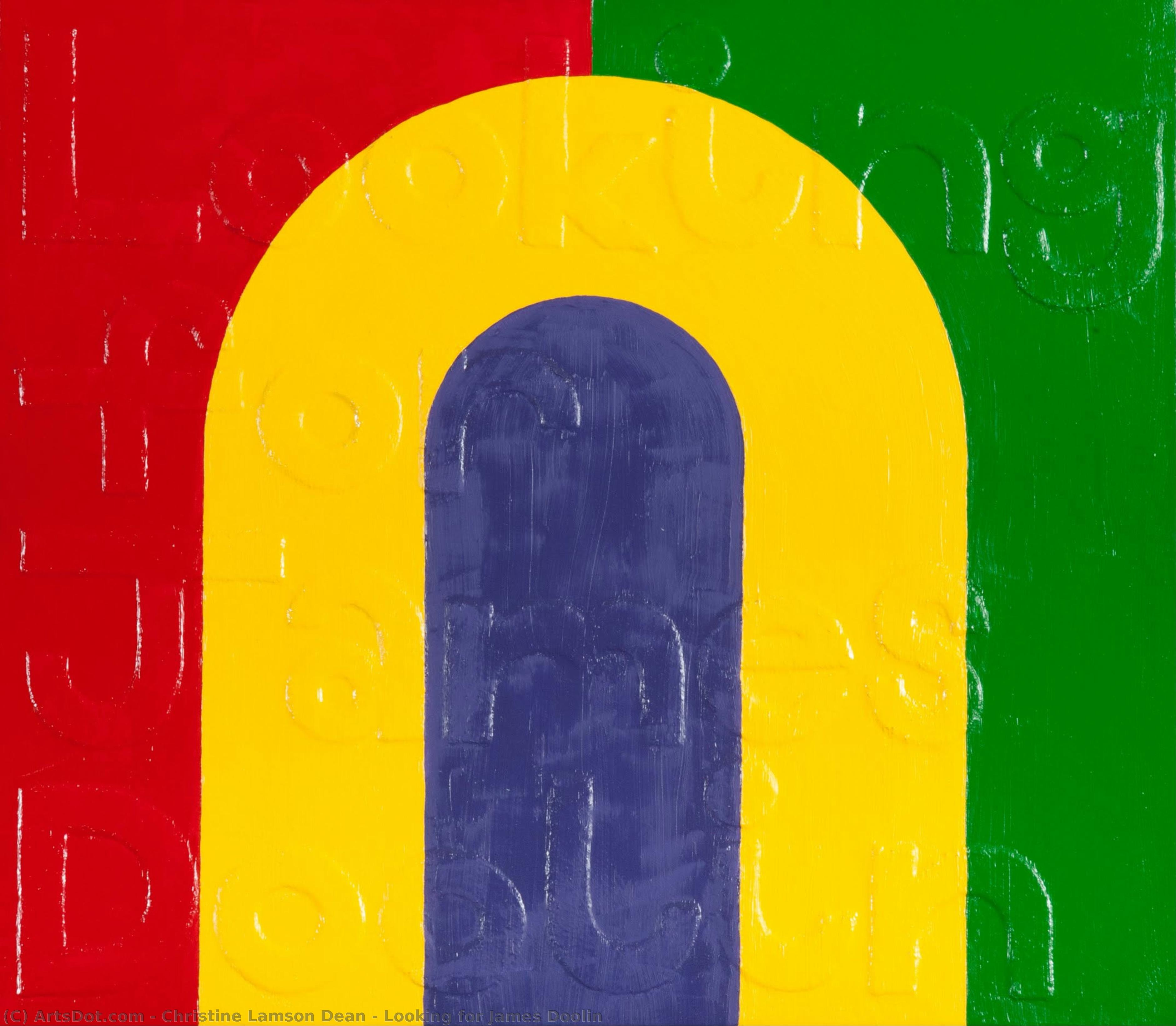
In the vibrant landscape of contemporary Australian abstraction, Christine Lamson Dean stands as a profound interlocutor between the past and the present. Her 2002 masterpiece, "Looking for James Doolin," serves as a captivating visual meditation on the legacies of late modernism. The painting is not merely an arrangement of shapes but a sophisticated intellectual inquiry, born from her transformative residency at the Penrith Regional Gallery. Through a masterful command of color and form, Dean invites the viewer into a space where geometry meets memory, creating a composition that feels both structurally rigorous and poetical in its execution.
The artwork is anchored by a commanding yellow triangle, a bold geometric protagonist that commands the eye's immediate attention. This central figure acts as a focal point for a rhythmic dance of secondary triangles in shades of deep blue, verdant green, and striking red. These overlapping forms create a sense of layered depth, suggesting a complex architectural or celestial map. The interplay of these primary and secondary colors evokes the spirit of mid-century abstraction, yet Dean infuses the piece with a contemporary sensibility that feels fresh and vital. The deliberate use of sharp edges and saturated hues creates a visual tension that is both stimulating and harmoniously balanced.
The Art of Reference and Resonance
To look upon "Looking for James Doolin" is to engage in a scholarly pursuit of art history. Dean’s technique involves a delicate layering of references, where each shape and color choice pays homage to the giants of Australian modernism. The painting breathes with the influence of Margo Lewers and the Hinder duo, weaving their aesthetic DNA into its very fabric. By referencing academic critics like Clement Greenberg, Dean elevates the canvas from a simple abstract study to a profound commentary on the philosophical foundations of art practice. This intellectual depth makes the piece an extraordinary choice for collectors who value art that functions as both a visual delight and a conversation starter.
Beyond its formal qualities, the painting possesses a unique emotional resonance. There is a sense of searching—a literal and metaphorical "looking"—that permeates the work. The way the smaller triangles drift in the background suggests a fragmented landscape or perhaps the fleeting nature of memory itself. For an interior designer, this piece offers a versatile yet commanding presence; its bright, energetic palette can breathe life into a minimalist modern space, while its historical weight provides a sophisticated anchor for more eclectic, curated environments. It is a work that does not merely decorate a wall but enriches the very atmosphere of a room, offering a window into the enduring power of abstract thought.


 Peržiūrėti realybėje
 Perejti prie spausdinimo
 Pasidalinti
 Dalintis
 Išsamiau

 Atsisiųsti
 Panašūs eksponatai
 Rentgeno nuotrauka
 Automatinė diorama
 Statistika


 Skaityti daugiau






































 Stiklo variantas prieinamas tik pasirinkus dydį iki 110 cm


