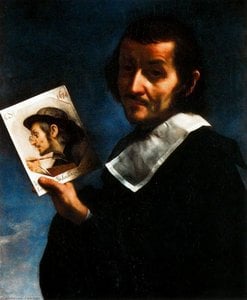
Autoriaus biografija
Florencijos baroko pietistiškumo meistras
Carlo Dolci, gimęs Florencijoje 1616 metais, yra įspūdinga figūra italų baroko kraštovaizdyje – dailininkas, kurio intensyviai religiniai darbai ir kruopšti technika užsitikrino jam vietą tarp labiausiai paklausių savo epochos menininkų. Skirtingai nei daugelis jo bendraamžių, patrauktų Romos didžiadieniu puošnumu, Dolci išliko tvirtai įsitvirtinęs Florencijos tradicijose, ugdydamas stilių, pasižymintį tylia intensyvumu ir giliu dvasiniu gilumu. Jo gyvenimas klostėsi meninės aistros fone, tačiau jis pasirinko unikalų kelią, apibrėžtą ne didelio našumo, o tvirto įsipareigojimo detalėms ir emociniam rezonansui. Nuo ankstyvųjų mokymosi metų pas Jacopo Vignali, Dolci parodė išskirtinį talentą, greitai pelnydamas reputaciją dėl tikslumo, kuris tapo jo kūrybos vizitine kortele. Jį domėjo ne didžiulės kompozicijos ar dinamiški naratyvai; vietoj to jis sutelkė dėmesį į intymius religinių temų portretus, dažnai kartodamas mėgstamiausias temas kelis kartus – tai liudija jų pastovų patrauklumą ir galbūt atspindi jo metodišką požiūrį.
Ankstyvas gyvenimas ir meninis formavimasis
Dolci’s meninė kelionė prasidėjo šeimoje, jau paliesta kūrybiškumo, suteikiant ankstyvą puoselėjimo aplinką jo įgimtam gebėjimui. Būdamas labai jaunas jis buvo paverstas Jacopo Vignali mokiniu ir greitai perėmė meistro pamokas, žinomo dėl dramatiškumo, tačiau Dolci netrukus ėmė kurti savo savitą balsą. Net būdamas bernas, jo atsidavimas detalėms užfiksuoti ir emociniam svoriui perteikti buvo akivaizdus. Istorijos byloja apie jo kruopštų požiūrį – įsipareigojimą, kuris, kaip teigiama, truko savaitėmis, kad būtų baigtas net vienas kūno narys figūroje. Šis sąmoningas tempas nebuvo gimęs iš lėtumo, o atspindėjo intensyvų tobulumo troškimą, siekį įkviepti kiekvieną potepį dvasine reikšme. Jis greitai sulaukė Florencijos ratuose pripažinimo, pritraukdamas užsakymus iš žymių šeimų ir įsteigdamas savo dirbtuvę dar net nepasiekęs pilnametystės. Nors kiti menininkai ieškojo judraus Romo meno pasaulio, Dolci liko Florencijoje, giliai susijungęs su jos tradicijomis ir globėjais. Šis tvirtas lojalumas gimtajam miestui formavo ne tik jo karjerą, bet ir paties meno esmę.
Stilius ir žymiausi darbai
Dolci stilius yra iš karto atpažįstamas – harmoningas turtingų spalvų, kruopščių detalių ir gilaus emocinio išreiškimo derinys. Jo paveikslai nėra apie didžiulį spektaklį; tai intymios tikėjimo akimirkos, perteiktos švelnumu, kviečiančiu apmąstyti. Jis dažnai vaizdavo šventųjų gyvenimo scenas ir biblinius pasakojimus, sutelkiant dėmesį į tylios pamaldumo ar skausmingo kančios akimirkas. Pavyzdžiui, Šv. Sebastiano paveiksle jis nevaizduojamas kaip didvyriškas kankinys, o kaip figūra, apėmta dvasinio nerimo, jo kūnas puikiai perteiktas, kad pabrėžtų pažeidžiamumą, o ne jėgą. Panašiai jo keturių evangelistų portretai atskleidžia gilų supratimą apie žmogaus psichologiją, užfiksuodamas jų individualius bruožus nepaprastu jautrumu. Kristus dalijantis duona, dar vienas garsus kūrinys, pavyzdžiuoja jo gebėjimą perteikti šventas akimirkas santūriu elegancija ir emocine galia. Jo dukra Agnese Dolci vaidino svarbų vaidmenį skleidžiant tėvo meninę viziją, meistriškai kurdama jo paveikslų kopijas, kurios dar labiau išplėtė jo pasiekiamumą ir įtaką. Šios reprodukcijos, nors ir ne originalūs kūriniai, liudija paklausą Dolci darbams ir pastovų jo stiliaus patrauklumą.
Palikimas ir istorinę reikšmę
Carlo Dolci’s poveikis Florencijos menui yra nepaneigiamas. Jis yra svarbi baroko stiliaus figūra mieste, smarkiai prisidėdamas prie jo turtingo meno paveldo. Būdamas įtakotas ankstesnių meistrų, tokių kaip Giovanni Bellini ir Bramantino, jis pasirinko savo unikalų kelią, pasižymintį tylia intensyvumu ir pamaldumu, kuris atskyrė jį nuo daugelio jo bendraamžių. Jo paveikslai tebėra saugomi prestižiškose institucijose, tokiose kaip Florencijos Uffizi galerija, kur Contini Bonacossi kolekcija siūlo ypač turtingą jo kūrybos reprezentaciją. Pastovus Dolci darbų patrauklumas slypi ne tik jų techniniame meistriškume, bet ir gebėjime sukelti gilius dvasinius jausmus. Jis ne tik vaizdavo religines scenas; jis kūrė vizualias meditacijas apie tikėjimą, kviesdamas žiūrovus susijungti su dievybe labai asmeniškame lygyje. Jo palikimas apima daugiau nei jo paveikslai – jis reprezentuoja įsipareigojimą meno meistriškumui ir tikėjimą meno galia įkvępti pamaldumą ir apmąstymus. Net šiandien, tyrinėjant Dolci šedevrus, galima pažvelgti į XVII amžiaus Florencijos širdį ir pastovų baroko meno galią.



 Peržiūrėti realybėje
 Pirkti rankomis tapytą paveikslą
 Pasidalinti
 Dalintis
 Išsamiau

 Atsisiųsti
 Panašūs eksponatai
 Rentgeno nuotrauka
 Automatinė diorama
 Stats
Stats


 Skaityti daugiau






































 Stiklo variantas prieinamas tik pasirinkus dydį iki 110 cm