


Muziejų lygio „giclée“ arba drobos spausdinimas: greita gamyba ir lankstios apdailos parinktys. ( Pirkti rankų darbo tapybą Perejti prie skaitmeninių vaizdų)





























Pasirinkite iš mūsų nustatytų dydžių, atitinkančių originalaus meno kūrinio proporcijas.

Įveskite jums reikiamą plotį ir aukštį, kad atvaizdas derėtų prie jūsų rėmo ar sienos. Spausdiną galima tik sumažinti, bet nepadidinti virš originalaus paveikslėlio dydžio, todėl keičiant proporcijas, dalis vaizdo prarandama. Prieš spausdinimą atsiųsime jums skaitmeninį maketą patvirtinimui. Šioje puslapio nuotraukoje matomas pjūvis nėra tikslus – jį rodo tik maketas.
Pristatymas visame pasaulyje () per 2 weeks, o ne įprastas 4/5 savaičių laikotarpis. (8 lapkritis)
Angels Pity
Reprodukcijos matmenys
In the quiet, hallowed atmosphere of the Early Renaissance, few works capture the intersection of human sorrow and divine grace as poignantly as Carlo Crivelli’s "Angels Pity." Painted in 1470, this masterpiece serves as a profound meditation on tenderness and spiritual devotion. The scene unfolds with an intimate warmth, presenting Jesus cradling two children within his arms—a gesture that transcends mere historical depiction to become a universal symbol of protection and innocence. Surrounded by a celestial assembly of angels and watchful figures, the composition draws the viewer into a sacred circle of empathy. Even the subtle presence of a solitary bird in the upper corner acts as a silent witness, lending an air of tranquility to a moment heavy with emotional significance.
The artistry of Crivelli is on full display through his masterful command of color and light. Utilizing soft, luminous hues and delicate brushstrokes, the artist creates a sense of palpable intimacy that makes the divine feel reachable. The painting is a triumph of the Early Renaissance style, where every detail is rendered with an almost obsessive realism. Crivelli’s technique involves the meticulous application of oil glazes on wood panel, building layers of color to achieve a radiant depth. This method allows light to appear as if it is emanating from within the figures themselves, highlighting the soft textures of skin and the intricate folds of drapery, thereby inviting the observer to linger on the subtle nuances of the composition.
Beyond its visual splendor, "Angels Pity" is a rich tapestry of Christian iconography designed to provoke deep reflection. The arrangement of the figures within an arched niche creates a sense of sacred enclosure, separating the holy event from the mundane world. Every element serves a symbolic purpose: the tender way Jesus holds the children reflects the theological concept of divine mercy, while the surrounding angels represent the bridge between heaven and earth. Crivelli’s use of trompe l'oeil—a technique intended to trick the eye into perceiving three-dimensional reality—adds a layer of tactile presence to the work, making the spiritual themes feel grounded in a tangible, physical reality.
For the discerning collector or interior designer, this painting offers more than mere decoration; it provides an emotional anchor for any space. The somber yet serene mood makes it an ideal centerpiece for rooms dedicated to contemplation, study, or quiet luxury. Whether one is drawn to its historical significance as a product of the Venetian-influenced March of Ancona or moved by its profound expression of compassion, "Angels Pity" remains a timeless testament to the power of art to evoke the sublime. Owning a high-quality reproduction of this work allows for the preservation of this Renaissance spirit, bringing a sense of historical weight and aesthetic harmony into the modern home.
„Angels Pity“ – Karlo Krivelli yra Portrait kompozicija, kurios originalūs matmenys yra 72 x 55 cm.
„Angels Pity“ autorius yra Karlo Krivelli, o kūrinys datuojamas 1470 m.
„Angels Pity“ sukurtas 1470 m., naudojant Oil On Panel.

Carlo Crivelli, italietsų renesanso paveikslastoriaus, gimė Venecijoje maždaug 1430–1435 metais. Jis kilme iš paveikslastorių šeimos ir savo meninę formaciją įgijo Venecijoje bei Paduvoje. Teigiama, kad Crivelli ankstyvojo mokymosi metai praėjo dirbant su Jacobello del Fiore, kuris buvo aktyvus dar 1436 metais. Taip pat jis studijavo Venecijos Vivarini mokykloje.
Savo ankstyvuosius metus Crivelli praleido Veneto regione, vis intensyviau įsisavinęs Vivarini, Squarcione ir Mantegna įtakas. 1458 metais jis paliko Veneto ir didžiąją savo karjeros dalį praleido Anconos markuose, kur sukūrė išskirtinę asmeninę stilių, kontrastuojantį su jo venecietės amžininko Giovanni Bellini kūryba. Crivelli darbams būdingas konservatyvus vėlyvojo gotiko dekoratyvumas, pasižymintis linijiniu ryškumu, itin kruopščiu dėmesiui detalėms at dedicating ir „trompe l'oeil“ technikos naudojimu.
* Carlo Crivelli paveikslas „Didžioji Dievo Motina su Šv로 Child tronuose“ (106 x 55 cm, Budapesto gražiosios dailės muziejus, Vengrija) yra puikus jo stiliaus pavyzdys. * Jis bendradarbiavo su savo jaunesniuoju broliu Vittorio Crivelli įvairiuose projektuose. * Pietro Alemanno, paveikslastoris, emigravęs į Anconos markus iš Voklijos ar Austrijos, buvo jo mokinys ir bendrininkas.
* Milane, Italijoje, esančioje Pinacoteca di Brera galerijoje eksponuojami keli Crivelli darbai, įskaitant „Pietą“ (128 x 241 cm). * Venecijoje, Italijoje, esančiame San Giovanni in Bragora muziejuje, yra kolekcija meno kūrinių iš įvairių laikotarpių ir stilių, įskaitant kai kurias works, priskritas Crivelli.
Crivelli palikimas ir toliau įkvepia tiek meno entuziastus, tiek mokslininkus, o jo kūryba išlieka įrodymu neblėstančios konservatyvaus vėlyvojo gotiko dekoratyvumo galios.

1435 - 1495 , इटalija

Discover the enduring legacy of oil on board painting. Explore how historical techniques, rich impasto textures, and structural durability create timeless masterpieces that bridge Renaissance grandeur with modern art collecting excellence.

Discover the profound allure of oil on canvas. Explore the mastery of impasto textures, the science of pigment longevity, and expert guides to selecting museum-quality reproductions that elevate your collection with timeless elegance and tactile depth.

Discover the enduring allure of oil on canvas. Explore how master techniques like impasto and glazing create the depth, texture, and emotional resonance found in the world's greatest masterpieces. An essential guide for fine art enthusiasts and discerning collectors.

Discover the enduring allure of hand-painted oil reproductions. WahooArt offers museum-quality, archival masterpieces designed for discerning collectors seeking timeless beauty and a lasting legacy. Invest in fine art that transcends generations with our expert craftsmanship.
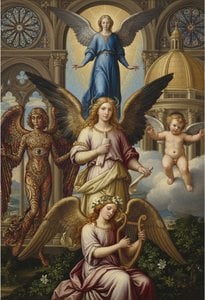
Explore the profound beauty of angelic figures in art history. From Renaissance masterpieces to celestial symbolism, our expert guide offers a sophisticated journey through the divine imagery of the Old Masters for discerning collectors and art enthusiasts.
 Peržiūrėti realaus dydžio版
 Pasidalinti
 Dalintis
 Išsamiau
 Vadovas

 Atsisiųsti
 Panašūs eksponatai
 Rentgeno spindulių nuotrauka
 Automatinė diorama
 问答
问答
 Statistika

 Skaityti daugiau









 Stiklo variantas prieinamas tik pasirinkus dydį iki 110 cm


