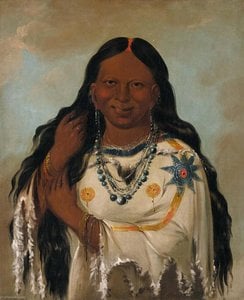
Komah qua ee (1943), autoriaus Carl Moon, meistro rankomis sumalatyta aliejų technika reprodukcija
Peržiūrėti realaus dydžio版 Peržiūrėti AR realybėje Perjungti į spausdinamus版作品 Perejti prie skaitmeninių vaizdų Pasidalinti
Išsamiau Vadovas Pridėti į mėgstamiausius Atsisiųsti Panašūs eksponatai Rentgeno spindulių nuotrauka Automatinė diorama 问答 Prezentacija Statistika

Komah qua ee Rankiniu būdu dažyta aliejaus reprodukcija

Matmenys
76.0 x 60.0 cm

Admire 'Komah qua ee' by Carl Moon – a captivating 1943 portrait of a Native American woman. Oil on canvas, 76x60cm. Explore this evocative piece & more authentic art reproductions at WahooArt.

Carl Moon (1878-1948) was an American photographer & painter renowned for his evocative portraits of Native American life in the Southwest. Explore his art studies, Fred Harvey Collection images, and romantic depictions of Hopi, Navajo, and Taos Pueb

Rankų darbo aliejinės reprodukcijos

Rankiniu būdu tapytas aliejus ant droblio jūsų pageidaujamame dydį ir rėmuose – tai mūsų menininkų pagal užsakymą sukurtas darbas. ( Perjungti į spausdinamus版作品 Perejti prie skaitmeninių vaizdų)

Corner sample of the P118B picture frame: lieto polistirolo detalės, 5 cm wide and 3 cm thick
P118B €10
Corner sample of the P118H picture frame: lieto polistirolo detalės, 5 cm wide and 3 cm thick
P118H €10
Corner sample of the P118W picture frame: lieto polistirolo detalės, 5 cm wide and 3 cm thick
P118W €10
Corner sample of the P438Z picture frame: lieto polistirolo detalės, 5.5 cm wide and 3.5 cm thick
P438Z €10
Corner sample of the P508JH picture frame: lieto polistirolo detalės, 7 cm wide and 3.5 cm thick
P508JH €12
Corner sample of the P508YH picture frame: lieto polistirolo detalės, 7 cm wide and 3.5 cm thick
P508YH €12
Corner sample of the P805H picture frame: lieto polistirolo detalės, 5 cm wide and 3.5 cm thick
P805H €10
Corner sample of the P805Z picture frame: lieto polistirolo detalės, 5 cm wide and 3.5 cm thick
P805Z €10
Corner sample of the P919BZ picture frame: lieto polistirolo detalės, 7 cm wide and 3.5 cm thick
P919BZ €10
Corner sample of the P919G picture frame: lieto polistirolo detalės, 7 cm wide and 3.5 cm thick
P919G €10
Corner sample of the P919XJ picture frame: lieto polistirolo detalės, 7 cm wide and 3.5 cm thick
P919XJ €10
Corner sample of the P959ZH picture frame: lieto polistirolo detalės, 5 cm wide and 3 cm thick
P959ZH €10
Corner sample of the P968JZ picture frame: lieto polistirolo detalės, 6 cm wide and 4 cm thick
P968JZ €12
Corner sample of the W106C picture frame: solidus medžio

**Improved version:**
solidus medis, 5 cm wide and 3 cm thick
W106C €8
Corner sample of the W218G picture frame: solidus medžio

**Improved version:**
solidus medis, 5 cm wide and 3 cm thick
W218G €10
Corner sample of the W218JH picture frame: solidus medžio

**Improved version:**
solidus medis, 5 cm wide and 3 cm thick
W218JH €8
Corner sample of the W218Y picture frame: solidus medžio

**Improved version:**
solidus medis, 5 cm wide and 3 cm thick
W218Y €10
Corner sample of the W307PJ picture frame: solidus medžio

**Improved version:**
solidus medis, 6 cm wide and 3 cm thick
W307PJ €10
Corner sample of the W316G picture frame: solidus medžio

**Improved version:**
solidus medis, 6 cm wide and 3 cm thick
W316G €10
Corner sample of the W316PJ picture frame: solidus medžio

**Improved version:**
solidus medis, 6 cm wide and 3 cm thick
W316PJ €8
Corner sample of the W316Y picture frame: solidus medžio

**Improved version:**
solidus medis, 6 cm wide and 3 cm thick
W316Y €10
Corner sample of the W398PJ picture frame: solidus medžio

**Improved version:**
solidus medis, 5 cm wide and 3 cm thick
W398PJ €8
Corner sample of the W4111J picture frame: solidus medžio

**Improved version:**
solidus medis, 6.5 cm wide and 3.5 cm thick
W4111J €10
Corner sample of the W500HY picture frame: solidus medžio

**Improved version:**
solidus medis, 7 cm wide and 5 cm thick
W500HY €15
Corner sample of the W500JH picture frame: solidus medžio

**Improved version:**
solidus medis, 7 cm wide and 5 cm thick
W500JH €15
Corner sample of the W692G picture frame: solidus medžio

**Improved version:**
solidus medis, 8 cm wide and 4 cm thick
W692G €12
Corner sample of the W849H picture frame: solidus medžio

**Improved version:**
solidus medis, 5 cm wide and 3 cm thick
W849H €8
Corner sample of the W940BG picture frame: solidus medžio

**Improved version:**
solidus medis, 7.5 cm wide and 4.5 cm thick
W940BG €15
Corner sample of the W953PJ picture frame: solidus medžio

**Improved version:**
solidus medis, 6 cm wide and 3.5 cm thick
W953PJ €8

Standartinis dydis
pagal užsakymą
CM
INCH

Pasirinkite iš mūsų nustatytų dydžių, atitinkančių originalaus meno kūrinio proporcijas.

plotis
aukštis

Įveskite jums reikiamą plotį ir aukštį, kad paveikslas atitiktų jūsų rėmą ar sieną. Kadangi šis darbas yra rankinio darbo, siekiant išgauti kitokios formos dydį, paveikslas gali būti šiek tiek didesnis (nuo kraštų bus palikta daugiau erdvės) arba mažesnis – pasirinkite jums patogiausią variantą. Prieš pradedant tapyti, atsiųsime jums skaitmeninį maketą patvirtinimui. Šioje puslapio nuotraukoje matomas vaizdas nėra galutinis rezultatas – jį parodys tik sukurtas maketas.

Ką galima pakeisti (pavyzdžiai): Pakeisti veidą į kliento nuotrauką; Pridėti augintinį (pvz., pakeisti katę šunimi); Įtraukti paslėptą žinutę fone; Pakeisti fono kraštovaizdį ar elementus.
Gavus užsakymą, WahooArt.com komanda susisieks su klientu el. paštu dėl instrukcijų ir pateiks maketo pavyzdį

Pristatymas visame pasaulyje () per 3–4 savaites, o ne įprastai – per 5 savaites. (8 lapkritis). Kokybė lieka nepakeičiama.

Nemokamas greitasis pristatymas visame pasaulyje
Aukštos kokybės lininis drobė
Pilnas siuntimo draudimas
Muitinės mokesčių grąžinimo garantija
Tikro spalvų atitikimo garantija
100 dienų grąžinimo politika (tik esant įtaigoms)
100% pinigų grąžinimo garantija
Nuolaida dideliems užsakymams

Visos kainos suma

€ 243

Komah qua ee

Reprodukcijos technika

Reprodukcijos matmenys

-

Bendroji kaina

€ 243


Autoriaus biografija

The Luminous Gaze: Carl Moon and the Romantic Vision of the American Southwest

Carl Moon (1878-1948), though perhaps less celebrated than some of his contemporaries, occupies a unique and poignant space in the history of American photography and painting. Born into an era captivated by the mythos of the West, Moon dedicated his life to documenting – and interpreting – the lives and cultures of Native American peoples, particularly those inhabiting the Southwest. His work transcends mere ethnographic record; it’s imbued with a romantic sensibility that reflects both the prevailing attitudes of his time and a genuine fascination with the beauty and dignity he found in his subjects. While biographical details remain somewhat sparse, the power of Moon's images speaks volumes about his artistic vision and the complex relationship between artist, subject, and audience during a period of rapid cultural change. He wasn’t simply *recording* the West; he was crafting an enduring narrative, one that blended observation with aspiration.

Early Life and Artistic Formation

Details surrounding Moon's early life are limited, but it is known he developed a passion for art at a young age. He pursued formal training, honing his skills in both painting and photography – disciplines he would skillfully intertwine throughout his career. The late 19th and early 20th centuries witnessed an explosion of artistic interest in the American West, fueled by government-sponsored expeditions, railroad expansion, and a growing national desire to define a uniquely American aesthetic. Artists like Thomas Moran and Albert Bierstadt captured the grandeur of Western landscapes with sweeping canvases, while photographers such as Edward S. Curtis embarked on ambitious projects to document Native American cultures before they were irrevocably altered. Moon emerged within this context, absorbing influences from both painting and photography traditions. He wasn’t solely focused on landscape; his true calling lay in portraiture – specifically, capturing the essence of individuals within their cultural framework.

The Fred Harvey Company and a Southwestern Focus

A pivotal moment in Moon's career came with his association with the Fred Harvey Company. This iconic hospitality empire, renowned for its elegant hotels and restaurants along the Atchison, Topeka & Santa Fe Railway, actively cultivated an image of the Southwest as a destination for refined travelers. The company commissioned artists to create works that would appeal to this clientele, showcasing Native American art and culture in a manner that was both aesthetically pleasing and commercially viable. Moon became a key figure in this endeavor, producing photographs and paintings that adorned Harvey hotels and were sold as souvenirs. This association provided him with access to communities throughout New Mexico and Arizona, allowing him to establish relationships with Hopi, Navajo, and Taos Pueblo peoples. It’s important to note the complexities inherent in this arrangement; while Moon's work helped popularize Native American art, it also operated within a framework of commercialization and cultural representation dictated by outside interests.

Style, Technique, and Recurring Themes

Moon’s artistic style is characterized by its soft focus, romantic lighting, and carefully composed portraits. His photographs often feature subjects posed in traditional attire, set against evocative Southwestern backdrops. He skillfully employed techniques like platinum printing to achieve a luminous quality that enhanced the ethereal beauty of his images. While he documented everyday life, Moon frequently focused on ceremonial occasions and moments of cultural significance. His paintings share a similar aesthetic sensibility, often depicting scenes of daily life or portraits with a heightened sense of drama and emotion. Recurring themes in his work include the dignity of Native American individuals, the beauty of traditional crafts, and the spiritual connection between people and the land. He wasn’t interested in portraying Native Americans as “savages” or exotic curiosities; rather, he sought to capture their humanity and resilience. His images often convey a sense of melancholy and nostalgia, perhaps reflecting his awareness of the challenges facing these communities during a period of forced assimilation and cultural disruption.

Legacy and Historical Significance

Carl Moon’s legacy is multifaceted. His work provides valuable visual documentation of Native American life in the Southwest during a crucial period of transition. While his romanticized depictions have been subject to critical scrutiny, they remain powerful and evocative images that continue to resonate with audiences today.
  • His photographs offer insights into traditional attire, ceremonies, and social structures.
  • He played a significant role in popularizing Native American art through his association with the Fred Harvey Company.
  • His work contributes to a broader understanding of the complex relationship between artist, subject, and audience in the context of Western representation.
Moon’s images serve as a reminder of the beauty, dignity, and resilience of Native American cultures – and as a call for continued dialogue about the ethical considerations surrounding cultural documentation and artistic interpretation. He wasn't simply an observer; he was a participant in shaping the narrative of the West, leaving behind a body of work that continues to inspire contemplation and debate.
Carl Moon

Carl Moon

1878 - 1948