


Šiame puslapyje rodomas meno kūrinys yra saugomas autorių teisių įstatymais, todėl neturime teisės legaliai kurti ar parduoti jo identiškos reprodukcijos. Ši apsauga užtikrinama remiantis tokiais tarptautiniais susitarimais kaip Bernės konvencija ir pagal nacionalines įstatymų nuostatas, įskaitant tas, kurias nurodo JAV autoriškos teisės įstatymas – 17-asis skyrius.
Šis metodas visiškai atitinka autorių teises, nes jame nėra saugomo kūrinio kopijavimo ar dubliavimo. Tai yra kūrybinė reinterpretacija – naujas paveikslas, kurį įkvėpė originalas, tačiau kuris nėra jo identiškas.
Muziejų lygio „giclée“ arba drobos spausdinimas: greita gamyba ir lankstios apdailos parinktys. ( Pirkti rankų darbo tapybą Perejti prie skaitmeninių vaizdų)
Pasirinkite iš mūsų nustatytų dydžių, atitinkančių originalaus meno kūrinio proporcijas.

Įveskite jums reikiamą plotį ir aukštį, kad atvaizdas derėtų prie jūsų rėmo ar sienos. Spausdiną galima tik sumažinti, bet nepadidinti virš originalaus paveikslėlio dydžio, todėl keičiant proporcijas, dalis vaizdo prarandama. Prieš spausdinimą atsiųsime jums skaitmeninį maketą patvirtinimui. Šioje puslapio nuotraukoje matomas pjūvis nėra tikslus – jį rodo tik maketas.
Pristatymas visame pasaulyje () per 2 weeks, o ne įprastas 4/5 savaičių laikotarpis. (15 lapkritis)
Packaging Post for the War
Reprodukcijos matmenys

Born Hermann Wilhelm Brandt in Hamburg, Germany, the man who would become known to the world as Bill Brandt possessed a lens capable of capturing the profound complexities of the human condition and the stark beauty of the natural world. His journey was one of movement and transformation, shaped by the turbulent winds of early twentieth-century Europe. After spending much of his youth in a sanatorium in Switzerland, Brandt found himself drawn to the artistic pulse of Paris in the late 1920s. It was here, within the legendary studio of Man Ray, that he encountered the surrealist movement—a profound influence that would later manifest in his celebrated, distorted studies of the human form.
Moving to London in 1933, Brandt began a period of intense social documentation. Inspired by the socio-political writings of figures like George Orwell, he turned his camera toward the deep contrasts of the British class system. He traversed the landscapes of the United Kingdom, from the bustling West End and the sprawling suburbs to the gritty, industrial slums. His work for influential magazines such as Lilliput and Picture Post allowed him to capture the raw emotion of the era, documenting everything from the heavy atmosphere of the 1930s depression to the ghostly, blackout-shrouded streets of London during the Second World War.
As his career progressed, Brandt’s focus shifted from the social realism of the streets to more experimental and evocative territories. He became a master of the monochrome landscape, finding a haunting rhythm in the textures of the earth. His photographic studies of places like the Isle of Skye, the Giant's Causeway in Ireland, and the rugged terrain of Connemara showcase an incredible ability to use light and shadow to evoke isolation and timelessness. In these works, the landscape is not merely a setting but a character, imbued with a sense of drama and scale.
Beyond his landscapes and photojournalism, Brandt achieved significant renown for his later explorations of the human figure. His series Perspective of Nudes remains a cornerstone of twentieth-century photography, utilizing unique techniques—such as working with a pinhole aperture set to infinity—to create images that challenge perception and celebrate the sculptural qualities of the body. Through this diverse body of work, Brandt established himself as one of the most important photographers of his century, leaving behind a legacy defined by:

1904 - 1983 , Germany

Explore the profound drama of warfare through fine art. From heroic battle scenes to intimate portraits of valor, discover museum-quality oil reproductions and bespoke commissions curated for the discerning collector by WahooArt.

Explore how military art evolved from imperial propaganda to raw realism. Discover the profound human truth behind every brushstroke.

Explore how masters like Vereshchagin and Bellows captured the visceral truth of war. Discover the profound power of visual history today.
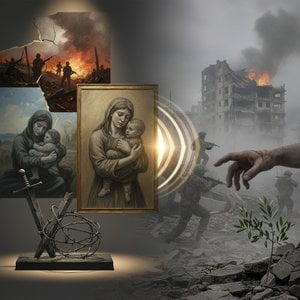
Explore a profound collection of historical war art. From visceral realism to poignant depictions of human resilience, discover museum-quality oil reproductions and expert insights for the discerning collector seeking to preserve history's most powerful echoes.

Explore the visceral visual language of battle art through masters like Rosa and Matejko. Discover the profound truth behind conflict on canvas.
 Peržiūrėti realaus dydžio版
 Pasidalinti
 Dalintis
 Išsamiau
 Vadovas

 Atsisiųsti
 Panašūs eksponatai
 Rentgeno spindulių nuotrauka
 Automatinė diorama
 问答
问答
 Statistika
 Skaityti daugiau






































 Stiklo variantas prieinamas tik pasirinkus dydį iki 110 cm


