NEMOKAMA MENO KONSULTACIJA

x
Pirkti atspaudą Pirkti atspaudąUžsisakyti kopiją Užsisakyti kopiją PasidalintiPasidalinti
IšsamiauIšsamiau Pridėti į mėgstamiausius Pridėti į mėgstamiausius AtsisiųstiAtsisiųsti Panašūs eksponataiPanašūs eksponatai Rentgeno nuotraukaRentgeno nuotrauka Automatinė dioramaAutomatinė diorama

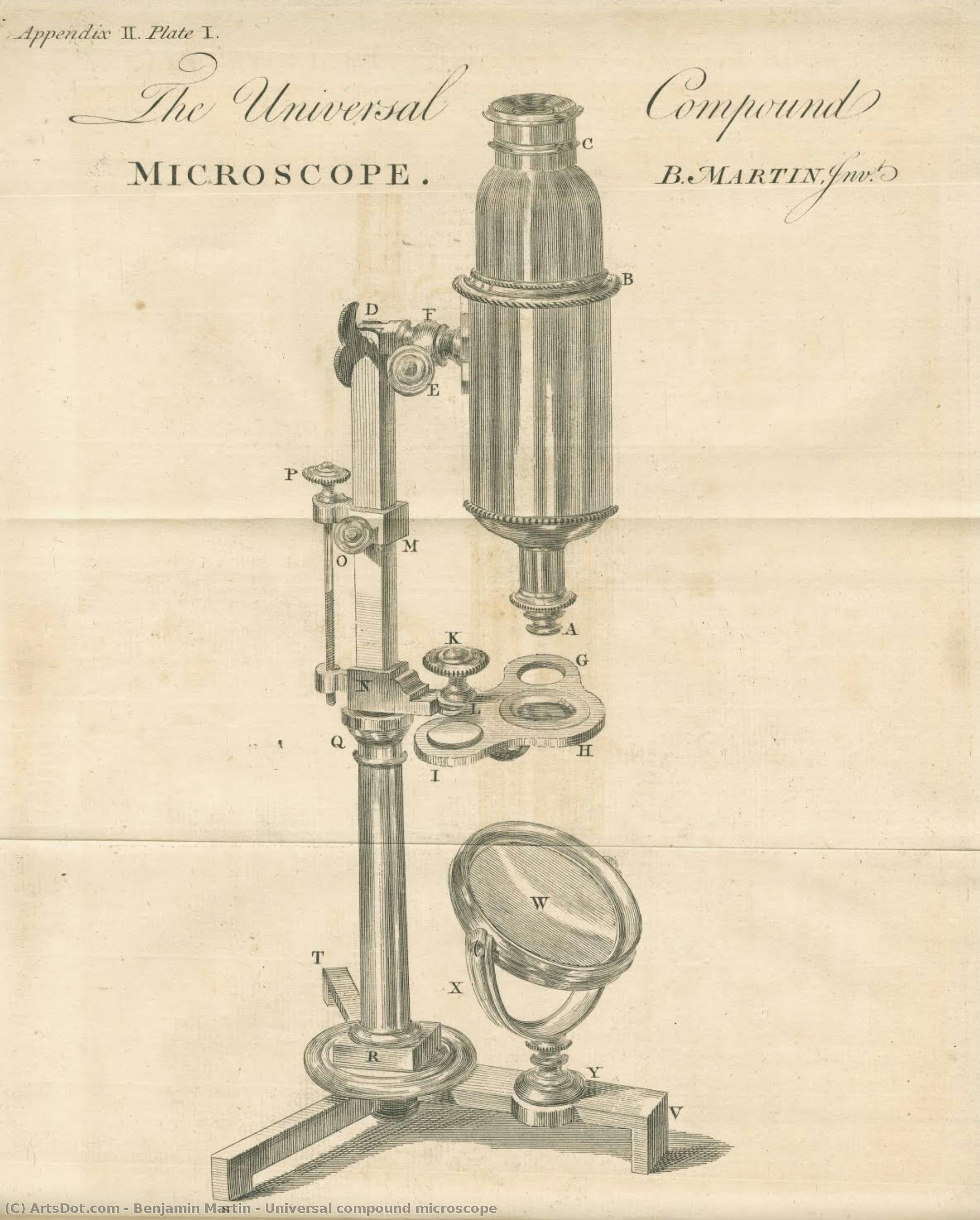
Universal compound microscope

Benjamin Martin (1705-1782) was an English lexicographer & instrument maker known for his 'Lingua Britannica Reformata' dictionary and contributions to science education. Explore his work in optics, natural philosophy, and early scientific instrument

Įsigykite aukštos skiriamosios raiškos, patobulintą skaitmeninį vaizdą, gerokai pranašesnį už internetinę peržiūrą.

Kiekvieną failą mūsų specialistai kruopščiai paruošia naudojant pažangias technologijas ir profesionalų rankinį retušavimą. Užtikriname, kad kiekvienas vaizdas pasižymėtų išskirtiniu aiškumu, tikslia spalvų atspalviu ir smulkiomis detalėmis.

Baigiamas failas el. paštu pristatomas per 72 valandas; jis optimizuotas nedelsiant naudojimui profesionalioje, redakcinėje ir spausdinimo aplinkoje. Tai ta pati kokybė, kuria pasitiki aukščiausios klasės dizaino studijos, leidyklos ir galerijos.

Skaitmeninis vaizdas

Atsisiųskite didelės raiškos failą asmeniniam naudojimui, spausdinimui ir kūrybiniams projektams.

Visų sumos kaina

$9.99

Kiekvieną skaitinio vaizdo užsakymą papildė

Profesionalus skaitmeninis pristatymas, garantuotas

Pasirinkę WahooArt.com, jūs ne tik gaunate paveikslėlį – jūs gaunate profesionaliai patobudintą skaitmeninį kūrinį, sukurtą itin tikniai ir užtikrinantį pasitenkinimą. Štai viską, kas automatiškai pritékia jūsų užsakymui:

shipping_icon
Greitas siuntimas el. paštu

Jūsų aukštos raiškos skaitmeninis vaizdo failas bus išsiųstas jums el. paštu per 72 valaudas nuo užsakymo – paruoštas naudojimui be jokių papildomų veiksmų.

canvas_icon
Skaitmeninis failas su dirbtiniu intelektu

Jūsų meno kūrinys profesionaliai optimizuojamas naudojant pažangius dirbtinio intelekto įrankius ir rankinį redagavimą, užtikrinant maksimalią detalę, aiškumą ir spalvų tikslumą.

insurance_icon
Nemokamas visam laikui pakartotinis siuntimas

Atsitiktinai ištrytikote ar praradote savo failą? Nebijokite – bet kuriuo metu atsiųsime jį jums vėl nemokamai.

tax_icon
Jokio importo mokesčio – niekada

Mėgaukitės savo meno kūriniu akimirka – skaitiniai failai visada yra neapmokestinami, todėl nereikės mokėti muitinės, mokesčių ar pristatymo mokesčių.

color_icon
Spalvų tikslumo garantija

Naudodami profesionalią įrangą ir spalvų valdymo sistemas, užtikriname, kad jūsų skaitmeninis vaizdas kuo tiksliau atspindėtų originalias spalvas.

return_icon
60 dienų pasitenkinimo garantija

Jei nebuvate patenkinti savo skaitinio vaizdo, per 60 dienų jį pertaisysime arba grąkinsime 100% sumą – be jokių klausimų.

guarantee_icon
100% pinigų grąžinimo garantija

Nepat 만족inti? Gaukite visą sumokėtą sumą per 60 dienų nuo skaitmeninio failo gavimo – be jokių papildomų klausimų.

discount_icon
Nuolaidos dideliems užsakymams

Pirkti 3 nuotraukas – pasiūla 10% - Pirkti 5 – pasiūla 15% - Pirkti 10 ir daugiau – pasiūla 20%. Puikiai tinka kūrybiniams projektams, galerijoms bei agentūroms.

Kolekcinio objekto aprašymas

Image from the appendix to the Philosophia Britannica, or: A new and comprehensive system of the Newtonian philosophy, astronomy, and geography, in a course of twelve lectures, with notes; containing the physical, mechanical, geometrical, and experimental proofs and illustrations of all the principal propositions in every branch of natural science: also a particular account of the invention, structure, improvement and uses of all the considerable instruments, engines, and machines; with new calculations relating to their nature, power, and operation. The whole collected and methodized from all the principal authors, and public memoirs; and embellished with eighty-one copper-plates, published by Benjamin Martin in 1759.

panašūs kūriniai


Autoriaus biografija

Benjamin Martin: A Pioneer of English Language and Scientific Instrument Making

Benjamin Martin (1705-1782) stands as a quietly significant figure in the annals of 18th-century England – a lexicographer, instrument maker, and dedicated educator who profoundly shaped the development of the English language and fostered a burgeoning interest in scientific inquiry. Born in Worplesdon, Surrey, to a family of modest means, Martin’s early life as a ploughboy belied an intellectual curiosity that would ultimately lead him to become one of the era's most influential polymaths. His journey exemplifies the rise of the independent scholar and demonstrates how proximity to centers of learning – in this case, the Royal Society near Fleet Street – could ignite a lifelong pursuit of knowledge.

Early Life and Intellectual Foundations

Martin’s formative years were marked by an unusual combination of practical labor and intellectual engagement. Initially working as a ploughboy, he later transitioned to teaching, a role that exposed him to the diverse range of minds within his community. Crucially, his location near Fleet Street placed him in close proximity to the Royal Society, where Isaac Newton lectured regularly. This environment profoundly influenced Martin’s thinking, instilling in him a deep appreciation for Newtonian physics and a commitment to disseminating scientific knowledge. He embraced the newtonian system, becoming an early champion of its principles within England. His dedication to learning was further fueled by a legacy of £500, which he judiciously invested in books and instruments – tools that would prove essential to his future endeavors.

A Lexicographer’s Vision: The Lingua Britannica Reformata

Martin's most enduring contribution lies in his meticulous compilation of the *Lingua Britannica Reformata*, published in 1749. This ambitious dictionary represented a significant leap forward from its predecessors, notably incorporating and largely preserving Nathan Bailey’s already established *Universal Dictionary* of 1721. However, Martin didn't simply replicate existing work; he sought to refine and modernize the English language as a whole. His dictionary was notable for its universal scope – aiming to explain the etymology of words – its simpler system of spelling, and a clearer guide to pronunciation. Importantly, Martin challenged the prevailing notion that language needed rigid standardization, arguing instead that it was a dynamic entity shaped by usage and custom. This forward-thinking perspective foreshadowed Samuel Johnson’s own dictionary, demonstrating Martin's pioneering role in shaping lexicographical methodology.

Beyond the Dictionary: Scientific Instruments and Educational Pursuits

Martin’s talents extended far beyond lexicography. He was a skilled instrument maker, producing essential tools for scientific observation and measurement, including Hadley’s quadrant – a precursor to the modern sextant – and various microscopes. His workshop flourished, establishing him as a respected figure in the London instrument trade. Furthermore, Martin dedicated himself to education, lecturing on natural philosophy at the Royal Society and publishing *Martin's Magazine* (1755-1764), formally known as the *General Magazine of Arts and Sciences*. This periodical served as an encyclopedia for its subscribers, offering a wealth of knowledge distilled into digestible “one Half-sheet upon a Science” portions. It represented Martin’s vision of democratizing scientific learning, making complex concepts accessible to a wider audience.

Legacy and Historical Significance

Benjamin Martin's life concluded tragically in 1782, following a period of financial hardship and a failed attempt at suicide. Despite this difficult end, his legacy remains substantial. His *Lingua Britannica Reformata* provided a crucial foundation for future dictionaries, while his work as an instrument maker contributed to the advancement of scientific observation. Martin’s emphasis on accessible education and his rejection of rigid linguistic dogma continue to resonate today, solidifying his position as a pivotal figure in the history of English language development and 18th-century British science. His story serves as a testament to the power of intellectual curiosity, dedication, and a commitment to disseminating knowledge for the benefit of society.
Benjamin Martin

Benjamin Martin

1705 - 1782 , United Kingdom

Trumpai apie šį kūrėją

  • Artistic Movement Or Style: Lexicographer, Instrument maker
  • Artists Or Movements Influenced By This Artist: ['Samuel Johnson']
  • Artists Who Influenced This Artist:
    • Newton
    • Nathan Bailey
  • Date Of Birth: 1705, Worplesdon, UK
  • Date Of Death: 1782
  • Full Name: Benjamin Martin
  • Nationality: British
  • Notable Artworks:
    • Lingua Britannica Reformata
    • Universal compound microscope
  • Place Of Birth: Worplesdon, UK