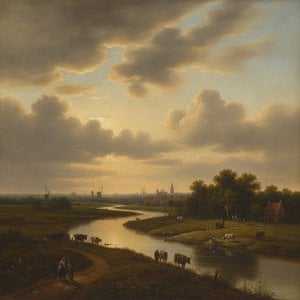
Autoriaus biografija
Aukso Amžiaus Portretų Meistras: Bartolomejaus van der Helsto Gyvenimas ir Kūryba
Gimęs 1613 metais Harleme, Bartolomejus van der Helstas greitai iškilęs kaip vienas žymiausių portretininkų Nyderlandų Aukso Amžiuje. Nors jo ankstyvasis gyvenimas apipintas paslaptimis – Harlemo gimimo įrašai to laikmečio, deja, dingo – žinome, kad jis persikėlė į Amsterdamą, klestintį prekybos ir meno inovacijų centrą, kur 1636 metais įsitvirtino. Jo santuoka su Ana du Pire, našlaite iš turtingos Pietų Nyderlandų šeimos, rodo ryšius su miesto prosperuojančiu pirklio sluoksniu – tinklu, kuris pasirodė esąs būtinas jo augančiai karjerai. Van der Helsto pradiniai mokytojai lieka neaiškūs, tačiau daugelis mokslininkų mano, kad Nikolaesas Eliaszoonas Pickenoy, gerbiamas Amsterdamo portretininkas, galėjo būti jo mentorius. Šią įtaką galima pastebėti ankstyvuose darbuose, tokiuose kaip puikus *Valonų našlaičių prieglaidos regentai* (1637), kuris nedelsiant parodė jo talentą užfiksuoti ir panašumą, ir charakterį.
Amžiaus Įamžinimas: Portretinė Tapyba ir Stilius
Van der Helsto meninis bruoždas slypi gebėjime perteikti Amsterdamo elito eleganciją ir pasiturimimą. Jo portretai nebuvo tik atvaizdai; tai buvo statuso pareiškimai, kruopščiai sukonstruoti naratyvai, atspindintys modelio padėtį visuomenėje. Jis turėjo nepaprastą įgūdį vaizduoti prabangius audinius, spindinčius papuošalus ir iškilmingus interjerus kvapą gniaužiančiu realizmu. Tačiau be techninio meistriškumo Van der Helstas suprato, kaip užfiksuoti savo modelių *esenciją* – jų asmenybę, ambicijas ir vietą pasaulyje. Tai ypač akivaizdu jo grupinėse portretinėse tapyboje, žanre, kuriame jis puikiai sekėsi. Skirtingai nuo kai kurių bendraamžių, kurie teikė pirmenybę dinamiškoms kompozicijoms, kupinomis judesio, Van der Helstas dažnai pasirenka formalūs susitarimus, pabrėžiant aiškumą ir individualų atskyrimą kolektyve. Jo didžiausias pasiekimas šia kryptimi neabejotinai yra *Banketas Kryžininkų gildijoje, minint Miunsterio sutartį* (1648). Šis monumentalus darbas, kupinas kruopščiai perteiktų figūrų, nėra tik įvykio užrašas; tai gyvas vaizdas, apimantis šventės dvasią ir pilietinį pasididžiavimą po Aštuoniasdešimt metų karo pabaigos.
Akimirka Saulyje: Pasiekimai ir Įtaka
Viduryje 1640-ųjų Van der Helstas pranoko netgi Rembrandtą populiarumu tarp Amsterdamo turtingų globėjų – tai liudija jo gebėjimą kurti portretus, kurie atitiko jų skonį ir siekius. Jis tapo pirmaujančiu miesto pirklio, pareigūnų ir žymių gildijų narių portretuotoju. Jo sėkmė neapsiribojo portretine tapyba; jis tyrinėjo žanrines scenas ir biblinius siužetus, nors šių darbų yra mažiau nei jo garsiausių atvaizdų. Van der Helsto įtaka apėmė visą jo gyvenimą. Ludolf Bakhuizen, žymus jūrininkystės tapytojas, jam padėjo keletą kartų, pasisavinęs vertingas pamokas apie kompoziciją ir techniką. Jo palikimas matomas kitų olandų menininkų darbuose, kurie buvo patraukti jo rafinuoto stiliaus ir meistriško šviesos ir šešėlio valdymo. Šiandien jo paveikslai yra brangūs muziejų lobiai, tokie kaip Rijksmuseum Amsterdamo mieste, ir juos galima rasti kolekcijose visame pasaulyje, įskaitant tas, kurios prieinamos tokiose platformose kaip WahooArt.com ir WahooArt.com.
Šeima, Palikimas ir Paskutiniai Metai
Van der Helsto asmeniniam gyvenimui būdingas tiek džiaugsmas, tiek sielvartas. Su Ana du Pire jis susilaukė šešių vaikų, tačiau suaugę liko tik du. 1647 metais, augant jo šeimai ir plečiantis dirbtuvėms, jis persikėlė į didesnį namą Walenpleintje Amsterdamo mieste. Jo sūnus Lodewijk pasekė tėvo pėdomis, tapdamas dailininku – nors jis nepasiekė tokio paties garso lygio. Bartolomejus van der Helstas mirė Amsterdamo mieste gruodžio 16 dieną, 1670 metais, palikęs turtingą meninį palikimą, kuris ir toliau žavi ir įkvepia. Jis reikšmingai prisidėjo prie portretinės tapybos plėtros Nyderlandų Aukso Amžiuje, sukūręs stilių, pasižymintį elegancija, detaliais atvaizdais ir subtiliai jautrumu individualiam charakteriui tiek vienišuose portretuose, tiek sudėtingose grupinėse kompozicijose. Jo darbai išlieka galingais įrodymų gyvybingam laikmečiui ir meistro amatininko nesibaigiančiam įgūdžiui.



 Peržiūrėti realaus dydžio版
 Perjungti į spausdinimą
 Siųsti
 Dalintis
 Išsamiau
 Gidas
Gidas

 Atsisiųsti
 Panašūs eksponatai
 Rentgeno spindulių nuotrauka
 Diaporama
 Statistika


 Rodyti daugiau






































 Stiklo variantas prieinamas tik pasirinkus dydį iki 110 cm