

Šiame puslapyje rodomas meno kūrinys yra saugomas autorių teisių įstatymais, todėl neturime teisės legaliai kurti ar parduoti jo identiškos reprodukcijos. Ši apsauga užtikrinama remiantis tokiais tarptautiniais susitarimais kaip Bernės konvencija ir pagal nacionalines įstatymų nuostatas, įskaitant tas, kurias nurodo JAV autoriškos teisės įstatymas – 17-asis skyrius.
Šis metodas visiškai atitinka autorių teises, nes jame nėra saugomo kūrinio kopijavimo ar dubliavimo. Tai yra kūrybinė reinterpretacija – naujas paveikslas, kurį įkvėpė originalas, tačiau kuris nėra jo identiškas.
Muziejų lygio „giclée“ arba drobos spausdinimas: greita gamyba ir lankstios apdailos parinktys. ( Pirkti rankų darbo tapybą Perejti prie skaitmeninių vaizdų)
Pasirinkite iš mūsų nustatytų dydžių, atitinkančių originalaus meno kūrinio proporcijas.

Įveskite jums reikiamą plotį ir aukštį, kad atvaizdas derėtų prie jūsų rėmo ar sienos. Spausdiną galima tik sumažinti, bet nepadidinti virš originalaus paveikslėlio dydžio, todėl keičiant proporcijas, dalis vaizdo prarandama. Prieš spausdinimą atsiųsime jums skaitmeninį maketą patvirtinimui. Šioje puslapio nuotraukoje matomas pjūvis nėra tikslus – jį rodo tik maketas.
Pristatymas visame pasaulyje () per 2 weeks, o ne įprastas 4/5 savaičių laikotarpis. (8 lapkritis)
Mask
Reprodukcijos matmenys
In the quietude of modern sculpture, few works command the room with as much understated power as Barbara Hepworth’s “Mask,” created in 1928. This piece is not merely an object to be viewed; it is an experience to be felt. At first glance, the viewer is met with a deceptively simple geometric shape—a soft, oval form that seems to float within its wooden frame. Yet, as one lingers, the sculpture reveals a profound depth, inviting a meditative dialogue between the observer and the stone. Hepworth, a titan of British Modernism, possessed an unparalleled ability to distill the complexities of human emotion into the purest essence of organic abstraction.
The sculpture’s physical presence is defined by its exquisite material choice: alabaster. This medium provides a milky, ethereal translucence that allows light to penetrate the very heart of the stone, creating an inner glow that breathes life into the inanimate. The surface is a masterclass in tactile precision, where meticulous polishing and grinding have achieved a smooth, luminous finish, yet subtle irregularities remain to remind us of the earth from which it was carved. This interplay of light and texture creates a sense of movement within a static form, making the piece feel as though it is caught in a moment of eternal transformation.
To understand “Mask,” one must look to the historical currents that shaped Hepworth’s vision. Emerging from the vibrant artistic landscape of the early 20th century, Hepworth was deeply influenced by Surrealist thought and the burgeoning movement toward abstraction. While her contemporaries often sought to break entirely from the past, Hepworth found inspiration in the ancient. The title itself evokes the primal significance of ceremonial masks—objects used throughout human history to facilitate ritual, disguise, and spiritual transition. By blending these ancestral echoes with a modern, geometric sensibility, she created a work that feels both timeless and avant-garde.
The sculpture serves as a bridge between the seen and the unseen. In its carved features, there is a haunting quality—a subtle tension between concealment and revelation. It asks the viewer to contemplate what lies beneath the surface of our own identities. For the collector or the interior designer, this piece offers more than mere decoration; it provides a focal point for intellectual curiosity and emotional reflection. Whether placed in a sunlit gallery or a sophisticated contemporary living space, “Mask” acts as an anchor of serenity, its silent strength capable of transforming the atmosphere of any environment.
For those seeking to curate a collection that celebrates the pinnacle of 20th-century sculpture, a high-quality reproduction of this masterpiece offers an unparalleled opportunity. The beauty of Hepworth’s work lies in its ability to harmonize with diverse interior aesthetics—from the minimalist rigor of modern architecture to the warm, organic textures of mid-century design. Owning a piece that captures the spirit of Unit One and the legacy of St Ives is an invitation to live alongside history.
A reproduction of “Mask” allows the subtle play of light and the profound stillness of Hepworth’s vision to inhabit your personal space. It is a tribute to the enduring power of form, a celebration of the artist's ability to find the infinite within the finite, and a timeless addition for anyone who finds beauty in the quiet, powerful language of abstraction.
„Mask“ yra Modern Sculpture stiliaus kūrinys. Šis dailos kryptis nurodo meninę tradiciją, kurios šis darbas yra dalis.
Kūriniai, panašūs į „Mask“ – Barbara Hepworth, surinkti puslapio Panašūs kūriniai.
Dominuojanti „Mask“ – Barbara Hepworth spalva yra Amber to Saffron. Šis tonas yra pagrindinė paletės spalva.


1903 - 1975 , Jungtinė Karalystė

Discover the sublime beauty of marble art through an expert exploration of Renaissance and Neoclassical masterpieces. From the delicate textures of Carpeaux to the grandeur of Sansovino, immerse yourself in a guide to timeless elegance and sculptural perfection.
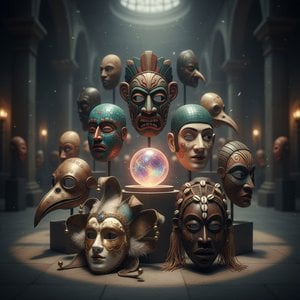
Embark on a profound journey through the world's most iconic mask artworks. Explore the spiritual depth, intricate craftsmanship, and rich cultural heritage of global traditions, from Chhau to Gomira, in this expert-led exploration of ancestral artistry and symbolic beauty.
 Pasidalinti
 Dalintis
 Išsamiau
 Vadovas

 Atsisiųsti
 Panašūs eksponatai
 Automatinė diorama
 问答
问答
 Statistika


 Skaityti daugiau






































 Stiklo variantas prieinamas tik pasirinkus dydį iki 110 cm


