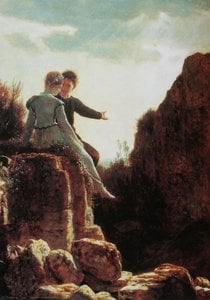
Centaur Watching Fish (1878), autoriaus Arnold Böcklin, meistro rankomis sumalatyta aliejų technika reprodukcija
Peržiūrėti realaus dydžio版 Peržiūrėti AR realybėje Perjungti į spausdinamus版作品 Perejti prie skaitmeninių vaizdų Pasidalinti
Išsamiau Vadovas Pridėti į mėgstamiausius Atsisiųsti Panašūs eksponatai Rentgeno spindulių nuotrauka Automatinė diorama 问答 Prezentacija Statistika

Centaur Watching Fish Rankiniu būdu dažyta aliejaus reprodukcija

Matmenys
43.0 x 70.0 cm

Arnold Bocklin’s ‘Centaur Watching Fish’ (1878) is a haunting Symbolist oil painting of a melancholic centaur. Explore its Romantic style, earthy tones & contemplation.

Šveicaro simbolistas, žinomas dėl „Mirusiosios salos“. Atraskite jo šiurpius mitologijos šedevrus jau šiandien.

Rankų darbo aliejinės reprodukcijos

Rankiniu būdu tapytas aliejus ant droblio jūsų pageidaujamame dydį ir rėmuose – tai mūsų menininkų pagal užsakymą sukurtas darbas. ( Perjungti į spausdinamus版作品 Perejti prie skaitmeninių vaizdų)


Corner sample of the P118B picture frame: lieto polistirolo detalės, 5 cm wide and 3 cm thick
P118B €10
Corner sample of the P118H picture frame: lieto polistirolo detalės, 5 cm wide and 3 cm thick
P118H €10
Corner sample of the P118W picture frame: lieto polistirolo detalės, 5 cm wide and 3 cm thick
P118W €10
Corner sample of the P438Z picture frame: lieto polistirolo detalės, 5.5 cm wide and 3.5 cm thick
P438Z €10
Corner sample of the P508JH picture frame: lieto polistirolo detalės, 7 cm wide and 3.5 cm thick
P508JH €12
Corner sample of the P508YH picture frame: lieto polistirolo detalės, 7 cm wide and 3.5 cm thick
P508YH €12
Corner sample of the P805H picture frame: lieto polistirolo detalės, 5 cm wide and 3.5 cm thick
P805H €10
Corner sample of the P805Z picture frame: lieto polistirolo detalės, 5 cm wide and 3.5 cm thick
P805Z €10
Corner sample of the P919BZ picture frame: lieto polistirolo detalės, 7 cm wide and 3.5 cm thick
P919BZ €10
Corner sample of the P919G picture frame: lieto polistirolo detalės, 7 cm wide and 3.5 cm thick
P919G €10
Corner sample of the P919XJ picture frame: lieto polistirolo detalės, 7 cm wide and 3.5 cm thick
P919XJ €10
Corner sample of the P959ZH picture frame: lieto polistirolo detalės, 5 cm wide and 3 cm thick
P959ZH €10
Corner sample of the P968JZ picture frame: lieto polistirolo detalės, 6 cm wide and 4 cm thick
P968JZ €12
Corner sample of the W106C picture frame: solidus medžio

**Improved version:**
solidus medis, 5 cm wide and 3 cm thick
W106C €8
Corner sample of the W218G picture frame: solidus medžio

**Improved version:**
solidus medis, 5 cm wide and 3 cm thick
W218G €10
Corner sample of the W218JH picture frame: solidus medžio

**Improved version:**
solidus medis, 5 cm wide and 3 cm thick
W218JH €8
Corner sample of the W218Y picture frame: solidus medžio

**Improved version:**
solidus medis, 5 cm wide and 3 cm thick
W218Y €10
Corner sample of the W307PJ picture frame: solidus medžio

**Improved version:**
solidus medis, 6 cm wide and 3 cm thick
W307PJ €10
Corner sample of the W316G picture frame: solidus medžio

**Improved version:**
solidus medis, 6 cm wide and 3 cm thick
W316G €10
Corner sample of the W316PJ picture frame: solidus medžio

**Improved version:**
solidus medis, 6 cm wide and 3 cm thick
W316PJ €8
Corner sample of the W316Y picture frame: solidus medžio

**Improved version:**
solidus medis, 6 cm wide and 3 cm thick
W316Y €10
Corner sample of the W398PJ picture frame: solidus medžio

**Improved version:**
solidus medis, 5 cm wide and 3 cm thick
W398PJ €8
Corner sample of the W4111J picture frame: solidus medžio

**Improved version:**
solidus medis, 6.5 cm wide and 3.5 cm thick
W4111J €10
Corner sample of the W500HY picture frame: solidus medžio

**Improved version:**
solidus medis, 7 cm wide and 5 cm thick
W500HY €15
Corner sample of the W500JH picture frame: solidus medžio

**Improved version:**
solidus medis, 7 cm wide and 5 cm thick
W500JH €15
Corner sample of the W692G picture frame: solidus medžio

**Improved version:**
solidus medis, 8 cm wide and 4 cm thick
W692G €12
Corner sample of the W849H picture frame: solidus medžio

**Improved version:**
solidus medis, 5 cm wide and 3 cm thick
W849H €8
Corner sample of the W940BG picture frame: solidus medžio

**Improved version:**
solidus medis, 7.5 cm wide and 4.5 cm thick
W940BG €15
Corner sample of the W953PJ picture frame: solidus medžio

**Improved version:**
solidus medis, 6 cm wide and 3.5 cm thick
W953PJ €8

Standartinis dydis
pagal užsakymą
CM
INCH

Pasirinkite iš mūsų nustatytų dydžių, atitinkančių originalaus meno kūrinio proporcijas.

plotis
aukštis

Įveskite jums reikiamą plotį ir aukštį, kad paveikslas atitiktų jūsų rėmą ar sieną. Kadangi šis darbas yra rankinio darbo, siekiant išgauti kitokios formos dydį, paveikslas gali būti šiek tiek didesnis (nuo kraštų bus palikta daugiau erdvės) arba mažesnis – pasirinkite jums patogiausią variantą. Prieš pradedant tapyti, atsiųsime jums skaitmeninį maketą patvirtinimui. Šioje puslapio nuotraukoje matomas vaizdas nėra galutinis rezultatas – jį parodys tik sukurtas maketas.

Ką galima pakeisti (pavyzdžiai): Pakeisti veidą į kliento nuotrauką; Pridėti augintinį (pvz., pakeisti katę šunimi); Įtraukti paslėptą žinutę fone; Pakeisti fono kraštovaizdį ar elementus.
Gavus užsakymą, WahooArt.com komanda susisieks su klientu el. paštu dėl instrukcijų ir pateiks maketo pavyzdį

Pristatymas visame pasaulyje () per 3–4 savaites, o ne įprastai – per 5 savaites. (16 lapkritis). Kokybė lieka nepakeičiama.

Nemokamas greitasis pristatymas visame pasaulyje
Aukštos kokybės lininis drobė
Pilnas siuntimo draudimas
Muitinės mokesčių grąžinimo garantija
Tikro spalvų atitikimo garantija
100 dienų grąžinimo politika (tik esant įtaigoms)
100% pinigų grąžinimo garantija
Nuolaida dideliems užsakymams

Visos kainos suma

€ 242

Centaur Watching Fish

Reprodukcijos technika

Reprodukcijos matmenys

-

Bendroji kaina

€ 242

Trumpa informacija

  • Artistic style: Romantic
  • Dimensions: 43 x 70 cm
  • Influences: Romanticism
  • Notable elements or techniques: Impasto technique
  • Medium: Oil on canvas
  • Title: Centaur Watching Fish

Karo viktorina

Kiekviename klausime yra tik vienas teisingas atsakymas.

Klausimas 1:
What artistic movement is ‘Centaur Watching Fish’ primarily associated with?
Klausimas 2:
The painting depicts a mythological creature – what is it?
Klausimas 3:
What technique is prominently used in Böcklin’s ‘Centaur Watching Fish’?
Klausimas 4:
Where was Arnold Böcklin born?
Klausimas 5:
What is the overall mood conveyed by the artwork’s composition and color palette?

A Silent Meditation on Nature and Mortality

In the quietude of Arnold Böcklin’s 1878 masterpiece, “Centaur Watching Fish,” the viewer is invited into a realm where the boundaries between the mythological and the terrestrial dissolve. This evocative oil on canvas, currently held in the prestigious Kunsthaus Zürich, serves as a profound gateway into the Symbolist movement—a period of art history dedicated to exploring the hidden psychological depths of the human soul. Rather than presenting a mere scene from ancient legend, Böcklin crafts an immersive experience that speaks to the universal themes of solitude and the silent, rhythmic pulse of the natural world. The centaur, a creature of dual nature, reclines upon a serene shoreline, his gaze fixed upon the movement beneath the water's surface, creating a moment of suspended animation that feels both eternal and fleeting.

The composition is masterfully orchestrated to evoke a sense of Romantic reverie. Utilizing a horizontal format, Böcklin emphasizes the reclining posture of the centaur, grounding the mythological figure within a landscape of soft sands and swaying grasses. The artist deliberately eschews the rigid precision of strict realism in favor of an emotional truth. Through the use of diffused lighting and gentle shadows, he establishes an atmosphere of melancholic stillness. This technique allows the viewer to feel the weight of the silence, as if the very air around the creature is heavy with contemplation. It is a painting that does not demand attention through spectacle, but rather earns it through a subtle, haunting intimacy.

The Mastery of Texture and Atmosphere

Technically, “Centaur Watching Fish” is a triumph of texture and perspective. Böcklin employs the impasto technique with remarkable skill, applying thick, deliberate layers of paint to render the coarse fur of the centaur’s equine half. This tactile richness provides a palpable sense of physicality, making the creature feel present and breathing within the frame. To balance this heavy texture, the artist utilizes atmospheric perspective to create an illusion of infinite depth. By reducing color saturation and softening the details of the distant horizon, he simulates a hazy, dreamlike distance that reinforces the theme of isolation. This method draws a direct lineage from the Romantic masters like Caspar David Friedrich, using the landscape as a mirror for spiritual introspection.

The color palette is a sophisticated arrangement of earthy tones—ochres, deep browns, and muted beiges—which lends the work an organic, timeless quality. These warm, grounded hues are contrasted by the subtle, shimmering light reflecting off the water, drawing the eye toward the focal point of the centaur’s quiet observation. For the collector or interior designer, this piece offers a unique aesthetic versatility; its somber yet tranquil mood provides a sophisticated anchor for a room, offering a sense of historical depth and intellectual gravity that more contemporary works may lack.

Symbolism: The Intersection of Myth and Being

Beyond its visual splendor, the painting functions as a complex symbolic tapestry. The centaur itself—a hybrid of human intellect and animal instinct—serves as a powerful metaphor for the duality of existence. As he watches the fish, there is a profound sense of the relationship between humanity and the untamed elements of nature. The act of watching becomes a meditation on mortality; the stillness of the figure suggests a resignation to the cycles of life and death that govern both man and beast. There is a touch of sadness in his solitude, yet it is a beautiful, dignified melancholy that celebrates the quiet dignity of existence.

For those seeking to bring a piece of this profound emotional landscape into their personal spaces, a high-quality reproduction of this work offers more than just decoration. It provides a window into a bygone era of artistic exploration, a constant reminder of the beauty found in silence and the enduring power of myth. Whether placed in a library, a study, or a curated gallery space, “Centaur Watching Fish” continues to provoke thought, inviting all who encounter it to pause, breathe, and reflect upon the silent wonders of the world.

Klausimai ir atsakymai

Ar „Centaur Watching Fish“ – Arnold Böcklin, esąį Kunsthaus Zürich, galima legaliai reprodukcijaoti?

„Centaur Watching Fish“ – Arnold Böcklin autoriškos teisės statusas yra aiškus: kūrinys priklauso yra viešosios erdvės dalis – jo autorinė teisė pasibaigusi. Jo buvimas Kunsthaus Zürich šio statuso nekeičia.

Kaip meno kryptis ir epocha susilieja kūryboje „Centaur Watching Fish“ – Arnold Böcklin?

„Centaur Watching Fish“ priklauso Symbolism krypčiai, o jo kūrėjas dirbo XIX amžius laikotarpiu.

Kokią spalvų paletę naudoja „Centaur Watching Fish“?

„Centaur Watching Fish“ – Arnold Böcklin spalvų paletė apibūdinama kaip Earthy. Tai glaustas kūrinio spalvų aprašymas.


Autoriaus biografija

Salos šešėlis

Šveicarijos Bazelis tampa gyvenimo pradžia, apibrėžta įtampu tarp to, kas materialu, ir to, kas spektralu. Gimęs 1827 m. spalio 16 d. šeimoje, kurioje tėvas Christian Frederick Böcklin buvo šilko verslininkas, jaunas žmogus, Arnoldas Böcklinas, vėliau paliko šeimos verslą ir pasirinko griežtą Düsseldorfio akademijos mokslą. Dirbdamas su Schirmeriu, jis pradėjo įsisiuglinti kraštovardžių kalbą – įsidėvinėdamas įgūdį, kuris vėliau padės jam žemėlapius piešti žmogaus sielos geografiją. Jis ne tik tapo kraštovardžių pieštoju; jis kūrė karalystes, kuriose susiduria klasika ir makabra.

Kelionė iš akademinės Düsseldorfio disciplinos į Paryžiaus šviesą ir senovės Romos svorį žymi esminį jo vizijos perkirtojimą. Louvre muziejuje jis įsisavino meistrų istoriją, tačiau būtent Italijos atmosfera tikroji suformavo jo ranką. Grįžęs į Romą tarp 1862 ir 1866 metų, jis pradėjo rinktis rytesnius, išraiškiskesnius spalvos – tai ne buvo šviesi, saulėta Renesanso Italija, o vieta, kupinta gilių šešėlių ir mitologinio svorio. Jo kūryba pradėjo linkti į alegoriją, naudojant antikvarinius figūras, kad išnaudotų sunkų, neišvengiamą mirties buvimą.

Sapnų architektūra

XIX a. pabaigoje jo reputaciją įtvirtė specifinis, šiurpus užsiėmimas. Mežiu 1880–1886 m. jis sukūrė penkis Mirusiosios salos variantus. Šis darbas, įkvėptas Florencijos angliško kapelių, kuriame buvo laidota jo dukra, tapo simbolizmo judėjimo centru. Tai gilaus ramybės scena: uolinkas salpų, tamsios kiparės ir malkas artinantis stanglė prie tylios kranto. Paveikslas ne tik vaizduoja vietą; jis vaizduoja būtimo būdą. Gebėjimas perteikti nepalaužiamą – sapnų šūbius ir afterlife svorį – įdiegė jį į naujos Europos jautrumo širdį.

Techniškai jis dažnai taikė storą, ekspresyvų impasto sluoksnių naudojimą, ypač tokiuose darbuose kaip La Guerre (1896). Šiame paveiksyje drobė treptea nuo konflikto chaoso. Jis vengia tradicinis linijų gryžtumo, rinkdamasis tankią, sluoksniuotą kompoziciją, kur figūros susiduria griauva užsięmusi architektūroje. Tai yra vizcerališkas destrukcijos manifestas, kuriame sluoksnis tarp mito ir realybės ištirpsta į šešėlių audrą. Jo stilius persivienė su pre-Rafaelitais, tačiau jis išliko išskirtinis, orientuotas į mistizmą, kuris atrodo kartu senovinis ir neišvengiamai modernus.

Įtakos palikimas

Jo vaizdinio poveikis išsipletė gerai už drobės ribų, pasiekdamas vėlyvo romantizmo muzikos auditinį sferą. Jo paveikslai suteikė vizualią stimulus kompozitoriams, ypač paveikdami Gustavas Mahlerio kūrybos atmosferą. Gebėjimas užbryžti atsaką tarp vizualinio ir psichologinio reikšmė tai, kad jo įtampa buvo pajauta tiems, kurie siekė reprezentuoti nežinomąją podvėdį. Jo įtaka pasiekė kelias menininkų kartas:

  • Hansas Thoma, jaunesnis menininkas,受到了 jo simboline galybe.
  • Giorgio de Chirico, kuris rado gilią ryšį izoliuotoje Arnoldas Böcklinas kompozicijose.
  • Salvador Dalí ir Max Ernst, kurie pasinaudojo jo gebėjimu juoką derinti su košmario elementais.
  • Marcel Duchamp, pastebėjęs reikšmingą menininko įtaką savo asmeniniam vystymui.

Jis mirė Fiesole, Italijoje, palikdamas kūrybos veiklą, kurios nebuvo lengva kategorizuoti. Jis buvo Šveicarijos kraštovardžių, romų užeidų ir mitologinių girų paveikslų meistras, tačiau jo tikroji tema išliko tylus, amžinas nežinomo būvimas. Jo darbai išlieka svarbių kolekcijų lapai, įskaitant Kunstmuseum Bazelį ir Kunsthaus Zürich, tarnuodami kaip kertinės stulpų tiems, kurie tyrinėja mito ir mirties sankryžmą.

Arnold Böcklin

Arnold Böcklin

1827 - 1901 , Šveicarija

Trumpa informacija

  • Artistic Movement Or Style: Simbolizmas
  • Artists Or Movements Influenced By This Artist:
    • Hansas Thoma
    • Giorgio de Chirico
    • Max Ernstas
    • Salvador Dalí
    • Marcel Duchampas
  • Artists Who Influenced This Artist:
    • Eugene Delacroix
    • Jean-Baptiste-Camille Corot
  • Date Of Birth: 1827
  • Date Of Death: 1901
  • Full Name: Arnoldas Böcklinas
  • Nationality: Šveicaro
  • Notable Artworks:
    • Mirusiosji salos
    • Nimfa ir satyras
    • Safona
    • La Guerre
  • Place Of Birth: Bazelis, Šveicarija
Tyrinėkite meno kūrinius, suskirstytus pagal temas, stilius ir savybes.