A Serene Encounter with Catalan Impressionism
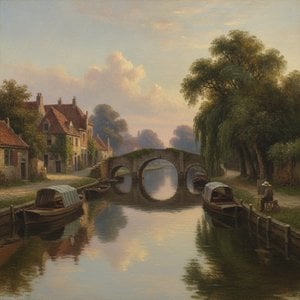
In the quietude of 1912, Antoni Samarra Tugues captured a moment of profound stillness that transcends the boundaries of time. His Untitled (landscape) is not merely a depiction of a bridge and water; it is an invitation into a world where the frantic pace of modernity yields to the rhythmic pulse of nature. The scene unfolds with a delicate balance, presenting a structural bridge that arches gracefully over a tranquil body of water, acting as a gateway between the viewer and the verdant depths of the background. Through his masterful use of light and atmosphere, Tugues invites us to wander through this picturesque setting, where the presence of scattered figures adds a layer of human connection to the vast, breathing landscape.
The technique employed in this piece reflects the soulful versatility that defined Tugues’ brief but brilliant career. There is a soft, almost ethereal quality to the brushwork that allows the trees and foliage to blend seamlessly into the horizon, creating a sense of depth that pulls the eye inward. The interplay between the solid, geometric lines of the bridge's fence and the fluid, organic shapes of the surrounding nature creates a captivating visual tension. This mastery of composition ensures that every element—from the distant silhouettes of people to the shimmering reflections on the water—contributes to a unified, harmonious whole, making it an ideal centerpiece for those looking to introduce a sense of calm and classical elegance into a contemporary interior.
The Poetic Legacy of a Lost Talent
To look upon this work is to touch the legacy of a Catalan master whose life was tragically cut short. Antoni Samarra Tugues, a polymath of sculpture, painting, and literature, possessed a rare ability to imbue his visual art with the lyrical sensitivity of a poet. This landscape serves as a testament to his deep connection to the Spanish landscape and his ability to find the sublime in the everyday. The emotional impact of the piece lies in its profound peace; it evokes a nostalgic longing for a simpler era, making it an evocative choice for collectors who seek art that speaks to the soul and provides a sanctuary of tranquility within the home.
For interior designers and connoisseurs of fine art, this reproduction offers more than just aesthetic beauty; it offers a historical narrative. As a piece that embodies the spirit of early 20th-century Catalan art, it brings a sophisticated intellectual weight to any curated space. Whether placed in a sunlit study or a grand living area, the painting acts as a window into a lost moment of 1912, offering a timeless elegance that complements both traditional and modern decor styles. It is an investment in emotion, history, and the enduring power of the landscape.



 Peržiūrėti realaus dydžio版
 Perjungti į spausdinamus版作品
 Pasidalinti
 Dalintis
 Išsamiau
 Vadovas

 Atsisiųsti
 Panašūs eksponatai
 Rentgeno spindulių nuotrauka
 Automatinė diorama
 Q&A
Q&A Statistika


 Skaityti daugiau






































 Stiklo variantas prieinamas tik pasirinkus dydį iki 110 cm