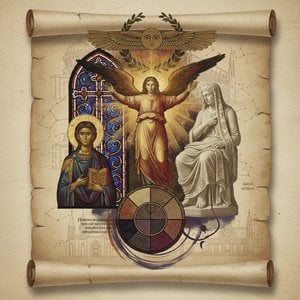
Curandera (2011), autoriaus Amalia Mesa-Bains, meistro rankomis sumalatyta aliejų technika reprodukcija
Peržiūrėti realaus dydžio版 Peržiūrėti AR realybėje Perjungti į spausdinamus版作品 Perejti prie skaitmeninių vaizdų Pasidalinti
Išsamiau Vadovas Pridėti į mėgstamiausius Atsisiųsti Panašūs eksponatai Rentgeno spindulių nuotrauka Automatinė diorama 问答 Prezentacija Statistika

Curandera Rankiniu būdu dažyta aliejaus reprodukcija

A powerful depiction of a spiritual healer fills this evocative painting by Amalia Mesa-Bains, capturing the essence of Chicana cultural memory and inviting you to bring this profound piece into your collection.

Amalia Mesa-Bains (b. 1943) is a renowned Chicana artist celebrated for her large-scale altar installations exploring Mexican American women's spirituality, cultural memory & feminist reclamation. Author & educator.

Šiame puslapyje rodomas meno kūrinys yra saugomas autorių teisių įstatymais, todėl neturime teisės legaliai kurti ar parduoti jo identiškos reprodukcijos. Ši apsauga užtikrinama remiantis tokiais tarptautiniais susitarimais kaip Bernės konvencija ir pagal nacionalines įstatymų nuostatas, įskaitant tas, kurias nurodo JAV autoriškos teisės įstatymas – 17-asis skyrius.

Kaip pagarbią ir teisėtą alternatyvą, mes siūlome pagal užsakymą rankomis dažytus paveikslus, įkvėptus originalo. Mūsų įgudę ir profesionalūs menininkai kruopščiai tiria originalo stilių, nuotaiką ir meninę esmę, kad sukurtų naują, unikalią kūrinį, kuris sukelia tą paties jausmą – išlikdamas tuo tarciau originaliu, savarankišku kūrybiniu darbu.

Šis metodas visiškai atitinka autorių teises, nes jame nėra saugomo kūrinio kopijavimo ar dubliavimo. Tai yra kūrybinė reinterpretacija – naujas paveikslas, kurį įkvėpė originalas, tačiau kuris nėra jo identiškas.

Rankų darbo aliejinės reprodukcijos

Rankiniu būdu tapytas aliejus ant droblio jūsų pageidaujamame dydį ir rėmuose – tai mūsų menininkų pagal užsakymą sukurtas darbas. ( Perjungti į spausdinamus版作品 Perejti prie skaitmeninių vaizdų)

Corner sample of the P118B picture frame: lieto polistirolo detalės, 5 cm wide and 3 cm thick
P118B €10
Corner sample of the P118H picture frame: lieto polistirolo detalės, 5 cm wide and 3 cm thick
P118H €10
Corner sample of the P118W picture frame: lieto polistirolo detalės, 5 cm wide and 3 cm thick
P118W €10
Corner sample of the P438Z picture frame: lieto polistirolo detalės, 5.5 cm wide and 3.5 cm thick
P438Z €10
Corner sample of the P508JH picture frame: lieto polistirolo detalės, 7 cm wide and 3.5 cm thick
P508JH €12
Corner sample of the P508YH picture frame: lieto polistirolo detalės, 7 cm wide and 3.5 cm thick
P508YH €12
Corner sample of the P805H picture frame: lieto polistirolo detalės, 5 cm wide and 3.5 cm thick
P805H €10
Corner sample of the P805Z picture frame: lieto polistirolo detalės, 5 cm wide and 3.5 cm thick
P805Z €10
Corner sample of the P919BZ picture frame: lieto polistirolo detalės, 7 cm wide and 3.5 cm thick
P919BZ €10
Corner sample of the P919G picture frame: lieto polistirolo detalės, 7 cm wide and 3.5 cm thick
P919G €10
Corner sample of the P919XJ picture frame: lieto polistirolo detalės, 7 cm wide and 3.5 cm thick
P919XJ €10
Corner sample of the P959ZH picture frame: lieto polistirolo detalės, 5 cm wide and 3 cm thick
P959ZH €10
Corner sample of the P968JZ picture frame: lieto polistirolo detalės, 6 cm wide and 4 cm thick
P968JZ €12
Corner sample of the W106C picture frame: solidus medžio

**Improved version:**
solidus medis, 5 cm wide and 3 cm thick
W106C €8
Corner sample of the W218G picture frame: solidus medžio

**Improved version:**
solidus medis, 5 cm wide and 3 cm thick
W218G €10
Corner sample of the W218JH picture frame: solidus medžio

**Improved version:**
solidus medis, 5 cm wide and 3 cm thick
W218JH €8
Corner sample of the W218Y picture frame: solidus medžio

**Improved version:**
solidus medis, 5 cm wide and 3 cm thick
W218Y €10
Corner sample of the W307PJ picture frame: solidus medžio

**Improved version:**
solidus medis, 6 cm wide and 3 cm thick
W307PJ €10
Corner sample of the W316G picture frame: solidus medžio

**Improved version:**
solidus medis, 6 cm wide and 3 cm thick
W316G €10
Corner sample of the W316PJ picture frame: solidus medžio

**Improved version:**
solidus medis, 6 cm wide and 3 cm thick
W316PJ €8
Corner sample of the W316Y picture frame: solidus medžio

**Improved version:**
solidus medis, 6 cm wide and 3 cm thick
W316Y €10
Corner sample of the W398PJ picture frame: solidus medžio

**Improved version:**
solidus medis, 5 cm wide and 3 cm thick
W398PJ €8
Corner sample of the W4111J picture frame: solidus medžio

**Improved version:**
solidus medis, 6.5 cm wide and 3.5 cm thick
W4111J €10
Corner sample of the W500HY picture frame: solidus medžio

**Improved version:**
solidus medis, 7 cm wide and 5 cm thick
W500HY €15
Corner sample of the W500JH picture frame: solidus medžio

**Improved version:**
solidus medis, 7 cm wide and 5 cm thick
W500JH €15
Corner sample of the W692G picture frame: solidus medžio

**Improved version:**
solidus medis, 8 cm wide and 4 cm thick
W692G €12
Corner sample of the W849H picture frame: solidus medžio

**Improved version:**
solidus medis, 5 cm wide and 3 cm thick
W849H €8
Corner sample of the W940BG picture frame: solidus medžio

**Improved version:**
solidus medis, 7.5 cm wide and 4.5 cm thick
W940BG €15
Corner sample of the W953PJ picture frame: solidus medžio

**Improved version:**
solidus medis, 6 cm wide and 3.5 cm thick
W953PJ €8

Standartinis dydis
pagal užsakymą
CM
INCH

Pasirinkite iš mūsų nustatytų dydžių, atitinkančių originalaus meno kūrinio proporcijas.

plotis
aukštis

Įveskite jums reikiamą plotį ir aukštį, kad paveikslas atitiktų jūsų rėmą ar sieną. Kadangi šis darbas yra rankinio darbo, siekiant išgauti kitokios formos dydį, paveikslas gali būti šiek tiek didesnis (nuo kraštų bus palikta daugiau erdvės) arba mažesnis – pasirinkite jums patogiausią variantą. Prieš pradedant tapyti, atsiųsime jums skaitmeninį maketą patvirtinimui. Šioje puslapio nuotraukoje matomas vaizdas nėra galutinis rezultatas – jį parodys tik sukurtas maketas.

Ką galima pakeisti (pavyzdžiai): Pakeisti veidą į kliento nuotrauką; Pridėti augintinį (pvz., pakeisti katę šunimi); Įtraukti paslėptą žinutę fone; Pakeisti fono kraštovaizdį ar elementus.
Gavus užsakymą, WahooArt.com komanda susisieks su klientu el. paštu dėl instrukcijų ir pateiks maketo pavyzdį

Pristatymas visame pasaulyje () per 3–4 savaites, o ne įprastai – per 5 savaites. (8 lapkritis). Kokybė lieka nepakeičiama.

Nemokamas greitasis pristatymas visame pasaulyje
Aukštos kokybės lininis drobė
Pilnas siuntimo draudimas
Muitinės mokesčių grąžinimo garantija
Tikro spalvų atitikimo garantija
100 dienų grąžinimo politika (tik esant įtaigoms)
100% pinigų grąžinimo garantija
Nuolaida dideliems užsakymams

Visos kainos suma

€ 243

Curandera

Reprodukcijos technika

Reprodukcijos matmenys

-

Bendroji kaina

€ 243

Trumpa informacija

  • Year: 2011
  • Title: Curandera

A Sacred Encounter with Tradition

In the evocative painting Curandera, Amalia Mesa-Bains invites the viewer into a sanctuary of healing and cultural memory. The scene unfolds within a verdant, emerald-toned room, where the atmosphere is thick with the scent of herbs and the weight of ancestral wisdom. At the heart of this composition stands the Curandera—a traditional healer—positioned beside a table laden with the tools of her sacred craft. Bottles of tinctures, ancient books, and ritualistic objects are meticulously arranged, suggesting a lifetime of gathered knowledge and spiritual practice. The presence of other figures, partially veiled in the periphery of the room, creates a sense of communal ritual, transforming the space from a mere domestic setting into a profound site of spiritual intercession.

Mesa-Bains utilizes her mastery of composition to guide the eye through this intimate landscape of devotion. The deep greens of the walls and furniture do more than provide a backdrop; they establish an organic, life-giving environment that mirrors the restorative nature of the healer herself. Through a delicate balance of light and shadow, the artist illuminates the textures of the objects on the table, lending them a tactile reality that makes the viewer feel as though they could reach out and touch the glass of a potion bottle or the weathered parchment of a medicinal text. This painterly approach creates a bridge between the physical world and the metaphysical realm, making the unseen spiritual forces palpable.

Symbolism and the Chicana Narrative

Beyond its visual beauty, Curandera serves as a powerful vessel for cultural reclamation. As a pivotal figure in Chicana art, Mesa-Bains weaves together the threads of Mexican American women’s spirituality and feminist identity. The altar-like arrangement of the table is not merely a collection of items but a symbolic landscape representing the intersection of memory, ritual, and resistance. Each element—the books, the bottles, the quiet presence of the community—acts as a testament to the enduring strength of feminine lineages that have preserved healing traditions through generations of displacement and change.

For the discerning collector or interior designer, this piece offers more than just aesthetic elegance; it provides a profound emotional resonance. The painting possesses a quiet, contemplative energy that can anchor a room, offering a sense of peace and groundedness. Whether placed in a private study, a curated gallery, or a sophisticated living space, Curandera acts as a conversation piece that celebrates the sanctity of heritage and the enduring power of the human spirit to heal and remember.

Klausimai ir atsakymai

Ar galiu peržiūrėti „Curandera“ – Amalia Mesa-Bains prieš užsakant?

„Curandera“ – Amalia Mesa-Bains peržiūra galima kūrinio Peržiūra interjere puslapyje.

Kokią emociją perteikia „Curandera“ – Amalia Mesa-Bains?

Įtvirtinta „Curandera“ – Amalia Mesa-Bains nuotaika yra Mystical, o emocinis tonas – Spiritual.

Kur ir kokiam tikslui rekomenduojamas „Curandera“?

„Curandera“ siūloma naudoti Cultural, o rekomenduojama erdvė – Coffee Shop.


Autoriaus biografija

The Sacred Architecture of Memory: The Art of Amalia Mesa-Bains

Amalia Mesa-Bains stands as a pivotal figure in Chicana art, recognized for her groundbreaking approach to visual storytelling through monumental altar installations that delve into the profound intersection of Mexican American women’s spiritual practices and broader cultural narratives. Born in 1943 in Santa Clara, California, Mesa-Bains's artistic journey was shaped by a unique blend of academic rigor and deep-rooted cultural traditions. Her formal training began with painting at San Jose State University, but it was her subsequent studies in interdisciplinary studies and clinical psychology at San Francisco State University and Berkeley’s Wright Institute that provided the intellectual scaffolding for her conceptual explorations. This multidisciplinary background allowed her to approach art not merely as a visual medium, but as a psychological and sociological tool capable of excavating layers of identity and historical trauma.

The formative years of Mesa-Bains were steeped in the vibrant cultural landscape of California’s Mexican American community, where the boundaries between the sacred and the everyday are often beautifully blurred. Growing up amidst traditions rooted in Catholicism and indigenous beliefs—particularly the veneration of la Virgen de Guadalupe—influenced her artistic vision from its inception. Her early career saw her making marks on the San Francisco art scene, notably with her debut at the 1967 Phelan Awards show. However, a transformative shift occurred in 1975 when she began engaging deeply with altar iconography. This period marked the birth of her signature style: the creation of ofrendas and installations that serve as meticulously crafted representations of faith, remembrance, and feminist reclamation.

Symbolism and the Altar as a Living Archive

For Mesa-Bains, the altar is far more than a decorative object; it is a site of ritualistic performance and a vessel for cultural memory. Her installations often function as Wunderkammer—or cabinet of curiosities—where disparate elements are brought together to create a cohesive narrative of heritage. She masterfully incorporates symbolic materials that bridge the gap between the physical and the spiritual, using items such as:

  • Dried leaves and organic matter: Representing the cycles of life, death, and the enduring connection to the earth.
  • Rocks and minerals: Serving as anchors of geological time and ancestral presence.
  • Fragments of pre-Columbian ceramics: Reconnecting the contemporary Chicana experience to ancient indigenous lineages.
  • Religious iconography: Utilizing the visual language of Catholicism to explore themes of devotion and resistance.

Through these elements, her work—such as the evocative Curandera—captures the essence of spiritual healing and the role of the healer within the community. Her pieces do not merely sit in a gallery space; they invite the viewer into a sacred encounter, demanding an engagement with the complex histories of those who have navigated the margins of society. In works like Yaqui Map, she further expands this scope, using landscape and cultural mapping to illustrate the profound connection between people and their ancestral territories.

Legacy and Historical Significance

The historical significance of Amalia Mesa-Bains lies in her ability to transform the personal, domestic ritual of the altar into a powerful political and artistic statement. By elevating the ofrenda—a practice often relegated to the private, feminine sphere—to the scale of monumental installation art, she has reclaimed space for Chicana voices within the canon of contemporary art. Her work challenges the traditional boundaries between fine art and folk tradition, asserting that the spiritual practices of marginalized women are essential components of the broader human narrative.

As an author and educator, Mesa-Bains continues to influence generations of artists by providing a framework for exploring identity through installation. Her legacy is found in the way her work forces a confrontation with the past, using the tools of memory to build a more inclusive future. Through her meticulous layering of history, psychology, and spirituality, she has ensured that the stories of resilience, cultural reclamation, and feminist strength are not only remembered but vibrantly re-enacted through the medium of art.

Amalia Mesa-Bains

Amalia Mesa-Bains

1943 - , United States of America

Trumpa informacija

  • Full Name: Amalia Mesa-Bains
  • Nationality: American
  • Date Of Birth: 1943
  • Place Of Birth: Santa Clara, United States of America
  • Notable Artworks:
    • Grotto of the Virgins
    • Venus Envy
    • Curandera
  • Artistic Movement Or Style: Chicana Art
  • Artists Who Influenced This Artist:
    • Frida Kahlo
    • Dolores del Río
  • Artists Or Movements Influenced By This Artist: ['Contemporary Installation']