


 36.0 x 54.0 cm
Įsigykite aukštos skiriamosios raiškos, patobulintą skaitmeninį vaizdą, gerokai pranašesnį už internetinę peržiūrą.
Kiekvieną failą mūsų specialistai kruopščiai paruošia naudojant pažangias technologijas ir profesionalų rankinį retušavimą. Užtikriname, kad kiekvienas vaizdas pasižymėtų išskirtiniu aiškumu, tikslia spalvų atspalviu ir smulkiomis detalėmis.
Baigiamas failas el. paštu pristatomas per 72 valandas; jis optimizuotas nedelsiant naudojimui profesionalioje, redakcinėje ir spausdinimo aplinkoje. Tai ta pati kokybė, kuria pasitiki aukščiausios klasės dizaino studijos, leidyklos ir galerijos.
Atsisiųskite didelės raiškos failą asmeniniam naudojimui, spausdinimui ir kūrybiniams projektams. ( Pirkti spaudinį Pirkti rankomis tapytą paveikslą)
Pasirinkę WahooArt.com, jūs ne tik gaunate paveikslėlį – jūs gaunate profesionaliai patobudintą skaitmeninį kūrinį, sukurtą itin tikniai ir užtikrinantį pasitenkinimą. Štai viską, kas automatiškai pritékia jūsų užsakymui:

Jūsų aukštos raiškos skaitmeninis vaizdo failas bus išsiųstas jums el. paštu per 72 valaudas nuo užsakymo – paruoštas naudojimui be jokių papildomų veiksmų.

Jūsų meno kūrinys profesionaliai optimizuojamas naudojant pažangius dirbtinio intelekto įrankius ir rankinį redagavimą, užtikrinant maksimalią detalę, aiškumą ir spalvų tikslumą.

Atsitiktinai ištrytikote ar praradote savo failą? Nebijokite – bet kuriuo metu atsiųsime jį jums vėl nemokamai.

Mėgaukitės savo meno kūriniu akimirka – skaitiniai failai visada yra neapmokestinami, todėl nereikės mokėti muitinės, mokesčių ar pristatymo mokesčių.

Naudodami profesionalią įrangą ir spalvų valdymo sistemas, užtikriname, kad jūsų skaitmeninis vaizdas kuo tiksliau atspindėtų originalias spalvas.

Jei nebuvate patenkinti savo skaitinio vaizdo, per 100 dienų jį pertaisysime arba grąkinsime 100% sumą – be jokių klausimų.

Nepat 만족inti? Gaukite visą sumokėtą sumą per 100 dienų nuo skaitmeninio failo gavimo – be jokių papildomų klausimų.

Pirkti 3 nuotraukas – pasiūla 10% - Pirkti 5 – pasiūla 15% - Pirkti 10 ir daugiau – pasiūla 20%. Puikiai tinka kūrybiniams projektams, galerijoms bei agentūroms.

Alfred Balding (1858-1915) remains a quietly significant figure in British art, an artist whose evocative depictions of the rural landscape and sporting scenes have earned him a devoted following. Often overshadowed by his more flamboyant contemporaries, Balding’s work possesses a subtle power—a mastery of light, atmosphere, and a deep understanding of the rhythms of the English countryside that speaks volumes about his profound connection to the land.
Born in Walsoken, Norfolk, into a family with a strong artistic tradition – his father was a landscape painter – Balding’s early life was steeped in the visual world. He initially pursued a career as a solicitor, but the pull of art proved too strong. He began exhibiting his work seriously in the 1880s, quickly establishing himself as a skilled painter of sporting scenes and landscapes. His style evolved considerably over time, moving from a more academic approach to one characterized by loose brushwork, vibrant color palettes, and an emphasis on capturing fleeting moments of light and mood. Balding’s early influences included the Dutch Masters, particularly their use of light and atmospheric perspective, as evidenced in works like “Interior of Parson Drove,” a meticulously rendered depiction of a Cambridgeshire mill scene that demonstrates his ability to recreate the textures and details of rural life with remarkable precision.
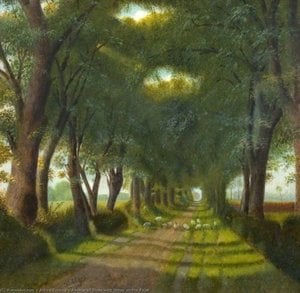
Balding's most celebrated work, undoubtedly, is "Gypsy Lane," painted in 1913. This iconic image, depicting a scene on the Norfolk Broads – a network of waterways and marshes – captures a quintessential moment of rural life. A group of gypsies are seen traveling along a muddy track, their horses silhouetted against the golden light of the setting sun. The painting’s enduring appeal lies in its ability to evoke a sense of timelessness and tranquility. It's not merely a representation of a specific scene; it’s an embodiment of the spirit of the English countryside – its beauty, its solitude, and its connection to generations past.
The success of “Gypsy Lane” brought Balding considerable recognition, but he continued to paint prolifically throughout his career. He was particularly drawn to scenes of Norfolk, capturing the unique character of the region’s landscapes and people with a keen eye for detail and an empathetic understanding of their lives. His depictions of the Broads, the coastline, and the surrounding villages are imbued with a sense of warmth and nostalgia – reflecting his deep affection for the area.
Balding’s artistic technique was characterized by a loose, expressive brushstroke that allowed him to capture the fleeting effects of light and atmosphere. He employed a vibrant color palette, often using complementary colors to create a sense of depth and luminosity. His compositions were typically balanced and harmonious, with an emphasis on creating a sense of visual rhythm. Unlike some of his contemporaries who favored dramatic lighting and bold brushwork, Balding’s style was more subtle and understated – relying on the careful observation of nature and the skillful manipulation of color to convey his artistic vision.
He wasn't afraid to experiment with Impressionistic techniques, particularly in works like “A Large Number of Standing Stones,” where he used broken brushstrokes and a hazy atmosphere to create a sense of distance and mystery. However, his paintings always retained a strong sense of realism – reflecting his commitment to accurately portraying the details of the natural world.
Alfred Balding’s work has had a lasting impact on British art. He is remembered as one of the foremost painters of the English countryside, whose evocative depictions have helped to shape our understanding of this iconic landscape. His paintings are exhibited in major museums and galleries throughout the country, and his work continues to be admired for its beauty, its sensitivity, and its profound connection to the spirit of England.
Balding’s legacy extends beyond his artistic achievements. He was also a dedicated conservationist, actively campaigning to protect the Norfolk Broads from development. His paintings serve as a powerful reminder of the importance of preserving this unique landscape for future generations. His work stands as a testament to the enduring power of art to capture and celebrate the beauty of the natural world.
1858 - 1915

 Peržiūrėti realybėje
 Pasidalinti
 Dalintis
 Išsamiau

 Atsisiųsti
 Panašūs eksponatai
 Rentgeno nuotrauka
 Automatinė diorama
 Skaityti daugiau


![Flower Beds In Holland [1883] — Vinsentas Van Gogas, Post-impressionism](/media/artworks/images-thumb/f6/51/f651abfc36815a917764737c755b7dc0.jpg)


