A Life Dedicated to Botanical Precision: Alexander Marshal
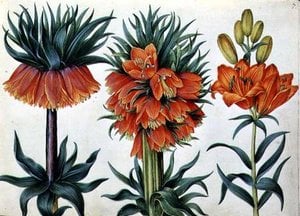
Alexander Marshal, a name perhaps unfamiliar to many outside the circles of botanical art history, represents a pivotal figure in 17th-century English naturalism. Born around 1620, his life unfolded amidst a burgeoning fascination with the natural world, fueled by exploration and the introduction of exotic flora from distant lands. Unlike many artists who pursued commissions or public acclaim, Marshal cultivated his talent as a deeply personal endeavor, driven by an insatiable curiosity and a desire to meticulously document the beauty surrounding him. He wasn’t merely recording plants; he was capturing a moment in time, preserving the ephemeral splendor of gardens both grand and humble.
Marshal belonged to a select group of “gentleman gardeners” – individuals with independent means who devoted themselves to cultivating rare species imported from the Near East and the New World. This environment fostered an exchange of knowledge and specimens, providing Marshal with access to an extraordinary variety of plants that would become the subjects of his remarkable paintings. His early life remains somewhat shrouded in mystery; he is believed to have spent time as a merchant, possibly even residing in France, which may have exposed him to Continental flower painting traditions. However, it was in England that his artistic passion truly blossomed.
The Florilegium: A Testament to Patience and Observation
Marshal’s most enduring legacy is undoubtedly his Florilegium – a comprehensive album of approximately 160 folios depicting over 600 plant species. This wasn't a hastily assembled collection; it was the culmination of thirty years of dedicated work, undertaken purely for personal enjoyment and shared amongst a close circle of friends. The paintings themselves are breathtaking in their detail and accuracy. Marshal didn’t simply render the plants aesthetically pleasing; he captured every nuance of leaf structure, petal arrangement, and flowering stage. He even included studies of insects, birds, and small mammals that inhabited these gardens, creating vibrant ecosystems on vellum.
What sets Marshal apart is his commitment to observing plants throughout their entire life cycle. He understood that true understanding came not from a single snapshot but from witnessing the complete transformation – from bud to bloom to seed. This dedication is evident in the meticulous notes he penned alongside his drawings, detailing observations about growth patterns and even experimenting with creating his own pigments from natural sources like berries, roots, and flowers. The vibrancy of his colors, which have endured for over three centuries, speaks volumes about his skill and resourcefulness.
Beyond the Florilegium: Lost Albums and Rediscovered Talent
While the Florilegium is his most celebrated work, it wasn’t Marshal’s only artistic endeavor. Records indicate he produced other albums of exquisite botanical illustrations, including one created for John Tradescant the Younger in 1650 – sadly now lost to time. Another album, consisting of thirty-three paintings, resides in the British Museum, offering a glimpse into his broader range. Perhaps surprisingly, Marshal’s talent as an entomologist only came to light relatively recently, in 1980, with the discovery of an album containing 129 watercolors of various insects – butterflies, moths, beetles, and more – now housed at the Academy of Natural Sciences of Drexel University.
This revelation broadened our understanding of Marshal’s artistic scope. He wasn't simply a flower painter; he was a keen observer of all aspects of the natural world, possessing a remarkable eye for detail and an ability to capture the delicate beauty of even the smallest creatures. His insect studies are as meticulous and scientifically accurate as his botanical works, demonstrating a profound appreciation for the interconnectedness of life.
A Lasting Legacy: From Private Passion to Public Treasure
Despite receiving a substantial offer for his Florilegium, Marshal refused to sell it, choosing instead to pass it down through his family. It eventually found its way into the hands of George IV in the early 19th century and is now part of the Royal Collection at Windsor Castle. This circuitous journey underscores the private nature of Marshal’s artistic pursuits – a labor of love undertaken for personal fulfillment rather than public recognition.
Today, Alexander Marshal stands as a testament to the power of dedicated observation and meticulous craftsmanship. His work offers a unique window into 17th-century English gardens and the burgeoning field of natural history. He was not merely an artist; he was a scientist, a gardener, and a passionate observer who captured the beauty and complexity of the natural world with unparalleled precision and grace. His legacy continues to inspire artists and botanists alike, reminding us of the importance of slowing down, observing closely, and appreciating the delicate wonders that surround us.



 Peržiūrėti realybėje
 Pirkti rankomis tapytą paveikslą
 Pasidalinti
 Dalintis
 Išsamiau

 Atsisiųsti
 Panašūs eksponatai
 Rentgeno nuotrauka
 Automatinė diorama
 Statistika
 Skaityti daugiau






































 Stiklo variantas prieinamas tik pasirinkus dydį iki 110 cm