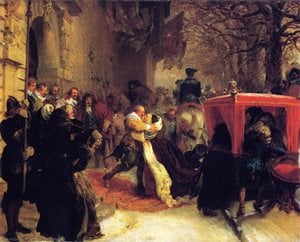
Autoriaus biografija
Gyvenimo eskizas realizmo spalvose: Adolfo fon Mencelio pasaulis
Adolfas Frydrichas Erdmanas fon Menzelis, vardas neatsiejamas nuo vokiečių realizmo, buvo daugiau nei tapytojas – jis buvo XIX amžiaus gyvenimo vizualinis kronikininkas. Gimęs 1815 m. gruodžio 8 d. Breslau (dabar Vroclavas, Lenkija), jo kelionė prasidėjo ne garbingose meno akademijų salėse, o tėvo litografijos dirbtuvėje. Šis ankstyvas įsitraukimas į reprodukciją ir detales turėjo gilų poveikį jo estetiniam jautrumui. Nors tėvas iš pradžių numatė jam profesoriaus kelią, jaunojo Adolfo aistra menui buvo nenuginčijama, todėl 1833 m. jis trumpai studijavo Berlyno meno akademijoje, o vėliau pasirinko daugiausia savamokslos kelią. Jis greitai išsiskyrė kruopščiu braižymu ir gebėjimu užfiksuoti kasdienio gyvenimo esmę, iš pradžių per litografiją, tačiau netrukus plečiant tapybą ir graviūrą – medijas, kuriose jis pasiekė neprivalomą meistriškumą. Mencelio gyvenimas buvo skirtas stebėjimui, pasaulio vertimui į drobę ir popierių su tikslumu, artimu fotografiniam realizmui, tačiau visada praturtintam subtiliu emociniu gyliu.
Iš istorinės didybės į intymius momentus
Mencelio kūryba buvo nuostabiai įvairi, apimdama istorines tapybas, žanrinius paveikslus, portretus ir peizažus. Ankstyvas pasisekimas atėjo su iliustracijomis istoriniams darbams, ypač tiems, vaizduojantiems Frydricho Didžiojo valdymą, rodant dedikaciją tikslumui ir naratyvinei detalei, kuri rezonavo su augančiu nacionaliniu Prūsijos pasididžiavimu. Šios didelio masto kompozicijos įtvirtino jį kaip pirmaujantį istorijos tapytoją, tenkindami visuomenės paklausą patriotinio pobūdžio vaizdams per laikotarpį, kupiną reikšmingų politinių ir socialinių pokyčių. Tačiau jo vėlesnis darbas – atrodytų, nesudėtingi žanriniai paveikslai ir intymios šiuolaikinio gyvenimo studijos – iš tikrųjų įtvirtino jo palikimą. Geležies valcavimo malūnas, baigtas tarp 1872 ir 1875 m., yra monumentalis pasiekimas ne tik dėl savo masto, bet ir dėl atšiauraus pramonės darbo vaizdavimo. Tai scena, kupina energijos ir sunkumo, užfiksuojanti žalią galią ir žmogaus kainą besivystančios pramonės revoliucijos metu. Tai nebuvo romantiška industrija; tai buvo sąžininga, įkvepianti ir giliai moderni jos požiūriu. Kartu su dideliais istoriniais pasakojimais Menzelis rado grožio ir reikšmės tykiuose momentuose: žvilgsnis per prancūzišką langą, scena rūmų sode ar paprastas portretas, atskleidžiantis charakterį subtiliomis gestais ir išraiška.
Įtakos ir meninis vystymasis
Nors Mencelis buvo daugiausia savamokslis, jis nebuvo imunus meno įtakoms. Jis gerbė olandų meistrus – jų šviesos ir šešėlio valdymą, gebėjimą pakelti kasdienį gyvenimą į menišką reikšmę – ir šio poveikio elementai matomi jo kompozicijose ir spalvų naudojime. Tačiau jis sukūrė savitą vokiečių kelią, atmesdamas atvirą romantizmą, vyraujantį kai kuriuose šiuolaikinio meno sluoksniuose, naudodamasis objektyvesniu, analitiškesniu požiūriu. Jo darbas rezonavo su prancūzų menininkais; Edgaras Degasas žavėjosi Mencelio įgūdžiais, net kopijavo jo darbus ir paskelbė jį „didžiausiu šių dienų meistru“. Šis abipusis pagarba pabrėžia bendrą įsipareigojimą realizmui ir stebėjimui, nepaisant skirtingo nacionalinio konteksto. Mencelio plėtra nebuvo tiesinė. Jis nuolat eksperimentavo su technika ir tema, pereidamas nuo ankstyvosios karjeros didelių istorinių drobų prie intymesnių ir psichologiškai niuansesnes scenas, kurios apibūdino jo vėlesnį darbą. Ypač vertingos buvo jo graviūros įgūdžiai, leidę pasiekti detalumo ir toninio diapazono lygį, kuris dar labiau sustiprino jo realistinį stilių.
Palikimas ir istorinė reikšmė
Adolfo fon Mencelio poveikis vokiečių menui yra neabejotinas. Jis sujungė tradicinės istorinės tapybos ir modernaus realizmo spragą, paliesdamas kelią ateities kartoms tyrinėti naujas temas ir technikas. Jo pomirtinis įvertinimas remiasi ne tik jo paveikslais, bet ir išsamiu grafiniu darbu – piešiniais ir graviūromis, atskleidžiančiomis nepaprastą jautrumą ir stebėjimo įgūdžius. 1898 m. jis buvo riteriu paskirtas, tapdamas Adolfu fon Menzel, pripažįstant jo didžiulį indėlį į Vokietijos kultūros kraštovaizdį. Jo įtaka apėmė ne tik tapybą, turėdama įtakos iliustracijai ir spaudiniams. Muziejai visoje Vokietijoje – Georg Schäfer muziejus ir Lenbachhaus miesto galerija, tarp kitų – didžiuodamiesi eksponuoja jo darbus, užtikrindami, kad jo vizija toliau įkvėptų. Mencelio menas primena kasdienio gyvenimo grožį ir sudėtingumą, o jo dedikacija sąžiningai ir tiksliai fiksuoti realybę užtikrina jam tvirtą vietą kaip vienam svarbiausių XIX amžiaus vokiečių menininkų. Jo darbas išlieka aktualus šiandien, siūlant įžvalgų apie lemiamą socialinės ir pramonės transformacijos laikotarpį ir primindamas meno galią apšviesti žmogaus būklę. Jo paveikslai yra ne tik vaizdai; tai istorijos, atspindys, emocijų užfiksuojimas.



 Peržiūrėti realybėje
 Pirkti rankomis tapytą paveikslą
 Pasidalinti
 Dalintis
 Išsamiau

 Atsisiųsti
 Panašūs eksponatai
 Rentgeno nuotrauka
 Automatinė diorama
 Statistika


 Skaityti daugiau






































 Stiklo variantas prieinamas tik pasirinkus dydį iki 110 cm