
 Ink On Paper
 1994Contemporary
 48.0 x 518.0 cm
빠른 제작과 다양한 마감 옵션을 제공하는 박물관 품질의 지클레이 또는 캔버스 프린트. ( 손으로 그린 그림 구매 디지털 이미지로 전환)
작품의 원본 비율을 유지하는 미리 설정된 크기 중에서 선택하세요.

특정 프레임이나 공간에 맞춰 직접 치수를 입력하실 수 있습니다. 선택하신 사이즈가 원본 이미지의 비율과 일치하지 않을 경우, 작품을 크롭(자르기)하거나 이미지를 대칭 또는 단색 채우기로 확장하여 제작합니다. 제작 시작 전, 최종 확인을 위해 디지털 목업이 전송됩니다.
화면상의 미리보기는 실제 크롭이나 확장 상태를 반영하지 않으므로, 최종 구도는 오직 목업을 통해서만 정확하게 확인하실 수 있습니다.
맞춤 사이즈 제작도 가능하지만, 원본 비율을 유지하기 위해서는 사전 정의된 목록에서 치수를 선택하시는 것을 권장합니다.

An Introduction to Square Word Calligraphy
복제본 크기
In the vast landscape of contemporary art, few works possess the profound ability to dissolve cultural boundaries as elegantly as Xu Bing’s "An Introduction to Square Word Calligraphy." Created in 1994, this masterpiece serves as a mesmerizing intersection between the familiar and the foreign. At first glance, the viewer is met with a rhythmic, grid-like arrangement of characters that pulse with the structural gravity of traditional Chinese calligraphy. Yet, upon closer inspection, a delightful cognitive dissonance emerges. The artist has masterfully reconfigured the Latin alphabet into square, block-like structures that mimic the aesthetic logic of Chinese logograms. This is not merely an exercise in graphic design; it is a profound experiment in perception, inviting the observer to inhabit a space where the English language is transformed into a visual poetry of form and stroke.
The technique behind this work is deeply rooted in the disciplined traditions of printmaking and brushwork, reflecting Xu Bing’s rigorous training at the Central Academy of Fine Arts. Each "word" is meticulously constructed within its own square cell, utilizing varying line weights and structural components that suggest a complex, invented lexicon. The black and white medium strips away the distraction of color, forcing the eye to focus entirely on the interplay of negative space and ink. This starkness lends the piece a timeless, archival quality, reminiscent of ancient manuscripts or scholarly texts, making it an intellectually stimulating centerpiece for any sophisticated collection.
To engage with this artwork is to participate in a ritual of decoding. Xu Bing, whose life was shaped by the linguistic upheavals of the Cultural Revolution, uses this piece to explore how language functions as both a barrier and a gateway. By imposing the structural rules of Chinese characters onto English words, he demystifies the "otherness" of the East for Western audiences while simultaneously challenging Westerners to see their own language through a new, more sculptural lens. The symbolism lies in the act of translation itself—the idea that meaning is not just found in what we read, but in how we perceive the architecture of communication.
For the collector or interior designer, this piece offers a unique emotional resonance. It carries an aura of quiet contemplation and intellectual curiosity. The repetitive, meditative nature of the grid provides a sense of order and stability, making it an ideal choice for spaces dedicated to study, reflection, or high-concept modern living. It is a work that does not merely decorate a wall; it invites conversation, prompting guests to lean in, squint, and ultimately find joy in the process of discovery.
Whether displayed as a large-scale focal point or integrated into a curated gallery wall, a high-quality reproduction of "An Introduction to Square Word Calligraphy" brings a sense of global sophistication to an environment. Its monochromatic palette ensures seamless integration with minimalist, contemporary, or even classical decor, acting as a sophisticated anchor that bridges the gap between traditional craftsmanship and avant-garde conceptualism. Owning this piece is an invitation to celebrate the beauty of structural harmony and the endless possibilities of human expression.


1955 - , China

Explore the profound artistry of black and white photography. From historical mastery to the interplay of light and shadow, discover how monochrome captures timeless emotion and form through a sophisticated lens of art history.

Elevate your most cherished memories with WahooArt’s bespoke service. We transform your personal photos into breathtaking, hand-painted black & white oil masterpieces. Experience museum-quality craftsmanship and timeless elegance for your private collection. Discover the art of legacy.

Embark on a profound journey through the soul of Chinese calligraphy. Explore the historical mastery of ink, brush, and script, from ancient Zhuanshu to elegant running script, and discover how this timeless art form reflects the enduring spirit of classical East Asian aesthetics.
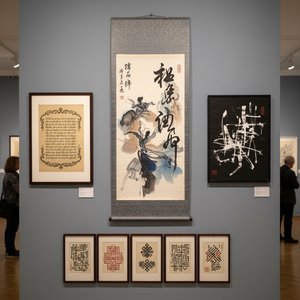
Explore the profound beauty of calligraphy art. From the fluid running script of Chinese masters to historical ink masterpieces, discover how the elegance of line transforms spaces with timeless grace and scholarly sophistication.

Discover how monochrome masterpieces elevate modern luxury interiors. Explore the profound impact of single-color fine art, from geometric abstraction to textured oil reproductions, curated for the discerning collector seeking sophisticated architectural elegance.


 미리보기
미리보기
 공유하기
공유하기 공유하기
공유하기
 상세 정보
상세 정보 가이드 보기

 다운로드
다운로드
 유사 작품
유사 작품 X-레이
X-레이 슬라이드 쇼
 통계 정보
통계 정보 더 보기
더 보기






































 유리 옵션은 110cm 미만 크기에서만 선택 가능합니다.


