x
Oil On Canvas
WallArt
Synthetic Cubism
1913
Modern
81.0 x 65.0 cm작품의 원본 비율을 유지하는 미리 설정된 크기 중에서 선택하세요.
특정 프레임이나 공간에 맞도록 직접 크기를 입력할 수 있습니다. 선택하신 크기가 원본 이미지의 비율과 일치하지 않는 경우, 작품을 자르거나 추가적인 손으로 그린 요소를 사용하여 그림을 확장합니다. 제작 시작 전 승인을 위해 디지털 목업을 보내드립니다.
화면 미리 보기는 실제 자르기 또는 확장을 반영하지 않습니다. 최종 구성은 목업을 통해서만 정확하게 확인하실 수 있습니다.
맞춤 크기 제작도 가능하지만, 원본 비율을 유지하기 위해 사전 정의된 목록에서 크기를 선택하시는 것을 권장합니다.
The Siphon
복제본 크기
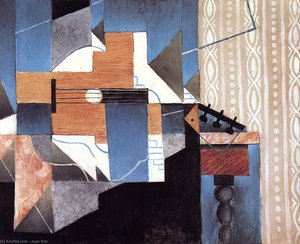
Juan Gris's "The Siphon," created in 1913, stands as a pivotal work within the Synthetic Cubist movement. This oil on canvas (81 x 65 cm), currently residing at the Rose Art Museum, exemplifies Gris’s unique approach to abstraction – one that grounded itself in recognizable objects while dismantling traditional representational techniques. The painting depicts a commonplace kitchen scene—a vase, bottles, cups, and a chair—rendered through a fractured lens of geometric shapes and muted colors.
The artwork's power lies in its deliberate fragmentation. Gris doesn’t aim to depict the objects as they appear from a single viewpoint; instead, he presents them simultaneously from multiple perspectives, breaking them down into interlocking planes and geometric forms. This technique, characteristic of Synthetic Cubism, moves beyond the Analytical Cubism that preceded it by incorporating simpler shapes and flatter areas of color. The monochromatic palette—primarily blues, grays, and whites with subtle accents of red and brown—contributes to a sense of harmony and balance despite the apparent chaos of fragmented forms. Overlapping planes create an illusion of depth within the flattened picture plane, while sharply defined lines add dynamism and visual interest.
"The Siphon" emerged during a period of radical artistic experimentation in the early 20th century. Following the pioneering work of Pablo Picasso and Georges Braque in Analytical Cubism, Gris spearheaded the development of Synthetic Cubism. This new phase emphasized simplification, collage elements (though absent here), and a greater emphasis on color. Gris’s approach was notably more structured and mathematically precise than that of his contemporaries, reflecting his engineering background. He sought to create a rational order within abstraction, using geometric forms to construct a coherent visual language.
While seemingly depicting mundane objects—a kitchen still life—"The Siphon" transcends mere representation. The fragmentation of these familiar items invites viewers to reconsider their perception of reality. The geometric abstraction evokes a sense of intellectual engagement rather than purely emotional response. There's a quiet dignity in the way Gris elevates everyday objects to the realm of high art, transforming them into complex visual puzzles. The muted color palette and carefully balanced composition create an atmosphere of contemplative stillness, inviting viewers to pause and appreciate the beauty inherent in deconstructed form.
Juan Gris (1887-1927) was a Spanish painter who became a central figure in the Cubist movement. Born José Victoriano González-Pérez, he adopted the pseudonym Juan Gris and moved to Paris in 1906, where he encountered influential artists like Matisse, Braque, and Picasso. His unique contribution lay in his systematic approach to Cubism, emphasizing geometric precision and a more structured composition than many of his contemporaries. Other notable works by Gris include "Glass of beer and playing cards" and "Newspaper and Fruit Dish," further demonstrating his mastery of Synthetic Cubism and his ability to transform ordinary subjects into extraordinary works of art.
1887 - 1927 , 스페인
프로젝트에 대해 알려주시면 저희 미술 전문가들이 맞춤형 아트 제안 3가지를 전달해 드립니다.
당신만을 위한 맞춤형 옵션 3가지를 무료로 추천해 드립니다!