
x


빠른 제작과 다양한 마감 옵션을 제공하는 박물관 품질의 지클레이 또는 캔버스 프린트. ( 손으로 그린 그림 구매 이미지 구매)





























작품의 원본 비율을 유지하는 미리 설정된 크기 중에서 선택하세요.

특정 프레임이나 공간에 맞춰 직접 치수를 입력하실 수 있습니다. 선택하신 사이즈가 원본 이미지의 비율과 일치하지 않을 경우, 작품을 크롭(자르기)하거나 이미지를 대칭 또는 단색 채우기로 확장하여 제작합니다. 제작 시작 전, 최종 확인을 위해 디지털 목업이 전송됩니다.
화면상의 미리보기는 실제 크롭이나 확장 상태를 반영하지 않으므로, 최종 구도는 오직 목업을 통해서만 정확하게 확인하실 수 있습니다.
맞춤 사이즈 제작도 가능하지만, 원본 비율을 유지하기 위해서는 사전 정의된 목록에서 치수를 선택하시는 것을 권장합니다.

The Checkerboard
복제본 크기
Juan Gris’s “The Checkerboard,” painted in 1915, isn’t merely a depiction of a familiar domestic scene; it’s a radical declaration of artistic intent. Created during the nascent years of Synthetic Cubism, this work embodies the movement's core tenets – a deliberate dismantling of traditional perspective and representation to reveal an underlying geometric structure. The painting’s power lies not in its subject matter—a checkerboard adorned with everyday objects like a bottle, a cup, a knife, and scissors—but in Gris’s masterful manipulation of form and color to evoke a sense of fragmented space and heightened visual complexity.
Juan Gris (1887-1927), born José Victoriano González-Pérez in Madrid, Spain, was a pivotal figure in the development of Cubism. His early life, marked by studies in engineering before embracing art, reflects a mind accustomed to analytical thinking – a quality that profoundly shaped his artistic approach. Gris’s connection to Pablo Picasso and Georges Braque cemented his place at the forefront of this revolutionary movement. He wasn't simply copying what others were doing; he was developing a distinct visual language characterized by its precise geometric forms and bold color combinations.
Gris’s work is deeply rooted in the intellectual currents of the time, reflecting a fascination with modern technology and urban life. The inclusion of objects like the bottle and knife suggests a concern with industrialization and the changing role of man within society. His dedication to Cubism earned him recognition as one of the movement's most distinctive artists, alongside Picasso and Braque.
The checkerboard motif itself carries significant symbolic weight. Historically, it has represented order, logic, and control – concepts that are deliberately disrupted within Gris’s composition. The juxtaposition of these ordered squares with seemingly random objects creates a tension between structure and chaos, reflecting the anxieties and uncertainties of the early 20th century. The specific arrangement of the bottle, cup, knife, and scissors adds to this complexity, inviting viewers to contemplate their individual meanings and their collective relationship within the overall design.
Beyond its immediate visual impact, “The Checkerboard” invites us to consider the nature of perception itself. Gris challenges our traditional ways of seeing, forcing us to confront a world where objects are no longer presented in a fixed or unified manner.
"The Checkerboard" stands as a testament to Juan Gris’s artistic genius and his pivotal role in shaping the course of modern art. Its influence can be seen in countless subsequent works, and its enduring appeal lies in its ability to provoke thought and inspire wonder. A hand-painted reproduction offers an unparalleled opportunity to experience this iconic masterpiece firsthand, bringing its fractured beauty into your home or studio.

1887 - 1927 , 스페인

Unveil the radical revolution of Cubism. Explore how masters like Picasso and Braque redefined modern art through fragmented forms and geometric abstraction, offering profound insights for discerning collectors of fine art history and masterpieces.
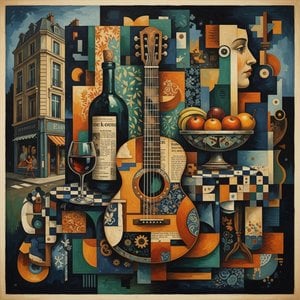
Master the vibrant world of Synthetic Cubism with our expert guide. Explore the revolutionary techniques of Picasso and Braque, from collage to color, and discover how this movement redefined modern art for collectors and connoisseurs alike.

Embark on a journey through the revolutionary world of Cubism. Discover how masters like Picasso redefined perspective through Analytical and Synthetic techniques in this expert-led guide for art enthusiasts and collectors.

Explore the profound impact of Cubism on modern art. Our expert guide delves into the revolutionary techniques of Picasso and Braque, offering collectors deep insights into deconstructing form, perspective, and the enduring legacy of the Cubist movement.


최신 미술 뉴스, 특별 혜택 및 인테리어 아이디어를 가장 먼저 만나보세요.
프로젝트에 대해 알려주시면 저희 미술 전문가들이 맞춤형 아트 제안 3가지를 전달해 드립니다.
당신만을 위한 맞춤형 옵션 3가지를 무료로 추천해 드립니다!


 미리보기
미리보기
 공유하기
공유하기 공유하기
공유하기
 상세 정보
상세 정보

 다운로드
다운로드
 유사 작품
유사 작품 X-레이
X-레이 슬라이드 쇼


 더 보기
더 보기









 유리 옵션은 110cm 미만 크기에서만 선택 가능합니다.


