


이 페이지에 표시된 작품은 저작권법의 보호를 받으며, 이에 따라 동일한 복제품을 제작하거나 판매하는 것은 법으로 금지되어 있습니다. 이러한 권리 보호는 다음과 같은 국제 협약에 따라 시행됩니다. 베른 협약 또한 다음에서 명시하는 법률을 포함한 국내법에 의해 보호됩니다. 미국 저작권법 제17조.
이 방식은 저작권 보호를 받는 예술 작품을 복제하거나 그대로 재현하는 것이 아니기에 저작권 규정을 완벽히 준수합니다. 대신, 이는 창의적인 재해석의 과정을 거칩니다. 즉, 원작에서 영감을 받되 원작과 동일하지 않은 새로운 회화 작품을 의미합니다.
빠른 제작과 다양한 마감 옵션을 제공하는 박물관 수준의 지클레이 및 캔버스 프린트. ( 수작업 채색 복제본 주문하기 디지털 이미지로 전환)
작품의 원본 비율을 그대로 유지하는 프리셋 사이즈 중에서 선택해 보세요.

액자나 벽면 크기에 맞춰 필요한 가로와 세로 길이를 입력해 주세요. 프린트는 원본 이미지보다 크게 제작할 수 없으며 오직 자르는 것만 가능하므로, 비율이 다른 사이즈를 선택할 경우 이미지의 일부가 잘려 나갈 수 있습니다. 인쇄 작업에 들어가기 전, 최종 확인을 위해 디지털 목업을 보내드립니다. 이 페이지에 표시된 이미지는 실제 잘리는 영역을 나타내지 않으며, 오직 목업을 통해서만 정확한 확인이 가능합니다.
Grain Elevators II
복제본 크기

John Szarkowski was born in Brooklyn, New York, in 1925, though his formative years were shaped by the landscape of the American north. He grew up in Ashland, a small city in northern Wisconsin, where he first discovered an interest in photography at the age of eleven. This early curiosity remained a quiet constant as he navigated the challenges of adulthood. During World War II, he served in the U.S. Army, an experience that preceded his return to academic life and his deepening connection to the visual world.
His intellectual path was marked by a rigorous pursuit of history and literature. In 1947, he graduated from the University of Wisconsin–Madison with a degree in art history. This foundation provided the structural understanding that would later inform his perspective on the photographic medium. He did not stop at his undergraduate studies; he eventually moved toward the study of language and narrative, earning a doctorate in English Literature from Harvard University.
This combination of art history and literary study created a unique perspective. He approached the camera with the eye of a scholar and the precision of a historian. His background allowed him to see beyond the surface of an image, looking instead for the underlying structures and stories that define how we perceive our surroundings.
Szarkowski’s connection to the Museum of Modern Art began in 1957, a period that would define much of his professional life. He eventually stepped into a significant leadership role when he was chosen by his predecessor to lead the department. From 1962 to 1991, he served as the director of photography at the museum, a position that allowed him to shape how the public understood the medium. During his time there, he also held the title of Curator of Photography from 1964 to 1983.
His work at the museum was characterized by a commitment to pushing the boundaries of what photography could achieve. He championed artists who challenged conventional ideas, helping to bring new voices into the critical conversation. His influence was not limited to the museum walls; in 1973, he also contributed his expertise to the National Endowment for the Arts, serving as one of three photography panelists. This role allowed him to help guide the direction of the medium on a broader scale.
Szarkowski’s approach to the lens was rooted in a desire to find the essence of a subject, a concept he called the "photographer’s eye." Rather than chasing grand narratives or theatrical gestures, he sought to capture the world with a quiet, steady precision. His early work often turned toward the American landscape, finding a specific kind of beauty in the starkness of rural Pennsylvania and the quiet stretches of New England. He looked at these places with a sensitivity that favored the understated over the dramatic, focusing on how light and form could reveal a deeper truth about a scene.
This preference for clarity became a central part of his photographic theory. In his 1964 book, The Photographer's Eye, he argued for a deliberate simplification of form. He believed that by rejecting excessive detail, a photographer could better reveal the underlying structure of an image. To him, the power of a photograph lay in its ability to strip away the unnecessary, leaving behind a composition that was both clear and intellectually honest. He wanted the viewer to see the bones of a subject, whether it was a landscape or a simple domestic moment.
The influence of John Szarkowski reached far beyond the walls of the museum. His ideas helped shape the paths of photographers like Diane Arbus and William Eggleston, who found their own ways of seeing through the principles he championed. He had a particular talent for spotting artists who pushed against the edges of what photography could be, bringing figures such as Lee Friedlander and Garry Simmons into the light of critical discussion. His eye for talent helped define the direction of the medium for decades.
Beyond his work with living artists, he was a dedicated scholar of the history of the craft. He worked alongside Maria Morris Hamburg to produce a definitive four-volume study on the photography of Atget, a project that required immense care and precision. In 1973, he published Looking at Photographs, a book that remains a fundamental text for anyone trying to understand how to truly see and interpret a photographic image. He believed that looking required intelligence and a deep, careful attention to detail.
When he passed away in 2007, he left behind a landscape of visual culture that had been fundamentally altered by his presence. He did not merely curate exhibitions; he changed how people understood the relationship between the lens and the subject. His work ensured that photography would be treated with the same intellectual rigor as any other fine art.

1925 - 2007
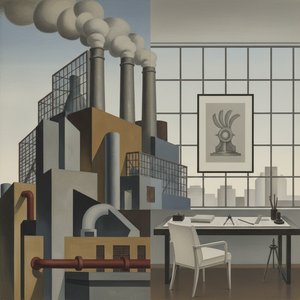
Explore the groundbreaking work of Charles Sheeler Jr., a pivotal figure in American Precisionism. Discover his iconic industrial landscapes, photographic studies & lasting influence on modernist art. Expert insights for collectors.
존 싱어 사전트의 대표작 25선을 만나보세요. 인상주의 초상화부터 빛과 색채가 아름다운 유화까지, 그의 예술 세계를 탐험하고 WahooArt에서 고품질 아트 프린트로 거실 장식을 완성하세요. 지금 온라인 컬렉션을 확인하세요!

Step into the haunting dreamscapes of Giorgio de Chirico. Explore 25 iconic Metaphysical paintings that defined Surrealism. From enigmatic shadows to timeless architecture, find inspiration and museum-quality art reproductions. Discover all masterpieces on WahooArt.com.

Explore the profound evolution of photography through an art-historical lens. From the alchemy of early daguerreotypes to modern visual narratives, discover how light and shadow have shaped our perception of reality and beauty in the world of fine art collecting.

Explore 25 iconic works from Turner to Hogarth at Yale Center for British Art. Discover every masterpiece on WahooArt.com.
 미리보기

 공유하기
 공유하기
 상세 정보
 가이드 보기


 다운로드
 유사 작품 더 보기
 X-레이
 슬라이드 쇼 보기
 질의응답

 통계 정보


 더 보기






































 유리 옵션은 110cm 미만 크기에서만 선택 가능합니다.


