실제 크기로 보기 AR로 미리보기 수작업 채색 복제본 주문하기 디지털 이미지 판매 채널로 전환 보내기
상세 보기 가이드 보기 즐겨찾기에 추가 이미지 다운로드 유사 작품 더 보기 X-레이 슬라이드 쇼 보기 Q&A 통계 정보

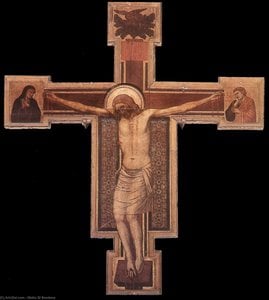
Crucifix

Experience the emotional realism of Giunta Pisano's 13th-century Crucifix, a masterpiece blending Byzantine grandeur with human suffering; discover this medieval icon today.

Discover Giunta Pisano's masterful Pisan paintings & sculptures from Pisa, Italy (1190-1260). Explore his Renaissance style and legacy at Piazza dei Cavalieri.

지클레 / 아트 프린트

빠른 제작과 다양한 마감 옵션을 선택할 수 있는 박물관 수준의 지클레이 및 캔버스 프린트. ( 수작업 채색 복제본 주문하기 디지털 이미지 판매 채널로 전환)

Corner sample of the P118B picture frame: 성형 폴리스티렌, 5 cm wide and 3 cm thick
P118B ₩10
Corner sample of the P118H picture frame: 성형 폴리스티렌, 5 cm wide and 3 cm thick
P118H ₩10
Corner sample of the P118W picture frame: 성형 폴리스티렌, 5 cm wide and 3 cm thick
P118W ₩10
Corner sample of the P438Z picture frame: 성형 폴리스티렌, 5.5 cm wide and 3.5 cm thick
P438Z ₩10
Corner sample of the P508JH picture frame: 성형 폴리스티렌, 7 cm wide and 3.5 cm thick
P508JH ₩12
Corner sample of the P508YH picture frame: 성형 폴리스티렌, 7 cm wide and 3.5 cm thick
P508YH ₩12
Corner sample of the P805H picture frame: 성형 폴리스티렌, 5 cm wide and 3.5 cm thick
P805H ₩10
Corner sample of the P805Z picture frame: 성형 폴리스티렌, 5 cm wide and 3.5 cm thick
P805Z ₩10
Corner sample of the P919BZ picture frame: 성형 폴리스티렌, 7 cm wide and 3.5 cm thick
P919BZ ₩10
Corner sample of the P919G picture frame: 성형 폴리스티렌, 7 cm wide and 3.5 cm thick
P919G ₩10
Corner sample of the P919XJ picture frame: 성형 폴리스티렌, 7 cm wide and 3.5 cm thick
P919XJ ₩10
Corner sample of the P959ZH picture frame: 성형 폴리스티렌, 5 cm wide and 3 cm thick
P959ZH ₩10
Corner sample of the P968JZ picture frame: 성형 폴리스티렌, 6 cm wide and 4 cm thick
P968JZ ₩12
Corner sample of the W106C picture frame: 원목, 5 cm wide and 3 cm thick
W106C ₩8
Corner sample of the W218G picture frame: 원목, 5 cm wide and 3 cm thick
W218G ₩10
Corner sample of the W218JH picture frame: 원목, 5 cm wide and 3 cm thick
W218JH ₩8
Corner sample of the W218Y picture frame: 원목, 5 cm wide and 3 cm thick
W218Y ₩10
Corner sample of the W307PJ picture frame: 원목, 6 cm wide and 3 cm thick
W307PJ ₩10
Corner sample of the W316G picture frame: 원목, 6 cm wide and 3 cm thick
W316G ₩10
Corner sample of the W316PJ picture frame: 원목, 6 cm wide and 3 cm thick
W316PJ ₩8
Corner sample of the W316Y picture frame: 원목, 6 cm wide and 3 cm thick
W316Y ₩10
Corner sample of the W398PJ picture frame: 원목, 5 cm wide and 3 cm thick
W398PJ ₩8
Corner sample of the W4111J picture frame: 원목, 6.5 cm wide and 3.5 cm thick
W4111J ₩10
Corner sample of the W500HY picture frame: 원목, 7 cm wide and 5 cm thick
W500HY ₩15
Corner sample of the W500JH picture frame: 원목, 7 cm wide and 5 cm thick
W500JH ₩15
Corner sample of the W692G picture frame: 원목, 8 cm wide and 4 cm thick
W692G ₩12
Corner sample of the W849H picture frame: 원목, 5 cm wide and 3 cm thick
W849H ₩8
Corner sample of the W940BG picture frame: 원목, 7.5 cm wide and 4.5 cm thick
W940BG ₩15
Corner sample of the W953PJ picture frame: 원목, 6 cm wide and 3.5 cm thick
W953PJ ₩8

표준 규격
맞춤 제작
CM
INCH

작품의 원본 비율을 그대로 유지하는 프리셋 사이즈 중에서 선택해 보세요.

가로 너비
높이

액자나 벽면 크기에 맞춰 필요한 가로와 세로 길이를 입력해 주세요. 프린트는 원본 이미지보다 크게 제작할 수 없으며 오직 자르는 것만 가능하므로, 비율이 다른 사이즈를 선택할 경우 이미지의 일부가 잘려 나갈 수 있습니다. 인쇄 작업에 들어가기 전, 최종 확인을 위해 디지털 목업을 보내드립니다. 이 페이지에 표시된 이미지는 실제 잘리는 영역을 나타내지 않으며, 오직 목업을 통해서만 정확한 확인이 가능합니다.

전 세계 배송()은 일반적인 4~5주의 소요 기간 대신 2주 이내에 완료됩니다. (30 10월)

전 세계 무료 특급 배송
고품질 린넨 캔버스
배송 전 과정 보험 적용
관세 환급 보장 서비스
원본 색상 일치 보장
제조 결함 발견 시 100일 이내 반품 가능
100% 환불 보장
다량 구매 할인 혜택

총 결제 금액

₩ 92461

Crucifix

지클레 / 아트 프린트

복제본 규격

-

총 결제 금액

₩ 92461

주요 정보

  • Medium: Tempera painting
  • Movement: Medieval art
  • Location: San Domenico, Bologna
  • Title: Crucifix
  • Year: 1240
  • Artistic style: Byzantine/Italian blend
The Crucifix by Giunta Pisano is a seminal work of medieval art that showcases the artist's skill and innovation. Created in 1240, this tempera painting measures 316 x 285 cm and is housed in the San Domenico museum in Bologna, Italy. The painting depicts a crucifixion scene with Jesus Christ at its center, surrounded by intricate details and gold leaf accents.

Artistic Style and Influence

Giunta Pisano's style is characterized by his use of Byzantine influences, which were prevalent in Italy during the 13th century. However, he also introduced a new way of representing Christ, focusing on his suffering and humanity. This approach would later influence other artists, such as Cimabue, who would develop their own unique styles. The Crucifix by Giunta Pisano is a prime example of this shift towards a more emotional and realistic representation of Christ.

Key Features and Symbolism

The painting features several key elements, including:
  • The use of gold leaf to create a sense of luxury and reverence
  • Intricate details, such as the crown of thorns and the nails on the cross
  • A focus on Christ's suffering and humanity, rather than his divinity
These elements work together to create a powerful and moving representation of the crucifixion scene. For more information on Giunta Pisano and his works, visit /art/list/?Filter=8Y3PBG-Giunta-Pisano-(Giunta-Da-Pisa)-Crucifix. You can also learn more about the San Domenico museum on /art/list/?Filter=A@D3BJLT-The-Museum-San-Domenico-Bologna-Italy. Handmade oil painting reproductions of the Crucifix by Giunta Pisano are available on https://WahooArt.com, allowing art lovers to own a piece of medieval history. For more information on the artist and his style, visit Wikipedia: https://en.wikipedia.org/wiki/Giunta_Pisano.
The Crucifix by Giunta Pisano is a masterpiece of medieval art that continues to inspire and influence artists to this day. Its unique blend of Byzantine and Italian styles, combined with its powerful symbolism and emotional representation of Christ, make it a must-see for anyone interested in art history.

질의응답

"Crucifix"은 어떤 색채와 어떤 감정을 담아내고 있나요?

Giunta Pisano (Giunta Da Pisa)의 "Crucifix"의 Neutrals 색조는 Spiritual 분위기와 조화를 이룹니다. 색채는 작품이 감정을 전달하는 중요한 방식 중 하나입니다.

"Crucifix"의 색조는 얼마나 채도가 높나요?

"Crucifix"의 색조는 채도가 Balanced Soft입니다.

Giunta Pisano (Giunta Da Pisa)의 "Crucifix"의 프린트를 어디에서 구매할 수 있나요?

"Crucifix" 작품은 코튼 캔버스 또는 아카이브용 캔버스지에 인쇄된 파인 아트 프린트로 만나보실 수 있습니다. 주문은 파인 아트 프린트 페이지에서 원하시는 사이즈를 선택하여 진행하실 수 있습니다.


작가 소개

Giunta Pisano: The Pioneer of Italian Crucifixion

Giunta Pisano, a name often overshadowed by the towering figures of his contemporaries, stands as a pivotal figure in the early development of Italian painting. Born in Pisa around 1190 and tragically dying sometime before 1258 or 1260, Giunta’s legacy rests primarily on his profoundly influential crucifixes – works that dramatically shifted the artistic representation of Christ's suffering and laid the groundwork for subsequent generations of Renaissance artists. While he remains a relatively obscure figure in broader art historical narratives, examining his life and work reveals a remarkably innovative artist who dared to challenge established Byzantine conventions and forge a distinctly Italian path.

Pisa during Giunta’s formative years was a vibrant hub of artistic activity, deeply influenced by the remnants of the Roman Empire and increasingly exposed to the wealth and culture of the East through trade routes. The city's strategic location as a major port facilitated contact with Byzantine artists and craftsmen, creating an environment ripe for artistic exchange. Giunta’s early career is shrouded in some mystery; he is believed to have been working by 1202, possibly influenced by Greek art following the Fourth Crusade. He was one of the first Italian painters whose name appears on a work, solidifying his place as a significant contributor to the burgeoning artistic landscape.

The Masterpiece: The Crucifix of San Raniero and Beyond

Giunta’s most celebrated works are undoubtedly his crucifixes. The *Crucifix of San Raniero*, housed in the Museo Nazionale di San Matteo in Pisa, exemplifies his groundbreaking approach. Unlike earlier depictions of Christ on the cross, which often presented a serene, almost triumphant image – a “Christus gloriosus” – Giunta depicted a Christ writhing in agony, consumed by physical and emotional suffering. His portrayal was strikingly realistic, emphasizing the wounds, contortions, and vulnerability of the dying figure. This shift towards a "Christus patiens" (suffering Christ) marked a radical departure from Byzantine iconography and established a new standard for representing the crucifixion that would profoundly influence artists like Cimabue and ultimately, Giotto.

Technique and Style: A Synthesis of Byzantine and Italian Traditions

Giunta’s style is characterized by a fascinating synthesis of Byzantine and emerging Italian artistic traditions. He inherited the meticulous detail, rich colors, and gold leaf characteristic of Byzantine art, particularly in his use of tempera on wood panels. However, he infused these elements with a distinctly Italian sensibility – a greater emphasis on naturalism, emotional intensity, and a more dynamic composition. His figures possess a remarkable sense of volume and weight, achieved through careful modeling and shading. The *Crucifix of San Raniero* demonstrates this perfectly, showcasing the artist’s ability to convey both physical pain and spiritual anguish with astonishing realism.

  • Tempera on Wood: Giunta primarily utilized tempera paint applied to wooden panels, a technique common in Italy at the time.
  • Byzantine Influence: His early works show clear traces of Byzantine iconography, particularly in the composition and rendering of Christ’s figure.
  • Italian Realism: He gradually introduced elements of Italian realism, evident in his attention to anatomical detail and emotional expression.

Giunta's Circle and Lasting Legacy

While Giunta Pisano is often considered a solitary figure, evidence suggests he had a circle of followers and assistants. Artists like the Master of the Blue Crucifixes, the Master of the Treasury, and Vicino da Pistoia are believed to have been influenced by his work. His influence extended beyond Pisa, impacting artists in other regions of Italy. Notably, Giunta’s depiction of Christ as a suffering figure paved the way for Cimabue's own groundbreaking crucifixes, which further solidified this new artistic direction. The imposing *Crucifix* in the Basilica of Saint Dominic in Bologna, bearing the inscription “Cuius docta manus me pixit Junta Pisanus” (painted by the learned or skilled hand of Giunta Pisano), stands as a testament to his enduring impact on Italian art – a powerful symbol of the transition from Byzantine tradition to the nascent Renaissance.

Giunta Pisano’s contribution to the history of art is often underestimated, but his pioneering work in depicting Christ's suffering represents a crucial turning point. He was not merely a follower of Byzantine conventions; he was an innovator who dared to reshape the visual language of Christian iconography and set the stage for the artistic achievements of subsequent generations.

Giunta Pisano (Giunta Da Pisa)

Giunta Pisano (Giunta Da Pisa)

1190 - 1260 , Italy

작가 정보 요약

  • Artistic Movement Or Style: Renaissance style
  • Artists Or Movements Influenced By This Artist:
    • Cimabue
    • Giotto
  • Artists Who Influenced This Artist: ['Byzantine artists']
  • Date Of Birth: 1190
  • Date Of Death: 1260
  • Full Name: Giunta Pisano (Giunta da Pisa)
  • Nationality: Italian
  • Notable Artworks:
    • Crucifix of Pisa
    • Crucifix (Bologna)
  • Place Of Birth: Pisa, Italy