무료 아트 컨설팅

x
프린트 구매하기 프린트 구매하기이미지 구매하기 이미지 구매하기 공유하기공유하기
DetailsDetails 즐겨찾기에 추가 즐겨찾기에 추가 다운로드다운로드 유사 작품유사 작품 X-RayX-Ray 슬라이드 쇼슬라이드 쇼

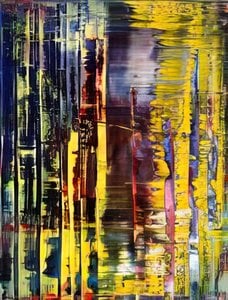
Basel 2

Explore Gerhard Richter's 'Basel 2,' an abstract grayscale masterpiece blending blurred forms and layered lines—a captivating example of his signature painterly technique.

경하드 리히터는 사진과 추상 표현 기법을 결합한 독특한 스타일로 현대 미술에 지대한 영향력을 행사하는 독일 화가입니다. 그의 작품은 사회주의 현실주의와 함께 다양한 색채와 질감을 사용하여 기억과 정체성을 탐구하며 예술의 한계를 확장했습니다.

수제 유화 복제품

원하는 크기와 액자로 주문 제작되는, 작가들이 직접 캔버스에 손으로 그린 유화 작품입니다.

P118B $10
P118H $10
P118W $10
P438Z $10
P508JH $12
P508YH $12
P805H $10
P805Z $10
P919BZ $10
P919G $10
P919XJ $10
P959ZH $10
P968JZ $12
W106C $8
W218G $10
W218JH $8
W218Y $10
W307PJ $10
W316G $10
W316PJ $8
W316Y $10
W398PJ $8
W4111J $10
W500HY $15
W500JH $15
W692G $12
W849H $8
W940BG $15
W953PJ $8

Standard
custom
CM
INCH

작품의 원본 비율을 유지하는 미리 설정된 크기 중에서 선택하세요.

가로 너비
세로 길이

특정 프레임이나 공간에 맞도록 직접 크기를 입력할 수 있습니다. 선택하신 크기가 원본 이미지의 비율과 일치하지 않는 경우, 작품을 자르거나 추가적인 손으로 그린 요소를 사용하여 그림을 확장합니다. 제작 시작 전 승인을 위해 디지털 목업을 보내드립니다.
화면 미리 보기는 실제 자르기 또는 확장을 반영하지 않습니다. 최종 구성은 목업을 통해서만 정확하게 확인하실 수 있습니다.
맞춤 크기 제작도 가능하지만, 원본 비율을 유지하기 위해 사전 정의된 목록에서 크기를 선택하시는 것을 권장합니다.

변경 가능한 예시: 얼굴을 고객의 사진으로 교체, 반려동물 추가(예: 고양이를 강아지로 변경), 배경에 숨겨진 메시지 삽입, 배경 풍경 또는 요소 변경 등
주문 후 WahooArt.com 팀에서 상세 안내를 위해 고객님께 이메일을 보내드리며, 미리보기 시안을 제공해 드립니다.

전 세계 배송()은 표준 5주 대신 3~4주 내에 완료됩니다. (2 7월). 품질에는 어떠한 타협도 하지 않습니다.

why_choose_icon
전 세계 무료 특급 배송
why_choose_icon
프리미엄 린넨 캔버스
why_choose_icon
전체 배송 보험 보장
why_choose_icon
관세 환불 보장
why_choose_icon
실제 색상 일치 보장
why_choose_icon
60일 이내 반품 정책 (제조 결함 시)
why_choose_icon
100% 환불 보장
why_choose_icon
다량 구매 할인 혜택

총 합계 금액

-

reproduction

Basel 2

재현 기법

복제본 크기

-

최종 결제 금액

-

작품 정보 요약

  • Movement: Capitalist Realism
  • Subject or theme: Ambiguity/Introspection
  • Notable elements: Blurred forms, layers
  • Title: Basel 2
  • Medium: Oil/Acrylic on Canvas
  • Artist: Gerhard Richter

예술 상식 퀴즈

각 질문의 정답은 하나뿐입니다.

질문 1:
What is the primary style of Gerhard Richter’s painting ‘Basel 2’?
질문 2:
The image description highlights which of the following key characteristics of ‘Basel 2’?
질문 3:
Which artist’s technique is most closely associated with Gerhard Richter's approach in ‘Basel 2’?
질문 4:
Based on the provided information, what materials are most likely used in creating ‘Basel 2’?
질문 5:
Gerhard Richter is known for his work in which of the following styles?

작품 상세 설명

The Genesis of Ambiguity: Basel 2 by Gerhard Richter

Gerhard Richter's "Basel 2," a work often considered a cornerstone of his mature style, isn’t merely a painting; it’s an invitation to contemplate the very nature of perception and representation. Created in 1987, during a period when Richter was increasingly exploring abstraction while retaining echoes of photographic realism, this piece embodies a profound shift within his oeuvre – a deliberate embrace of uncertainty and a rejection of definitive meaning. The canvas presents a landscape of muted grays, predominantly horizontal streaks and amorphous shapes that seem to dissolve into one another, creating an atmosphere thick with suggestion rather than explicit narrative. It’s a visual poem, less about depicting a specific scene and more about evoking a feeling – a sense of quiet contemplation, perhaps even melancholy.

Richter's technique is central to the work’s impact. He employed a method he termed “allag,” utilizing squeegees to apply paint in multiple layers, often overlapping them extensively. This process deliberately obscures sharp edges and introduces a textural richness that defies simple categorization. The blurring isn’t accidental; it’s a conscious decision to move away from the illusion of depth and surface detail, instead focusing on the interplay of light, shadow, and color within the layered application itself. The result is an image that feels both solid and ephemeral, grounded in materiality yet simultaneously dissolving into abstraction.

A Dialogue with Richter’s Predecessors: The Influence of Gerhard Richter

To fully appreciate "Basel 2," it's crucial to understand the context within which Richter was working. His style owes a significant debt to earlier artists, particularly German Expressionists like Franz Marc and Wassily Kandinsky, who similarly explored the expressive potential of color and form. However, Richter’s approach differs in its systematic deconstruction of representation. He builds upon the foundations laid by these pioneers while simultaneously pushing beyond them, creating a distinctly modern aesthetic. The influence of Gerhard Richter is evident in his work, particularly his use of blurred images and layered techniques.

Furthermore, Richter's exploration of photography – he spent years meticulously photographing photographs and then painting them – profoundly shaped his artistic practice. "Basel 2" can be seen as a distillation of this process, retaining the inherent ambiguity of photographic reproduction while simultaneously transforming it into something entirely new. The work’s ghostly quality, its sense of being both present and absent, reflects Richter's ongoing interrogation of the relationship between reality and representation.

Decoding the Layers: Composition, Color, and Technique

The composition of "Basel 2" is deceptively simple yet remarkably complex. The dominant horizontal lines create a sense of rhythm and movement, guiding the viewer’s eye across the canvas. These lines aren't uniformly applied; they vary in thickness and opacity, contributing to the overall textural richness. The grayscale palette – ranging from pale grays to deep blacks – reinforces the work’s atmosphere of quiet contemplation and understated emotion. There is a subtle shift in tone that adds depth and dimension, preventing the image from feeling flat or monotonous.

Richter's technique is particularly noteworthy. The application of paint with the squeegee results in a distinctive painterly texture – a surface that is both smooth and subtly uneven. This textural quality is crucial to the work’s impact, adding another layer of complexity to its visual language. It’s important to note that Richter often worked on multiple layers, building up the image gradually over time, allowing each layer to partially obscure the one beneath it. This layering process contributes significantly to the sense of depth and ambiguity inherent in "Basel 2."

Beyond Representation: The Emotional Resonance of Basel 2

Ultimately, “Basel 2” is not about depicting a specific scene or object; it’s about evoking an emotional response. The blurred forms suggest landscapes, urban scenes, or perhaps even abstract memories – but these associations are deliberately ambiguous, inviting the viewer to project their own experiences and interpretations onto the canvas. The painting's quiet intensity speaks to a deeper sense of introspection, prompting viewers to contemplate the nature of reality, perception, and the limitations of representation.

As a reproduction, "Basel 2" captures much of the original’s atmospheric quality. The subtle variations in tone and texture are faithfully reproduced, allowing viewers to experience the painting's emotional resonance even when viewed from afar. It remains a powerful testament to Richter’s artistic vision – a work that continues to challenge and intrigue audiences decades after its creation.

유사한 작품들


작가 약력

A Life Shaped by Division: The Early Years and Artistic Formation of Gerhard Richter

Gerhard Richter’s artistic journey began amidst the turbulent backdrop of postwar Germany, a nation scarred by war and grappling with the ideological divisions of the Cold War. Born in Dresden in 1932, his formative years were profoundly impacted by the rise of Nazism and the subsequent devastation inflicted upon his hometown during World War II. This early exposure to conflict instilled within him an inherent skepticism—a questioning gaze that would become a cornerstone of his artistic worldview throughout his prolific career. His father, Wilhelm Richter, was a schoolteacher who navigated the challenges of life under Nazi rule with quiet resilience, while his mother, Gisela Richter, nurtured his intellectual curiosity through literature and music. This duality – accepting circumstance with pragmatism alongside yearning for cultural expression—served as an indelible blueprint for Richter’s own creative sensibility. Initially trained in socialist realism at Dresden Academy of Fine Arts, Richter faced the constraints imposed by East German ideology. However, even within this framework, a fervent desire for artistic freedom persisted, fueled by dissatisfaction with dogma and longing for expansive creative horizons. Recognizing the limitations of prescribed stylistic conventions, he embarked on a transformative path toward Düsseldorf in 1961—a decisive relocation that ushered in an era of radical experimentation. Düsseldorf’s vibrant art community welcomed him with open arms, providing an environment where questioning established norms and embracing chance were not merely tolerated but actively encouraged. This pivotal moment catalyzed Richter's artistic evolution, propelling him away from socialist realism toward a multifaceted stylistic exploration. His early mature work showcased a captivating interplay between photorealism and abstraction—techniques he honed relentlessly throughout his career. Photorealistic paintings meticulously reproduced photographic images with astonishing precision, prompting viewers to confront the elusive nature of visual perception. Simultaneously, Richter embraced abstract compositions characterized by bold colors and dynamic brushstrokes, utilizing squeegees – tools typically employed for window cleaning – to manipulate paint in unpredictable ways. This embrace of spontaneity reflected his core artistic philosophy—a deliberate relinquishment of control that invited unforeseen outcomes. His collaborative endeavors with Sigmar Polke further solidified this ethos, resulting in the iconic ‘Capitalist Realism’ term—a provocative label encapsulating their shared critique of commercial art and appropriation of imagery from mass media. Throughout his lifetime, Richter consistently defied easy categorization, resisting attempts to confine his artistic vision within a singular stylistic paradigm. His influence extended across generations of artists who admired his technical virtuosity and unwavering commitment to intellectual rigor. He became recognized as one of the most significant figures in contemporary art—a visionary whose groundbreaking techniques and profound engagement with historical themes continue to inspire audiences worldwide. Richter’s legacy transcends mere aesthetic achievement; it embodies a fundamental reimagining of painting itself—a testament to his enduring power as an artist and thinker.
게르하트 리히터

게르하트 리히터

1932 - , 독일

주요 정보

  • Artistic Movement Or Style: 사진현실주의 및 추상화
  • Artists Or Movements Influenced By This Artist: ['현대 화가']
  • Artists Who Influenced This Artist:
    • 파블로 피카소
    • 제인 아르프
  • Date Of Birth: 2월 9일 생
  • Full Name: Gerhard Richter
  • Nationality: 독일인
  • Notable Artworks:
    • 추상화 610-1
    • 길버트
    • S.와 아이
  • Place Of Birth: 드레스덴 독일
테마, 스타일 및 특징별로 분류된 작품들을 만나보세요.