

빠른 제작과 다양한 마감 옵션을 제공하는 박물관 수준의 지클레이 및 캔버스 프린트. ( 수작업 채색 복제본 주문하기 디지털 이미지로 전환)
작품의 원본 비율을 그대로 유지하는 프리셋 사이즈 중에서 선택해 보세요.

액자나 벽면 크기에 맞춰 필요한 가로와 세로 길이를 입력해 주세요. 프린트는 원본 이미지보다 크게 제작할 수 없으며 오직 자르는 것만 가능하므로, 비율이 다른 사이즈를 선택할 경우 이미지의 일부가 잘려 나갈 수 있습니다. 인쇄 작업에 들어가기 전, 최종 확인을 위해 디지털 목업을 보내드립니다. 이 페이지에 표시된 이미지는 실제 잘리는 영역을 나타내지 않으며, 오직 목업을 통해서만 정확한 확인이 가능합니다.
Flora
복제본 크기

Ferdinand Keller, often referred to by his noble title von Keller, remains one of the most captivating figures of the German Romantic movement. Born on August 5, 1842, in Karlsruhe, his early life was marked by a profound sense of adventure and global perspective that would later infuse his canvases with an exotic, far-reaching spirit. As the son of a civil engineer, Keller’s childhood was shaped by the vast landscapes of Brazil, where he accompanied his father on ambitious infrastructural projects. It was amidst the lush, tropical greenery of South America that the young artist first taught himself to draw, sketching the vibrant flora and sun-drenched vistas that would forever haunt his artistic imagination. This early exposure to a world far beyond the borders of Europe provided him with a unique visual vocabulary, blending classical European training with a deep-seated fascination for the exotic and the untamed.
Upon returning to Germany, Keller sought formal refinement at the prestigious Academy of Fine Arts in Karlsruhe. Under the mentorship of Johann Wilhelm Schirmer, he mastered the rigorous techniques of landscape painting and learned to imblaming nature with psychological depth. However, Keller was never one to be confined by the rigid boundaries of academic conservatism. Seeking a more expressive realism, he pursued private instruction in the studio of the sculptor Hans Canon and embarked on transformative journeys through Switzerland and France. These travels were not merely sightseeing expeditions but essential periods of artistic maturation, where he absorbed the burgeoning currents of Symbolism and learned to use light and shadow to evoke the unseen tensions of the human soul.
Keller’s oeuvre is a breathtaking tapestry of genre and history painting, characterized by an unparalleled ability to capture dramatic tension and emotional complexity. He achieved international acclaim early in his career, most notably at the 1867 International Exposition of Paris, where his work “The Death of Philip II” stunned audiences with its narrative power and psychological intensity. This talent for storytelling found its most visceral expression in his celebrated depictions of bullfighting. In these works, Keller did not merely document a spectacle; he transformed the arena into a stage for primal struggles between life and death, man and beast, utilizing bold brushwork and a dramatic palette to immerse the viewer in the heat and dust of the ring.
Beyond the arena, his artistry extended into the realms of royal commissions and grand historical narratives. His technical prowess earned him the respect of European nobility, leading to significant decorations for prestigious venues such as the Karlsruhe Court Theater and the Dresden Semperoper. One of his most enduring legacies is the "History of Baden," a monumental series commissioned by Frederick I, Grand Duke of Baden. Through these paintings, Keller acted as both a chronicler and an artist, weaving the political and cultural identity of his homeland into a grand, symbolic epic that remains a cornerstone of German historical art.
As his career progressed, Keller’s role transitioned from a rising star to a pillar of the artistic community. Serving as the director of the Karlsruhe Academy from 1880 to 1913, he influenced generations of subsequent painters, instilling in them the same dedication to technical excellence and emotional truth that had defined his own journey. His ability to bridge the gap between the meticulous detail of classical realism and the evocative mystery of Symbolism allowed him to remain relevant even as artistic movements shifted toward modernity.
Ferdinand Keller passed away in 1922 in Baden-Baden, leaving behind a legacy that transcends simple categorization. His work continues to resonate because it speaks to the universal human experience—the thrill of the hunt, the solemnity of history, and the quiet majesty of the natural world. To look upon a Keller painting is to enter a realm where every shadow holds a secret and every landscape tells a story, ensuring his place as a true pioneer of the Romantic spirit.

1842 - 1922 , Germany

Immerse yourself in the vibrant world of Alexej von Jawlensky. Explore 25 iconic Expressionist masterpieces, from emotive portraits to bold colors. Find inspiration for your collection with museum-quality art reproductions at WahooArt.com. Discover all masterpieces online.
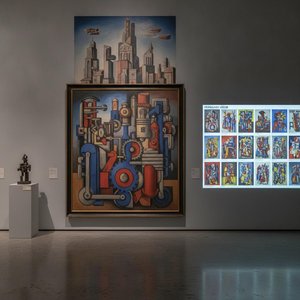
Immerse yourself in the vibrant world of Fernand Léger. Explore 25 iconic masterpieces of Cubism and Tubism, from bold geometric forms to machine-age energy. Find inspiration for your decor with museum-quality reproductions. Discover all masterpieces on WahooArt.com.
 미리보기
미리보기
 공유하기
공유하기 공유하기
공유하기
 상세 정보
상세 정보 가이드 보기

 다운로드
다운로드
 유사 작품 더 보기
 X-레이
X-레이 슬라이드 쇼 보기
 질의응답
질의응답
 통계 정보
통계 정보 더 보기
더 보기






































 유리 옵션은 110cm 미만 크기에서만 선택 가능합니다.


