
x


빠른 제작과 다양한 마감 옵션을 제공하는 박물관 품질의 지클레이 또는 캔버스 프린트. ( 손으로 그린 그림 구매 이미지 구매)
작품의 원본 비율을 유지하는 미리 설정된 크기 중에서 선택하세요.

특정 프레임이나 공간에 맞춰 직접 치수를 입력하실 수 있습니다. 선택하신 사이즈가 원본 이미지의 비율과 일치하지 않을 경우, 작품을 크롭(자르기)하거나 이미지를 대칭 또는 단색 채우기로 확장하여 제작합니다. 제작 시작 전, 최종 확인을 위해 디지털 목업이 전송됩니다.
화면상의 미리보기는 실제 크롭이나 확장 상태를 반영하지 않으므로, 최종 구도는 오직 목업을 통해서만 정확하게 확인하실 수 있습니다.
맞춤 사이즈 제작도 가능하지만, 원본 비율을 유지하기 위해서는 사전 정의된 목록에서 치수를 선택하시는 것을 권장합니다.

Papá Noel
복제본 크기

To encounter the work of Eduardo Arroyo is to step into a world where color serves as both a celebration and a weapon. Born in Madrid in 1937, Arroyo’s early consciousness was forged within the stifling shadows of Francoist Spain, a period of intense political repression that would later become the catalyst for his lifelong commitment to artistic resistance. While his roots were firmly planted in the Leonese tradition, his spirit was inherently nomadic and rebellious. After honing his intellect through journalism studies in Madrid, the suffocating atmosphere of his homeland drove him to emigrate to Paris in 1958. This transition was far more than a mere change of scenery; it was an artistic awakening. In the heart of the French avant-garde, Arroyo found the freedom to transform his political disillusionment into a sophisticated visual language that would eventually captivate the international art scene.
The Parisian years acted as a crucible for his developing style, placing him in direct conversation with the giants of the era. The influence of Joan Miró left an indelible mark on his sense of form and symbolic potential, while his friendship with Gilles Aillaud fostered a collaborative spirit that bridged the gap between the canvas and the stage. It was during this period that Arroyo began to master the art of Narrative Figuration, a movement that allowed him to weave complex, often ironic, social commentaries into his imagery. His work became a playground for Pop Art aesthetics, yet it remained deeply grounded in a uniquely Spanish sensibility—one that utilized vibrant, saturated hues and a deliberate flattening of perspective to strip away the illusions of depth, forcing the viewer to confront the raw, graphic truth of the subject matter.
Arroyo’s creative genius was never confined to the boundaries of a frame. He possessed a rare ability to extend his visual vocabulary into the three-dimensional realm of theater, working extensively as a set and costume designer. His collaborations with legendary directors like Klaus Michael Grüber allowed him to treat the stage as an expansive canvas, where light, shadow, and texture could orchestrating political and psychological drama. Whether designing for the Paris Opéra or the Salzburg Festival, Arroyo utilized his signature lack of spatial depth to create environments that felt both surreal and urgently present. This multidisciplinary approach enriched his paintings, infusing them with a theatrical sense of composition and a profound understanding of how visual elements can manipulate human emotion.
The technical hallmarks of his mature period are as striking as they are intellectually rigorous. His compositions often feature:
As his career progressed, Arroyo’s significance grew from that of a rising avant-garde figure to a pillar of politically committed realism. His triumph at the 1976 Venice Biennale, where he dominated the exhibition of post-Franco Spanish art, signaled his arrival as a global force. He did not merely document the changing political landscape; he interrogated it through a lens of beautiful irony. Even as he received prestigious accolades, such as Spain's National Award for Plastic Arts in 1982, his work never lost its edge or its capacity to provoke. He remained an artist who refused to settle into the comfort of tradition, constantly navigating the crossroads between nouvelle figuration and pop aesthetics.
Eduardo Arroyo passed away in 2018, leaving behind a legacy that continues to resonate with anyone who believes that art should be both aesthetically breathtaking and intellectually fearless. His ability to blend the playful with the profound, and the colorful with the critical, ensures his place in the pantheon of modern masters. Through his paintings, stage designs, and journalistic wit, he taught us that even in the most flattened of perspectives, one can find an infinite depth of meaning.

1937 - 2018

Explore the profound elegance of minimalist art. Discover how the precision of a single line transforms simple geometry into timeless masterpieces for the discerning collector seeking sophistication and depth in fine art acquisitions.
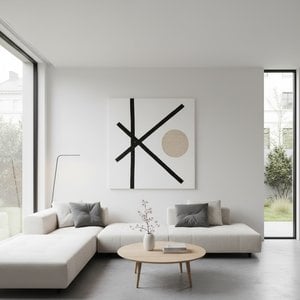
Discover how minimalist art elevates modern interiors. Explore the transformative power of geometric sculptures, tactile textures, and curated simplicity to create a luxurious, tranquil sanctuary in your home through expert design principles.
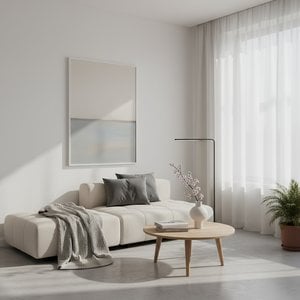
Elevate luxury hospitality with the transformative power of minimalist art. Discover how curated geometric sculptures and textured masterpieces create serene, sophisticated hotel interiors designed for the modern connoisseur.

Explore the profound elegance of the Minimalist Art Movement. From geometric abstraction to the power of negative space, our expert guide offers sophisticated insights for discerning collectors seeking to curate timeless, impactful modern collections.

Discover the profound elegance of modern & minimalist art. Our expert guide explores geometric abstraction, optical depth, and curated simplicity for the discerning collector seeking to elevate contemporary interiors with timeless, sophisticated design.


최신 미술 뉴스, 특별 혜택 및 인테리어 아이디어를 가장 먼저 만나보세요.
프로젝트에 대해 알려주시면 저희 미술 전문가들이 맞춤형 아트 제안 3가지를 전달해 드립니다.
당신만을 위한 맞춤형 옵션 3가지를 무료로 추천해 드립니다!


 미리보기
미리보기
 공유하기
공유하기 공유하기
공유하기
 상세 정보
상세 정보

 다운로드
다운로드
 유사 작품
유사 작품 X-레이
X-레이 슬라이드 쇼


 더 보기
더 보기






































 유리 옵션은 110cm 미만 크기에서만 선택 가능합니다.


![Vista Da Cidade De São Sebastião Do Rio De Janeiro Tirada Do Convento De Santa Teresa [view Of The City Of São Sebastião Do Rio De Janeiro Taken From Santa Teresa Convent] — Karl Robert, Baron Von Planitz, Romanticism](/media/artworks/images-thumb/4f/30/4f305170e79335b53038d4bc9bbbb4b2.jpg)


