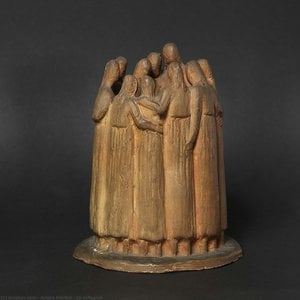
TerracottaNovecento Italiano
 Modern
 5.0 x 23.0 cm
 Fondazione Cariplo
빠른 제작과 다양한 마감 옵션을 선택할 수 있는 박물관 수준의 지클레이 및 캔버스 프린트. ( 수작업 채색 복제본 주문하기 디지털 이미지 판매 채널로 전환)
작품의 원본 비율을 그대로 유지하는 프리셋 사이즈 중에서 선택해 보세요.

특정 프레임이나 공간에 맞춰 직접 치수를 입력하실 수 있습니다. 선택하신 사이즈가 원본 이미지의 비율과 일치하지 않을 경우, 작품을 크롭(자르기)하거나 이미지를 대칭 또는 단색 채우기로 확장하여 제작합니다. 제작 시작 전, 최종 확인을 위해 디지털 목업이 전송됩니다.
화면상의 미리보기는 실제 크롭이나 확장 상태를 반영하지 않으므로, 최종 구도는 오직 목업을 통해서만 정확하게 확인하실 수 있습니다.
맞춤 사이즈 제작도 가능하지만, 원본 비율을 유지하기 위해서는 사전 정의된 목록에서 치수를 선택하시는 것을 권장합니다.

Horse
복제본 규격
In the quiet presence of Arturo Martini’s Horse, one encounters more than just a depiction of an animal; one meets a profound dialogue between ancient tradition and the burgeoning modernism of the early twentieth century. This captivating sculpture, originally conceived in cast terracotta, serves as a window into a pivotal moment in Italian art history. The piece captures a sense of raw, unbridled vitality, with its powerful head and open mouth suggesting a breath caught in time. While the original work is celebrated for its light blue finish—a color palette inspired by the storied ceramics of Savona—the essence of the sculpture lies in its ability to convey movement and life through the deliberate simplification of form.
The technique employed by Martini reflects his deep-seated roots in craftsmanship. Having begun his journey as a goldsmith, Martini possessed an intimate understanding of how material responds to the artist's touch. In this work, we see the influence of his studies with Etruscan and Roman antiquities, where the heavy, earthbound nature of terracotta is transformed into something ethereal. The way the legs are positioned, spreading outward to create a dynamic visual tension, demonstrates a mastery of composition that avoids mere imitation of nature in favor of capturing its underlying energy. For the discerning collector or interior designer, this piece offers a sophisticated interplay of texture and silhouette, making it an ideal focal point for spaces that value sculptural depth.
To understand the Horse is to understand the turbulent artistic landscape of post-World War I Italy. Martini was an artist who refused to be confined by a single movement; he navigated the experimental fervor of Futurism and the structured elegance of the Novecento Italiano with unparalleled grace. This specific work, produced around 1926-1927, represents a period where Martini sought to move beyond the "primitivist purification" of forms toward a more expressive, liberated style. He moved away from rigid constraints to find a new language of sculpture—one that utilized freer forms to achieve a deeper emotional resonance.
For those looking to integrate art into a contemporary living space, a high-quality reproduction of this masterpiece brings with it an aura of historical significance and timeless aesthetic appeal. The sculpture’s ability to bridge the gap between classical stability and modern fluidity allows it to complement diverse decor styles, from minimalist galleries to richly textured, classical interiors. It is not merely a decoration but an invitation to contemplate the enduring power of the animal spirit and the transformative hand of a master who turned humble clay into an eternal icon of motion.


1889 - 1947

Explore the rich history of sculpture from ancient masterpieces to contemporary innovations. Discover key techniques, influential artists & investment potential for discerning art collectors.

Explore the rich history of sculpture with WahooArt. Discover key techniques, influential artists & investment potential for discerning collectors. Expert insights into valuing and collecting timeless masterpieces.

Journey through art history with our Top 10 bronze sculptures! Explore masterpieces by Rodin, Michelangelo & more. Discover stories behind iconic statues and find museum-quality reproductions for your home decor at WahooArt.com.

Immerse yourself in the captivating world of slate blue! Explore 10 iconic paintings by Monet, Van Gogh & Renoir. Discover their stories, techniques & find museum-quality art reproductions for your home at .

Journey through art history with 10 legendary bronze sculptures – from Michelangelo's David to Rodin’s Thinker. Explore the stories, techniques & timeless beauty of these masterpieces. Find museum-quality reproductions & elevate your home decor on WahooArt.com.

 보내기
보내기 공유하기
공유하기
 상세 보기
상세 보기 가이드 보기

 이미지 다운로드
 유사 작품 더 보기
 슬라이드 쇼 보기
 통계 정보
통계 정보 상세 보기
상세 보기






































 유리 옵션은 110cm 미만 크기에서만 선택 가능합니다.