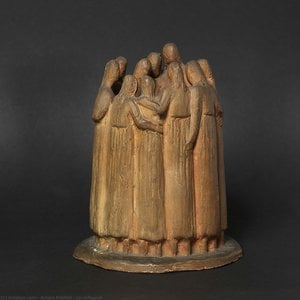
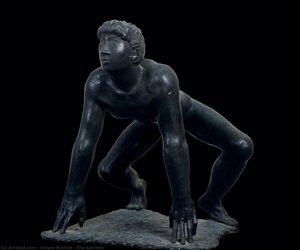
Arturo Martini: Bridging Classicism and the Modern Spirit
Arturo Martini (1889 – 1947) remains a compelling figure in Italian sculpture, a testament to an artist who navigated the turbulent currents of his time—from the fervent energy of
Futurism through the complexities of Fascist patronage and finally, a poignant return to artistic integrity. Born into modest circumstances in Treviso, Martini’s early life instilled within him a deep appreciation for craftsmanship, initially honed as a goldsmith before he found his true voice in sculpture. This grounding in material and technique would profoundly shape his later work, allowing him to seamlessly blend traditional forms with innovative approaches. His trajectory is marked by a restless exploration of style, reflecting the shifting artistic landscape of
early 20th-century Italy.
Early Influences and the Embrace of Futurism
Martini’s artistic journey began in Venice and Munich, exposing him to diverse European influences. He initially studied under
Adolf von Hildebrand in Munich, absorbing elements of
German Expressionism, but it was his encounter with the burgeoning Futurist movement that truly ignited his creative spirit. The dynamism and rejection of academic tradition within
Futurism resonated deeply, prompting Martini to experiment with fractured forms, rhythmic lines, and a sense of violent energy—a characteristic vividly displayed in early works like “I Morti di Bligny” (1935). This piece, depicting the aftermath of a train crash, exemplifies his embrace of Futurist principles: a fragmented composition conveying movement and chaos through sharp angles and distorted figures. Correspondence with
Umberto Boccioni further solidified his connection to this revolutionary artistic current, resulting in a modernist booklet that documented his exploration of new techniques and ideas.
The Shadow of Fascism and Monumental Works
The interwar period witnessed a dramatic shift in Martini’s career. Italy's embrace of Fascism presented both opportunities and challenges. Martini found himself increasingly involved with public sculpture, commissioned to create monumental works that served as symbols of the regime’s power and ideology. He produced impressive bronze sculptures for institutions like La Sapienza University in Rome – notably a colossal figure representing the Roman poet Titus Livius Patavinus – and memorials honoring figures such as Tito Minniti, the Italian aviator. These commissions demanded a shift towards more formal, classical styles, reflecting the aesthetic preferences of the Fascist government. However, beneath this veneer of official patronage, Martini’s artistic integrity remained intact; he subtly infused these monumental pieces with his own unique sensibility, injecting elements of irony and dynamism into traditionally static forms.
A Rejection of Sculpture and a Return to Personal Vision
As the Fascist regime crumbled in 1945, Martini experienced a profound disillusionment. He famously denounced sculpture as “a dead language” in his influential essay, *Scultura, lingua morta*, articulating his belief that art should be free from external constraints and driven by genuine
emotional expression. This critique marked a decisive break with his previous work, leading him to abandon sculpture altogether. Yet, despite this rejection, Martini’s artistic spirit persisted. In 1946, he created “Masaccio,” a poignant marble tribute to Primo Visentin, a partisan leader killed during the war in Loria. This final masterpiece embodies his enduring commitment to humanism and serves as a powerful testament to the sacrifices made during Italy's struggle for liberation. The sculpture’s raw emotion and understated elegance stand in stark contrast to the grandiosity of his earlier works, reflecting a newfound sense of artistic freedom.
Legacy and Enduring Influence
Arturo Martini’s legacy is complex and multifaceted. He was a pivotal figure in bridging the gap between
classicism and
modernism, demonstrating an extraordinary ability to synthesize diverse influences into a uniquely personal style. His work profoundly impacted subsequent generations of Italian sculptors, including
Marino Marini,
Emilio Greco, and
Marcello Mascherini, who carried forward his innovative spirit and formal experimentation. Martini’s sculptures—ranging from dynamic Futurist compositions to monumental civic monuments and intimate tributes—continue to captivate viewers with their expressive power, technical skill, and enduring relevance. He remains a significant voice in the history of
Italian art, a testament to an artist who dared to challenge convention and forge his own path amidst the tumultuous events of the 20th century.