A Munich Academic Tradition
Max Luber was a product of the rigorous academic training found in the art academies of Munich. Born in 1879, he spent his formative years and much of his professional life within the cultural orbit of this German city. His early years as a student were marked by a practical necessity; he earned his living by selling painted postcards at the Oktoberfest. These early works were far from the somber compositions of his later years, instead offering humorous, character-driven scenes of Munich life, often featuring heavy beer steins and abundant food served by local figures.
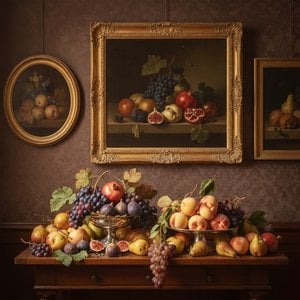
As his technique matured, Luber moved away from these lighthearted genre scenes toward a more serious, disciplined approach to oil painting. He became a specialist in the still life, adopting a style that looked backward to the traditions of the 17th-century Flemish masters. His canvases became darker and more substantial, focusing on the interplay of light and shadow across textured surfaces.
The Language of Still Life
Luber’s mature work is defined by a specific, lush aesthetic. He favored deep, moody backgrounds that allowed his subjects to emerge with a sense of physical weight. His compositions often centered on the following motifs:
- Exotic and magnificent flower arrangements, including irises and peonies.
- The presence of birds, particularly kingfishers or parrots, placed among the flora.
- Abundant displays of fruit and decorative vessels.
- Detailed depictions of insects, such as bees or snails, adding a sense of quiet life to the arrangement.
His ability to render the delicate petals of a tulip or the iridescent feathers of a bird required a precise, academic command of oil on canvas. He often signed his works "M. Luber München," a mark of his connection to his home city and his professional identity as a Munich painter.
Final Years and Artistic Legacy
The breadth of Luber's output included more than just floral arrangements. He captured various views of Munich, documenting the city's buildings and landscapes through both drawing and watercolor. While his large-scale oil paintings remain his most significant contribution to the art market, his sketches and watercolors offer a different perspective on the urban environment he inhabited. He remained in Munich throughout his life, eventually passing away there in 1950. He left behind a family, including a wife, Anny, and a son, leaving a body of work that remains a study in the disciplined application of the Flemish tradition within a German academic context.
კითხვები და პასუხები
რომელ ფერებს იყენებდა ყველაზე ხშირად Max Luber?
Max Luber-ის ნამუშევრების ფერული პროფილი წარმოდგენილია ხელოვანის პალიტრის გენომი გვერდზე.
რამდენი ნამუშევარია ხელოვან Max Luber-ის ხელსმოწმენე, რომლის ნახვაც შესაძლებელია?
თქვენ შეგიძლიათ ნახოთ 1 ნამუშევარი ნამუშევარი ხელოვან Max Luber-ისგან ყველა ნამუშევარი გვერდზე.
სად შემიძლია ვნახო Max Luber-ის ნამუშევრები ატმოსფეროს მიხედვით დალაგებული?
Max Luber-ის განწყობის სივრცე გვერდი ხელოვანის ნამუშევრებს განწყობის მიხედვით აჯგუფებს.
სად და რა წელს დაიბადა Max Luber?
Max Luber დაიბადა Munich-ში, 1879 წელს.