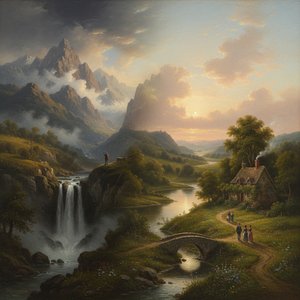
უფასო ხელოვნების კონსულტაცია

x

მოკლე ინფორმაცია

  • Works on APS: 1
  • Top 3 works: Portrait of Ferdinando Valerio
  • Died: 1949
  • Copyright status: Public domain
  • Also known as: Pasini
  • Nationality: Italy
  • კიდევ…
  • Born: 1861, Reggio Emilia, Italy
  • Lifespan: 88 years
  • Museums on APS:
    • Ca’ Granda – Ospedale Maggiore Policlinico
    • Ca’ Granda – Ospedale Maggiore Policlinico
    • Ca’ Granda – Ospedale Maggiore Policlinico
    • Ca’ Granda – Ospedale Maggiore Policlinico
    • Ca’ Granda – Ospedale Maggiore Policlinico
  • Art period: 19th Century
  • Top-ranked work: Portrait of Ferdinando Valerio

ხელოვნების ტესტი

თითოეულ კითხვაზე მხოლოდ ერთი სწორი პასუხია.

კითხვა 1:
What artistic movement is Lazzaro Pasini primarily associated with?
კითხვა 2:
Where was Lazzaro Pasini born?
კითხვა 3:
Who influenced Lazzaro Pasini’s artistic style early in his career?
კითხვა 4:
What type of landscapes did Lazzaro Pasini focus on during his artistic development?
კითხვა 5:
In what year did Lazzaro Pasini receive a scholarship to study at the Academy?

Lazzaro Pasini (1861–1949): The Tuscan Soul of Lombard Naturalism

Lazzaro Pasini, born in Reggio Emilia in 1861, stands as a pivotal figure within the Italian landscape painting tradition—specifically recognized for his contribution to the Macchiaioli movement. This influential group championed a revolutionary approach to art, prioritizing direct observation and capturing the immediacy of nature’s essence, rejecting academic conventions and favoring bold brushstrokes and vibrant color palettes. Pasini's artistic journey began under the tutelage of Romualdo Belloli, an engraver who instilled in him a foundational understanding of visual representation and meticulous craftsmanship—skills that would prove invaluable throughout his prolific career. Following this formative period, Pasini relocated to Florence where he immersed himself in Giovanni Fattori’s studio, absorbing the stylistic principles of Macchiaioli painting. This exposure solidified his commitment to portraying Tuscan landscapes with unparalleled realism, meticulously documenting the textures and hues of the countryside from life—a practice that became a hallmark of his artistic style. The influence of Fattori's expressive technique is palpable in Pasini’s canvases, demonstrating a shared dedication to conveying emotion through color and form. In 1884, Pasini debuted at Turin’s National Exposition with “Il Tombone di San Marco,” a genre scene tackling social commentary—a thematic preoccupation that continued throughout his artistic output. His subsequent move to Milan in 1886 brought him into contact with luminaries of Lombard Naturalism, furthering his exploration of capturing the subtleties of human experience alongside the grandeur of the natural world. This period witnessed Pasini’s experimentation with color separation techniques, aiming for heightened luminosity and achieving remarkable visual effects—a testament to his technical prowess and artistic innovation. Notable among Pasini's achievements was securing the gold medal from the Ministry of Education in 1918 for “Luigi Montanarini Isler,” a landscape depicting the serene beauty of Lombardy. This recognition underscored his mastery of tonal painting and cemented his reputation as one of Italy’s foremost landscape artists. His oeuvre encompasses a vast array of canvases, predominantly focused on Tuscan vistas—from rolling hills bathed in golden sunlight to dramatic mountain ranges rendered with breathtaking detail. Pasini's legacy extends beyond individual artworks; he represents a cornerstone of Italian art history, embodying the spirit of Macchiaioli painting and championing a humanist aesthetic rooted in observation and emotion. His works are housed in prestigious institutions such as the Pinacoteca di Vicenza, where visitors can admire his masterful depictions of Tuscan landscapes alongside other masterpieces from various eras. Furthermore, Pasini’s paintings reside within private collections—a testament to their enduring appeal and artistic significance.