Henry Straker: A British Painter of Domestic Scenes and Light
Henry Straker (1860-1943) was a significant, though often underappreciated, British artist whose career spanned the late 19th and early 20th centuries. Primarily known for his evocative depictions of domestic life, particularly within the context of the New Society of Artists – a group advocating for greater artistic freedom and realism – Straker’s work offers a poignant glimpse into Victorian England and its evolving social landscape. His paintings are characterized by a quiet sensitivity, a masterful use of light and color, and a subtle yet powerful storytelling ability.
Born in London, Straker received his initial artistic training at the Slade School of Fine Art under John Ruskin, a profoundly influential figure who instilled in him a deep appreciation for nature and moral values. This early exposure to Ruskin’s teachings shaped Straker's approach to art, emphasizing observation, truthfulness, and the importance of depicting human experience with integrity. Following his studies, he honed his skills through independent practice and exhibited sporadically before gaining recognition within the New Society of Artists in 1893.
The New Society of Artists and Straker’s Style
The New Society of Artists represented a deliberate challenge to the established art world. Founded on principles of artistic freedom and realism, it provided a platform for artists like Straker to explore subjects outside the traditional academic sphere – particularly genre scenes depicting everyday life. This movement encouraged artists to move away from idealized historical or mythological themes and instead focus on portraying contemporary society with honesty and empathy. Straker’s work perfectly embodies this ethos; he frequently depicted ordinary people engaged in simple, familiar activities—washing clothes, tending gardens, sharing meals—transforming these commonplace moments into scenes of quiet beauty and emotional resonance.
His style is often described as Impressionistic, though it possesses a distinctly British sensibility. Straker skillfully employed broken brushstrokes and subtle color variations to capture the fleeting effects of light and atmosphere. He was particularly adept at rendering fabrics—linen, wool, and cotton—with remarkable detail and texture, as evidenced in works like “The Linen Cupboard.” His compositions are typically balanced and harmonious, creating a sense of tranquility and intimacy. The influence of Jean-François Millet, a key figure in the Realist movement, is evident in Straker’s focus on rural life and his commitment to portraying the dignity of labor.
Notable Works and Recurring Themes
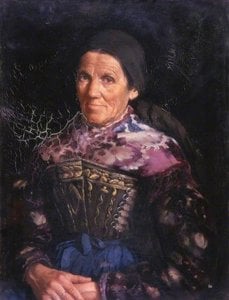
Several of Straker's paintings have achieved considerable recognition. “The Linen Cupboard” (1900), a particularly luminous depiction of a domestic interior, is arguably his most famous work. It captures a moment of quiet contemplation within a humble home, imbued with a sense of warmth and nostalgia. “Portrait of an Old Woman,” another significant piece, showcases Straker’s ability to convey character and emotion through subtle facial expressions and gestures. “Bavarian Peasant Woman” offers a glimpse into rural life in the late 19th century, while "Ruins in a Wood" demonstrates his interest in capturing the beauty of the natural world.
Recurring themes in Straker’s oeuvre include domesticity, labor, and the quiet dignity of everyday life. He frequently depicted women—often elderly or working-class—as central figures in his compositions, imbuing them with a sense of strength and resilience. His paintings are not merely representations of scenes; they are imbued with a profound understanding of human nature and a deep appreciation for the beauty found in the ordinary.
Legacy and Historical Significance
While Straker’s work did not achieve widespread fame during his lifetime, it has since been recognized as an important contribution to British art. His paintings offer a valuable window into Victorian society, capturing the social and cultural nuances of the era with sensitivity and insight. He stands as a testament to the power of realism and the importance of portraying everyday life with honesty and empathy. The New Society of Artists, and artists like Straker, played a crucial role in challenging artistic conventions and paving the way for modern art movements. His legacy continues to be appreciated by scholars and collectors alike, solidifying his place as a significant figure in British painting.
კითხვები და პასუხები
შესაძლებელია თუ არა Henry Straker-ის ნამუშევრების თემატური მიხედვით დათვალიერება?
Henry Straker-ის ნამუშევრების თემატური დათვალიერება შესაძლებელია ხელოვანის თემატური ატლასი გვერდზე.
რომელ ისტორიულ პერიოდში მოღვაწეობდა Henry Straker?
Henry Straker 19th Century პერიოდში მოღვაწეობდა. ეს ეპოქა ხელოვანის შემოქმედებას ისტორიულ კონტექსტს სვამს.
რამდენი ნამუშევარია ხელოვან Henry Straker-ის ხელსმოწმენე, რომლის ნახვაც შესაძლებელია?
თქვენ შეგიძლიათ ნახოთ 65 ნამუშევარი ნამუშევარი ხელოვან Henry Straker-ისგან ყველა ნამუშევარი გვერდზე.