Early Life and Family Background
- Born: Antwerp, then in the Spanish Netherlands, baptised on December 15, 1610.
- David Teniers the Younger came from a family deeply rooted in the artistic tradition of Flanders. His father, David Teniers the Elder, was also a painter, and his younger brothers Juliaan, Theodoor and Abraham all became painters as well.
- Training: He studied under his father from 1626, receiving his foundational training in painting techniques and styles.
- His father was frequently in debt and was at times jailed for it, so the young David made copies of old master paintings to help support the family.
- Antwerp Guild: He became a master of the Antwerp Guild of Saint Luke in 1632–1633 and served as its dean in 1644–1645.
Artistic Development and Influences
- Early Influences: His early work followed his father’s small cabinet paintings and, through him, the example of Adam Elsheimer. Until the end of the 1630s his pictures were very close to those of Adriaen Brouwer in subject matter, technique, colour and composition.
- The Rubens Circle: In 1637 he married Anna Brueghel, daughter of Jan Brueghel the Elder. Peter Paul Rubens, who had been her guardian after her father’s death, was a witness at the wedding, drawing Teniers into the circle of Antwerp’s leading painter.
- Genre Specialization: Teniers gradually specialized in genre painting – depictions of everyday life – becoming renowned for his lively scenes of peasant festivals (kermesses), tavern interiors, and village landscapes.
Major Works and Artistic Style
- Genre Scenes: His most celebrated works are his genre paintings. These often depict bustling scenes of peasant life filled with merriment, dancing, drinking, and games.
- Kermess Paintings: Village feasts such as The Flemish Kermess exemplify his style – vibrant colors, detailed compositions, and a keen observation of human behavior.
- Tavern Interiors: His tavern scenes are particularly notable for their realistic portrayal of everyday life and the lively atmosphere within these establishments.
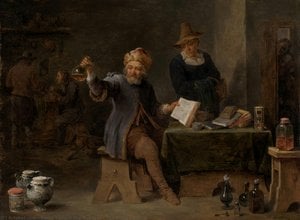
- Beyond the Village: He also painted landscapes, guardroom scenes, alchemists and physicians at work, and witty singeries in which monkeys act out human affairs.
- Gallery Paintings: His views of the Archduke’s picture gallery, their walls crowded with identifiable masterpieces, made him a leading figure of this distinctly Flemish genre.
Court Painter and Curator
- Service to Archduke Leopold Wilhelm: Around 1650 Teniers moved to Brussels to serve Archduke Leopold Wilhelm, the Governor of the Spanish Netherlands, as court painter and keeper of his art collection.
- Collection Management: He helped the Archduke acquire masterpieces, including paintings from the dispersed English royal collection and the Hamilton collection. The collection grew to some 1,300 works and later formed a foundation of the Kunsthistorisches Museum in Vienna.
- Theatrum Pictorium: Published in Brussels in 1660, it reproduced 246 Italian paintings from the Archduke’s collection in engravings – the first illustrated catalogue of an old master collection.
- Pupils: Gillis van Tilborgh is believed to have trained with him in Brussels and later held the same post of keeper of the court collection.
- Later Life: After Anna’s death he married Isabella de Fren in 1656. He petitioned the king of Spain for a patent of nobility, but gave up when he was told he would have to stop selling his paintings.
- The Antwerp Academy: Teniers was the driving force behind the foundation of the Academy of Fine Arts in Antwerp, obtaining its royal charter in 1663, with the aim of revitalizing Flemish painting after the deaths of Rubens and Van Dyck.
Historical Significance and Legacy
- Leading Genre Painter: David Teniers the Younger is considered the leading Flemish genre painter of his time, capturing the essence of 17th-century life with remarkable skill.
- Influence on Later Artists: His work influenced subsequent generations of Northern European painters and even impacted French Rococo artists like Antoine Watteau.
- Prolific Output: Teniers was an incredibly prolific artist, producing a vast body of work that continues to be admired for its charm, detail, and historical insight.
- Death: He died in Brussels on April 25, 1690, leaving behind a lasting legacy as one of Flanders’ most important Baroque painters.
კითხვები და პასუხები
სად არის დავიდ ტენიერს უმცროსი-ის ნამუშევრები ხელოვნების მიმდევრობების მიხედვით დაჯგუფებული?
დავიდ ტენიერს უმცროსი-ის ნამუშევრების დათვალიერება მიმდინარეობის მიხედვით შესაძლებელია ხელოვანის ყველა მიმდინარეობა გვერდზე.
როგორ განვითარდა დავიდ ტენიერს უმცროსი-ის შემოქმედება დროთა განმავლობაში?
დავიდ ტენიერს უმცროსი-ის ქრონიკა წარმოადგენს სქროლზე დაფუძნებულ ქრონოლოგიურ ხაზს, რომელიც ხელოვანის ნამუშევრებს ქრონოლოგიური თანმიმდევრობით აჯგუფებს მათი შემოქმედებითი ეპოქების მიხედვით.
რა ქალაქსა და ქვეყანაში დაიბადა დავიდ ტენიერს უმცროსი?
დავიდ ტენიერს უმცროსი დაიბადა ანტვერპენი-ში, ბელგია-ში.