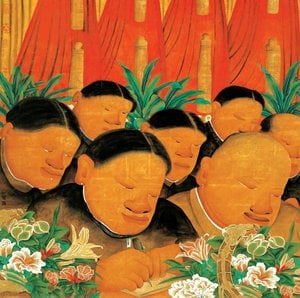
A Tapestry of Crimson and Silence
In the quiet corridors of contemporary Chinese art, few works command attention with such rhythmic simplicity as Zhu Wei’s Curtain, No.8. At first glance, the viewer is met with a striking expanse of deep red, interrupted only by the disciplined cadence of white stripes. This is not merely a study of fabric or pattern; it is an immersive experience that pulls the observer into a space of profound stillness. The painting, measuring a monumental 160 x 200 cm, utilizes its large scale to envelop the room, making it an ideal centerpiece for those seeking to introduce a sense of dramatic elegance and contemplative depth into a sophisticated interior.
The artistry lies in the masterful tension between tradition and modernity. Executed on paper, Zhu Wei employs techniques that bridge the gap between classical Chinese ink traditions and a contemporary, almost minimalist aesthetic. The way the red pigment interacts with the surface creates a visual texture that suggests the heavy, tactile weight of velvet or thick silk, yet retains a certain ethereal lightness characteristic of fine paper works. Each stripe serves as a structural element, guiding the eye across the composition and creating a hypnotic, undulating movement that mimics the gentle sway of a curtain caught in a phantom breeze.
Symbolism and the Contemporary Voice
To understand Curtain, No.8, one must look through the lens of Zhu Wei’s unique position in the post-Tiananmen era of Chinese art. As an artist trained at the People’s Liberation Army Art Academy, his early exposure to propaganda art—characterized by bold colors and clear messaging—informs his ability to manipulate powerful symbols. In this work, the red curtain acts as a potent metaphor. Red is a color deeply embedded in the Chinese cultural consciousness, representing both vitality and the political landscape of the nation. By presenting the curtain as an abstract, patterned object, Zhu Wei invites us to consider what lies behind the veil—the boundary between the public spectacle and the private reality.
For the discerning collector or interior designer, this piece offers a rare opportunity to possess a work that is both visually arresting and intellectually stimulating. The painting does not demand attention through chaos, but rather through a curated, rhythmic order. It provides a sophisticated anchor for a gallery wall or a standalone statement in a minimalist lounge. Whether viewed as a study of geometric pattern or a subtle critique of social layers, Curtain, No.8 remains an evocative masterpiece that brings the nuanced history of modern China into the contemporary living space.



 წინასწარი ნახვა
 გადართვა ბეჭდზე
 გაგზავნა
 გაზიარება
 დეტალები

 ჩამოტვირთვა
 მსგავსები
 რენტგენოგრაფიული კვლევა
 სლაიდშოუ
 სტატისტიკა


 გადასართად დაწვრილებით ნახეთ






































 მინის ჩარჩოს არჩევანი ხელმისაწვდომია მხოლოდ 110 სმ-ზე ნაკლები ზომისთვის