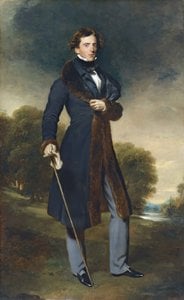
The Enigmatic Beauty of “The Blue Boy”: A Georgian Portrait Revisited
- A Masterpiece Born from Rivalry: The Tale of Gainsborough and Reynolds
- Jonathan Buttall’s Identity – Myth or Reality? Decoding the Sitter’s Persona
- Technique and Atmosphere: Gainsborough's Pioneering Approach to Landscape Painting
- Symbolism Beneath the Surface: Blue Silk, Feathered Caps, and the Pursuit of Artistic Innovation
- A Legacy Enduring Centuries – “The Blue Boy”’s Influence on Georgian Art and Beyond
A Masterpiece Born from Rivalry: The Tale of Gainsborough and Reynolds
The artistic landscape of England in the mid-18th century was dominated by two titans—Thomas Gainsborough and Joshua Reynolds—whose contrasting philosophies fueled a fervent debate about the very essence of beauty. Reynolds, championing classical ideals and meticulous detail, advocated for grand historical canvases imbued with moral instruction. Gainsborough, however, championed a more intimate style, prioritizing observation and capturing fleeting emotions through luminous brushstrokes. This divergence is vividly illustrated in “The Blue Boy,” where Gainsborough deliberately challenged Reynolds’s theories on color—a bold statement that cemented his reputation as an innovator and solidified the painting's place within Georgian artistic discourse. The anecdote itself speaks volumes about the intellectual climate of the era, highlighting the spirited exchange between artists who sought to define their respective visions of art history.
Jonathan Buttall’s Identity – Myth or Reality? Decoding the Sitter’s Persona
For decades, scholars wrestled with the question of “The Blue Boy’s” subject—was it truly Jonathan Buttall, son of a wealthy hardware merchant, as initially surmised? Evidence supporting this identification proved elusive, prompting renewed scrutiny into Gainsborough’s artistic process. Recent research suggests that Dupont, Gainsborough's nephew, may have been the more plausible candidate—a proposition bolstered by stylistic similarities between the portrait and other works attributed to Gainsborough. Regardless of definitive confirmation, Buttall embodies the aristocratic youth of Georgian England—dressed in opulent blue silk attire—representing a deliberate departure from prevailing portrait conventions. The sitter’s gaze, subtly averted, conveys a complex inner life—a characteristic that aligns perfectly with Gainsborough's artistic ethos and underscores the painting’s enduring fascination for viewers.
Technique and Atmosphere: Gainsborough's Pioneering Approach to Landscape Painting
Gainsborough’s mastery is immediately apparent in his revolutionary technique—characterized by loose, fluid brushwork and masterful blending of colors. Rejecting rigid lines for soft transitions, he created an atmospheric quality that envelops the figure—a hallmark of both Rococo and burgeoning Romanticism. This painterly approach prioritized capturing mood and character over precise detail—a conscious decision reflecting Gainsborough’s profound belief in the expressive power of art. The use of *alla prima*—painting directly onto the canvas without extensive underdrawing—further enhanced the painting's immediacy and spontaneity, mirroring the spirit of artistic innovation that defined Gainsborough’s oeuvre.
Symbolism Beneath the Surface: Blue Silk, Feathered Caps, and the Pursuit of Artistic Innovation
The vibrant blue of Buttall’s clothing transcends mere aesthetic consideration; it served as a deliberate rebuke to Reynolds's color theories—a testament to Gainsborough’s unwavering commitment to artistic experimentation. Beyond this anecdote, “The Blue Boy” subtly conveys layers of meaning—evident in the feathered cap symbolizing leisure and aristocratic status, and the sitter’s posture conveying confidence and introspection. These elements coalesce into a portrait that transcends its formal representation, inviting contemplation on themes of youth, elegance, and the pursuit of artistic excellence—a legacy that continues to inspire artists and collectors alike.
A Legacy Enduring Centuries – “The Blue Boy”’s Influence on Georgian Art and Beyond
“The Blue Boy” stands as a cornerstone of Georgian art history—its pioneering technique and emotive resonance establishing Gainsborough as a visionary artist who irrevocably altered the trajectory of British painting. Its enduring appeal stems from its ability to capture not merely likeness but also spirit—a feat achieved through Gainsborough’s masterful command of light, color, and composition. The painting's influence extends far beyond its immediate era, informing subsequent generations of artists and shaping perceptions of beauty and artistic expression—a testament to the timeless power of art to transcend temporal boundaries and captivate audiences across centuries.



 წინასწარი ნახვა
 შეიძინეთ ხელით შესრულებული ნახატი
 გაგზავნა
 გაზიარება
 დეტალები

 ჩამოტვირთვა
 მსგავსები
 რენტგენოგრაფიული კვლევა
 სლაიდშოუ
 Stats
Stats

 გადასართად დაწვრილებით ნახეთ






































 მინის ჩარჩოს არჩევანი ხელმისაწვდომია მხოლოდ 110 სმ-ზე ნაკლები ზომისთვის